Exercises for Kids Who Want to Lose Weight
If you have one or two kids who want to shed a few pounds, you don't need to send them to an early-morning boot camp or teach them the finer points of circuit training. To encourage your kids to develop good fitness habits for life, focus on the recreational nature of weight-loss exercises 3. Exercise with your kids when possible and show them how easy it is for them to do extra physical activity every day.
Some Healthy Competition
Enrolling your kids in sports can help them get regular exercise without the monotony that can occasionally arise from individual weight-loss exercises. Sports to consider include baseball, basketball, gymnastics, soccer and hockey. Kids who play these sports burn calories during practices and games and, in general, begin to experience the joy and camaraderie characteristic of team sports. Encourage your kids to have fun and enjoy the physical benefits of the sport, instead of focusing on winning and losing.
- Enrolling your kids in sports can help them get regular exercise without the monotony that can occasionally arise from individual weight-loss exercises.
- Kids who play these sports burn calories during practices and games and, in general, begin to experience the joy and camaraderie characteristic of team sports.
Find Fitness Around Home
The Negative Effects Electronics Have on Teens
Learn More
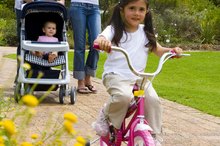
Kids don't always have to leave home or their neighborhood to get exercise. Encourage your kids to keep active by playing games such as tag in the backyard, walking the family dog around the neighborhood and riding their bikes on paths near your home. If you have a swimming pool, encourage them to swim laps and see who can tread water the longest. On rainy days, crank up the music and have a dance party in your living room or turn the garage or basement into a venue for inline skating.
- Kids don't always have to leave home or their neighborhood to get exercise.
- On rainy days, crank up the music and have a dance party in your living room or turn the garage or basement into a venue for inline skating.
Choose the Bike Over the Bus
Adults can often keep in shape by adding physical activity to their everyday schedule, and the same approach works for kids, too. Many kids can get exercise by biking, walking or inline skating to school instead of taking the bus. Instead of driving your kids to their friends' houses after school and on the weekends, encourage them to ride their bikes. If you exercise at home, allow them to join you for some jumping jacks, body-weight exercises or rope skipping.
- Adults can often keep in shape by adding physical activity to their everyday schedule, and the same approach works for kids, too.
- If you exercise at home, allow them to join you for some jumping jacks, body-weight exercises or rope skipping.
Cut Down on Junk Food and TV
How to Deal With Your Kid's Bad Attitude in Sports
Learn More
Regular exercise won't help your kids lose weight if they make poor dietary habits. As a parent, it's your job to ensure your fridge and pantry are devoid of junk food and are stocked with healthy treats, such as:
- fruits
- vegetables
- nuts
- seeds
Set a positive example by improving your own diet and cut down on the amount of time your family spends in front of the TV. For example, avoid watching TV while eating dinner and set a daily time limit for TV viewing.
Related Articles

The Negative Effects Electronics Have on Teens
Learn More
How to Deal With Your Kid's Bad Attitude in Sports
Learn More
How to Help a 4-Year-Old Run Faster
Learn More

Activities to Promote Perceptual & Motor Skills
Learn More
Galloping Activities for Children
Learn More
Exercises for Oppositional Defiant Disorder
Learn More

How to Slim Down for Teens
Learn More

Playing Activities for Infants 12-24 Months Old
Learn More
The Operant Conditioning Principles Used to Teach Someone to Ride a Bike
Learn More

The Purpose of a Juvenile Detention Center
Learn More
References
- Better Health Channel: Sports and Children
- Active for Life: Top 5 Reasons Kids Play Sports
- Kidszworld: Best Ways For Kids to Lose Weight
- KidsHealth: Healthy Eating
- University of Michigan Health System: A Guide to Managing Television: Tips for Your Family
- American Academy of Pediatrics Policy Statement. Active Healthy Living: Prevention of Childhood Obesity Through Increased Physical Activity. PEDIATRICS Vol. 117 No. 5 May 2006, pp. 1834-1842.
- The President's Council on Physical Fitness and Sports. Exercise and Weight Control.
Resources
Writer Bio
Toronto-based journalist William McCoy has been writing since 1997, specializing in topics such as sports, nutrition and health. He serves as the Studio's sports and recreation section expert. McCoy is a journalism graduate of Ryerson University.