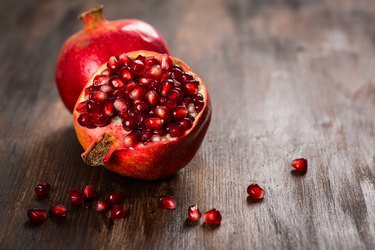
Pomegranate may be expensive and tricky to eat, but it tops the list of the most nutritious fruits. It's even earned the esteemed title of superfood. Low in calories, high in fiber, and a rich source of vitamins and minerals, pomegranate makes a delicious snack or nutritious salad topping.
Pomegranate also contains disease-fighting antioxidants called polyphenols that protect against cancer, boost heart health and enhance cognitive function. Although these benefits may best be reaped by drinking concentrated pomegranate juice, the arils of the whole fruit are still a worthwhile addition to your diet. Here's an overview of their nutrition facts (for one pomegranate):
Video of the Day
Video of the Day
- 234 calories
- 3 grams of fat
- 52 grams of carbohydrates
- 5 grams of protein
Pomegranate Calories and Carbs
Pomegranate calories are fairly low, with 117 in half a fruit. Of these calories, the majority come from the 26 grams of carbohydrates. Carbohydrates are an important source of energy, and the Institute of Medicine recommends all adults get 45 to 65 percent of their daily calories from carbs.
Protein and Fat Content
The pomegranate seed oils contribute a small amount of fat — 1.6 grams per half-fruit. These fats are a mix of saturated, polyunsaturated and monounsaturated fats. The saturated fat content in pomegranate is very low and won't make a significant difference in your diet, and the other beneficial nutrients in the fruit certainly make up for it.
There are also 2.3 grams of protein in half a pomegranate, which is actually a lot for a fruit. Apples only contain 0.5 grams per medium fruit, while half a mango has 1.4 g. Adults should get roughly 10 to 35 percent of their daily calories from protein to support growth, tissue repair and a healthy immune system.
Read more: Can You Eat a Pomegranate Seed?
Fiber in Pomegranates
One type of carbohydrate — dietary fiber — plays a major role in health. It helps promote healthy digestion,. lowers cholesterol, keeps blood sugar steady and aids weight loss. One-half of the fruit provides 5.6 grams of fiber.
That's 22 percent of the fiber recommended daily for women, and 15 percent of the daily recommendation for men. Although pomegranates are high in sugar, the fiber helps modulate the digestion and absorption of sugar into your bloodstream.
Pomegranate Vitamins and Minerals
This little red fruit packs a punch when it comes to getting your daily vitamins. Half a pomegranate provides 16 to 19 percent of the RDA for vitamin C, 14 percent of the RDA for folate and 19 to 26 percent of the RDA for vitamin K.
Vitamin C is an antioxidant vitamin that aids in the synthesis of collagen and neurotransmitters, and it also assists in protein metabolism. Folate plays a role in growth and development — it's especially important for pregnant women because it helps prevent birth defects. Vitamin K is known for its role in blood clotting and bone metabolism.
Trace minerals are present in small amounts as well. By eating half of a pomegranate, you'll get about 7 percent of your daily requirement of phosphorous and potassium. Phosphorous helps your body filter waste and repair cells and tissues; potassium is needed for healthy blood pressure, fluid balance, muscular contractions, nerve impulses, heart rhythms and digestion.
Other Pomegranate Benefits
Antioxidants are potent plant chemicals that prevent or delay cell damage by free radicals. They are believed to play a role in the prevention and treatment of numerous diseases, including cancer, heart disease and cognitive decline.
According to a 2017 review in the journal Molecules, pomegranate and its active compounds affect signaling pathways involved in inflammation, cell changes, and tumor growth and spread. The researchers report that pomegranate plays a promising role in the treatment and prevention of skin, breast, prostate, lung and colon cancers. The concentrated sources of pomegranate, such as juice and extracts, are touted as more powerful than the whole fruit.
Read more: Risks and Benefits of Pomegranate Juice
- Harvard Health Publications: Health Benefit of Pomegranate Juice on Prostate Cancer and the Heart
- Dr. Fuhrman: Secrets Revealed: The Powerful Health Benefits of the Pomegranate
- USDA National Nutrition Database: Pomegranates, Raw
- Joslin Diabetes Center: How Does Fiber Affect Blood Glucose Levels?
- USDA Beltsville Human Nutrition Research Center: USDA Database for the Oxygen Radical Absorbance Capacity of Selected Foods
- The Globe and Mail: Pomegranate: A ‘superfood’ that goes straight to your heart
- Institute of Medicine: Dietary Reference Intakes: Macronutrients
- Mayo Clinic: Dietary fiber: Essential for a healthy diet
- USDA: Basic Report: 09003, Apples, raw, with skin (Includes foods for USDA's Food Distribution Program) a b
- USDA: Basic Report: 09176, Mangos, raw a
- Institute of Medicine: Dietary Reference Intakes (DRIs): Recommended Dietary Allowances and Adequate Intakes, Elements
- NIH: Vitamin C
- NIH: Folate
- NIH: Vitamin K
- Healthline: What Is Phosphorus and Why Is It Important?
- Healthline: Potassium
- NIH: Antioxidants: In Depth
- Molecules: Pomegranate for Prevention and Treatment of Cancer: An Update