Ingram Publishing/Ingram Publishing/Getty Images
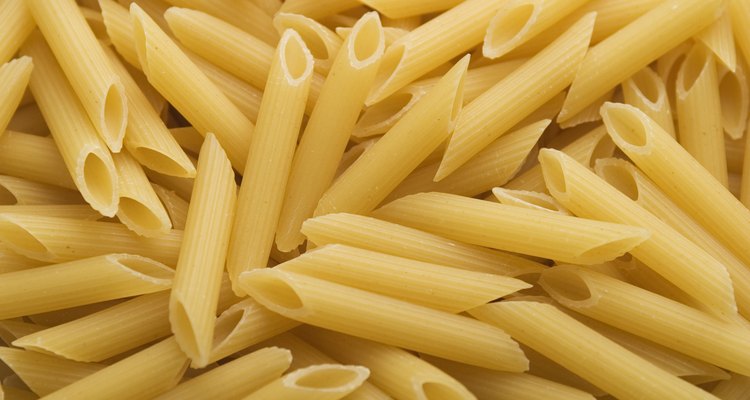
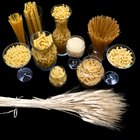
Pasta comes in many different shapes, from macaroni to penne to spaghetti, and is also available in different varieties such as whole wheat and vegetable. This array of types accounts for a range in calories.
Short Pasta
After it is cooked, a 1-cup serving of macaroni has 196 calories. Penne, ziti and rigatoni each have 220 calories per 1-cup serving.
Long Pasta
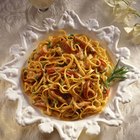
One cup of cooked spaghetti has 220 calories, as does 1 cup of cooked fettuccine or linguine.
Whole Wheat
One cup of cooked whole-wheat spaghetti has 172 calories. Whole-wheat penne has 200 calories per serving.
Spinach
Spaghetti made with spinach has 182 calories per 1-cup serving, while spinach-based egg pasta has 130 calories per 100-g serving.
Related Articles
How Fast Does Cooked Spaghetti Squash ...

How to Cook Spaghetti to Use the Next ...
How to Make Toasted Bread Sticks With ...
Cooking Dried Banh Pho Noodles
How Long Does It Take to Cook Linguine?
How Long Is Steamed Cauliflower Good ...
How to Reheat Leftover Pork Chops ...

How to Make Cottage Cheese Lasagna
How to Cook Elbow Macaroni in Milk
Calories in Cooked Wheat Pasta
Calories in One Slice Provolone Cheese
How to Cook Penne Rigate Noodles in the ...
How to Bake Mac & Cheese With a Bread ...

Calories in 1 Cup of Pasta Primavera
How to Freeze Empanadas
How Long to Cook Steak at 150 Degrees ...

How Long Do I Cook Vermicelli?
Directions on How to Cook Soba Noodles
The Calories in Pasta & Tomato Sauce ...

How to Wear a Bandana Around Your Neck
References
Writer Bio
Chris Callaway started writing professionally in 2007 and has worked as sports editor, managing editor and senior editor of "The Racquet" as well as written for the "La Crosse Tribune" and other newspapers in western Wisconsin. He graduated from the University of Wisconsin-La Crosse with a Bachelor of Arts in English and communications.
Photo Credits
Ingram Publishing/Ingram Publishing/Getty Images