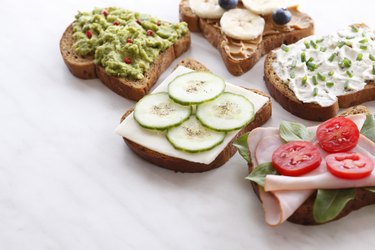
Lunch meat refers to any type of sliced meat, usually sold at the deli counter in the grocery store or in the refrigerated meat case in presliced packages. Also known as cold cuts, lunch meat is inexpensive and an easy-to-prepare lunchbox meal. Sodium nitrate, a type of salt, is added to cold cuts to stabilize the colors and extend its shelf life.
Sodium nitrite is a chemical compound derived from nitrates that prevents the growth of the bacteria Clostridium botulinum in processed meat, a toxin that can cause a dangerous condition called botulism.
Video of the Day
Video of the Day
On the flip side, according to Berkeley Wellness, sodium nitrite and sodium nitrate are known carcinogens, or substances capable of causing cancer. Sodium nitrite can also be found in fertilizer and rocket fuel, and may also contain heavy metals.
About Sodium Nitrate
Without added sodium nitrate in deli meats, your food will be gray rather than a healthy pink or red and will have a shorter shelf life and a less smoky — or cured — flavor. Nitrates are converted into nitrites when they come into contact with certain types of bacteria. "Nitrates and nitrites are naturally occurring compounds that are created when plants break down during photosynthesis," according to lunch meat producer Applegate Farms. Nitrates are added to meat products including salami, bologna and ham.
No Nitrites or Nitrates Added
"No nitrites or nitrates added" or "uncured" is a label you will find on products that were not cured based on guidelines put forth by the U.S. Department of Agriculture. It is, however, a misnomer. Lunch meats with this label can in fact contain the preservative nitrates. The USDA requires that meats prepared without synthetic sodium nitrate carry this label. Meats that are cured with organic nitrates, those made from celery juice and sea salts, must still have this label.
Risks of Consuming Nitrates
While nitrates protect from bacteria and make cold cuts safe for us to eat, there is an associated health risk. According to a study published in 2017 by "Journal of Clinical Nutrition and Dietetics," risk of colorectal cancer is increased by 18 percent in people who eat 50 grams of processed meat daily. In this study, luncheon meats were listed among the processed foods with the highest nitrate concentration. Additionally, some studies have linked obesity, type 2 diabetes, various cancers and cardiovascular conditions with frequent consumption of processed meats, according to the Foundation for Meat and Poultry Research and Education.
Nitrate-Free Deli Meat
If you'd rather not take your chances with factory-processed nitrates, you can opt for nitrate free deli meats. Look for lunch meat brands without nitrates in your local health food specialty store. Alternatively, cook fresh meat at home to eliminate your intake of processed meats altogether. Bake lean turkey or chicken breasts, and and then slice thin for use in sandwiches and wraps. Freeze any leftovers to prolong their shelf life.
- Applegate Farms: Nitrate Free and Nitrite Free
- The American Journal of Clinical Nutrition: Nitrate in Foods: Harmful or Healthy?; Martijn B. Katan; July 2009
- MedlinePlus: Diet and Disease
- ABC World News: Processed Meats May Pose Heart Health Risk; May 2010
- Harvard School of Public Health: Eating Processed Meats, but not Unprocessed Red Meats, May Raise Risk of Heart Disease and Diabetes
- Journal of Clinical Nutrition and Dietetics: Nitrates, Nitrites and Nitrosamines from Processed Meat Intake and Colorectal Cancer Risk
- Foundation for Meat and Poultry Research and Education: Understanding Processed Meat
- Berkeley Wellness: Looking at Lunch Meat
- United States Department of Agriculture: Additives in Meat and Poultry Products
- Argonne National Laboratory EVS; Nitrate and Nitrite; August 2005