


























Symptoms of Liver Problems in Children

Symptoms of Liver Problems in Children
Photo Credit Jupiterimages/Goodshoot/Getty Images

Liver problems in children are often related to either infection or inflammation, causing what is known as hepatitis. Infection is often caused by viruses, most commonly the hepatitis family of viruses. The most common hepatitis viruses are hepatitis A, B and C. Other viruses that cause liver problems include the Epstein-Barr virus (responsible for mononucleosis), cytomegalovirus or CMV, and the varicella or chickenpox virus. Medicines, especially acetaminophen, often cause liver inflammation in children.

General Symptoms

Most children with liver problems will have mild symptoms early in the disease, while some may not show any symptoms at all. Some hepatitis viruses can be quite indolent and will not produce symptoms until several days or weeks after initial infection.

General symptoms of liver disease in children can be mistaken for other mild conditions such as the flu. These general symptoms include nausea and vomiting, generalized tiredness or malaise, loss of appetite with dehydration or headache.

Liver Symptoms

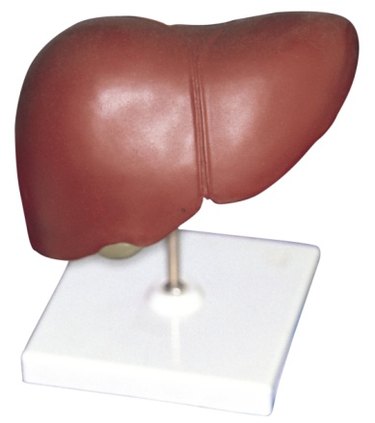
The most common specific symptoms of liver problems in children are liver enlargement, or hepatomegaly, and jaundice. The liver usually rests below the right rib margin, in the right upper quadrant of the abdomen. When a child has hepatitis, the liver becomes enlarged, and its edge can be felt several centimeters below the rib margin. The liver can also be quite tender.

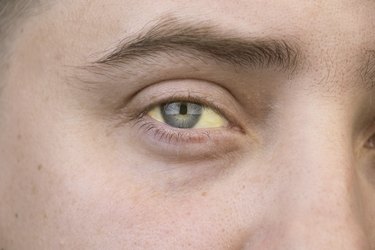
Jaundice, caused by deposition of bilirubin in the skin, is a common manifestation of liver problems. Bilirubin is a byproduct of normal cell metabolism, and the liver usually works to eliminate it from the body. When the liver is damaged, it cannot eliminate bilirubin appropriately so the bilirubin then deposits readily under the skin and in the conjunctiva, or the white part of the eyes.

Other Symptoms

Children with liver problems will often have joint pain, fever and may have nonspecific rashes. Jaundice can be quite itchy. A child's urine can become dark in color because the body is trying to filter the excess bilirubin through the kidneys and into the urine. The stool can become clay-colored.

Chronic inflammation of the liver can lead to ascites, or fluid retention in the abdomen, or to liver cirrhosis. Patients with cirrhosis have difficulty clotting off blood, which leads to easy bruising and bleeding, and to varicose veins, which can also bleed. When the liver becomes cirrhotic, it is unable to eliminate the body's waste products, which can cause encephalopathy, a condition in which the patient becomes confused, has hallucinations, can become lethargic or enters a state of coma.

References

Article reviewed by Cece Nash Last updated on: May 5, 2011

Must see: Photo Galleries