Pros & Cons of Giving Blood
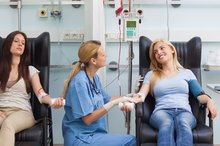
According to the American Red Cross, 3 percent of Americans donate blood on a regular basis 3. Blood donation is voluntary, and there is no financial reimbursement. Donors are heavily screened with a variety of questions. They must be over the age of 18 and weigh more than 110 pounds. Blood is stored at regional blood banks, and supplies vary depending on need. There are pros and cons to being a blood donor.
Pro: Helping Others
Blood donation is strictly voluntary, and it is something almost all adults can participate in. Blood is distributed to those greatly in need after medical procedures or severe loss of blood. Your donation could save a life.
Con: Pain
Is It Safe to Donate Blood While Breastfeeding?
Learn More
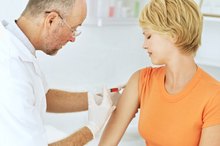
The site of the needle's insertion may be painful. Though some people find a needle poke to be simply unpleasant, other have great fears of needles. Seeing one’s own blood pumped into a bag may also be disagreeable to some.
Pro: Blood is Renewable
Blood renews itself in the body, so the blood donated is not missed by the body. A person can donate blood every 56 days. Donation time is approximately 45 minutes.
Con: Weakness
About O Positive Blood
Learn More
After donating a pint of blood, a person may feel faint or dizzy, and these symptoms are common. However, some people may find them very unpleasant. The feeling diminishes quickly as the body makes more blood. Most donation centers have juice and snacks available to quickly boost energy levels.
- After donating a pint of blood, a person may feel faint or dizzy, and these symptoms are common.
Pro: Free Gifts
Some donation centers give away free gifts for donating during special blood drives. Freebies include coupons for ice cream to free T-shirts.
Con: Increased Paperwork
Some parents make donations of blood prior to a child having surgery, to avoid the child receiving anonymous blood if blood is required. Both anonymous blood and direct donor blood are screened using the same process, and one is not identified as being safer than the other. However, the amount of paperwork required to make a direct donation is greater than using anonymous blood. A person may have to travel greater distance and pay extra money to have the blood transported.
- Some parents make donations of blood prior to a child having surgery, to avoid the child receiving anonymous blood if blood is required.
Related Articles

Is It Safe to Donate Blood While Breastfeeding?
Learn More

About O Positive Blood
Learn More
The History of Blood Testing
Learn More
How to Remove Excess Iron in Blood
Learn More
Venipuncture Complications
Learn More
Running After Giving Blood
Learn More
Difference Between O Positive & O Negative Blood
Learn More
Smoking Before Donating Blood
Learn More
Can You Drink Coffee Before Donating Blood?
Learn More

Disadvantages to Donating Plasma
Learn More
References
- American Red Cross
- Just SA, Rostgaard K, Titlestad K, et al. Transmission of rheumatoid arthritis through blood transfusion: a retrospective cohort study. Ann Rheum Dis. 2018;77(10):1536-1537. doi:10.1136/annrheumdis-2017-212844
- American Red Cross. Frequently asked questions.
- Memorial Sloan Kettering Cancer Center. Medical conditions affecting donation.
- American Red Cross. Frequently asked questions: General health considerations.
- Mayo Clinic. Rheumatoid arthritis. Updated March 1, 2019.
- American Red Cross. Frequently asked questions: Medications and vaccinations.
- The National Institute of Diabetes and Digestive and Kidney Diseases. Anemia of inflammation or chronic disease. Updated September 2018.
- Mayo Clinic. Blood donation.
- American Red Cross. Frequently asked questions about iron and blood donation.
- American Red Cross. Eligibility requirements.
- U.S. Department of Health & Human Services. Revised recommendations for reducing the risk of human immunodeficiency virus transmission by blood and blood products. Updated April 2020.
Writer Bio
Julie Hampton has worked as a professional freelance writer since 1999 for various newspapers and websites including "The Florida Sun" and "Pensacola News Journal." She served in the U.S. Army as a combat medic and nurse for over six years and recently worked as the Community Relations Director for a health center. Hampton studied journalism and communications at the University of West Florida.