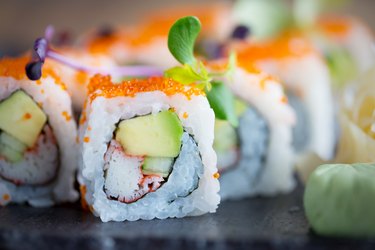
When the sushi craving hits, an avocado roll is a nutritious choice. A sushi roll made with avocado such as a plain avocado roll, salmon avocado roll or a California roll will provide healthy, monounsaturated fat to help you feel satisfied. Rolls made with fish also have an ample amount of protein.
Avocados have more than 20 vitamins and minerals per serving, are full of fiber, folate and antioxidants, and have been linked to lower cholesterol levels and a reduced risk of heart disease, according to the South Dakota Department of Health.
Video of the Day
Video of the Day
Warning
Sushi rolls can be high in sodium, and adding soy sauce can increase the sodium content even more. The daily recommended value for sodium is less than 2,300 milligrams per day, according to the FDA. Too much sodium in the diet has been linked to health risks such as high blood pressure.
Avocado Roll Nutrition
While an avocado roll isn't as filling as other sushi rolls, it does make for a nutritious meal option or accompaniment to another more protein-rich food.
According to the USDA, an avocado roll (with six to eight pieces) will give you:
- Calories: 339
- Total fat: 9 g
- Saturated fat: 1.5 g
- Trans fat: 0 g
- Cholesterol: 0 mg
- Sodium: 1,169 mg
- Total carbs: 60 g
- Dietary fiber: 5 g
- Sugar: 9 g
- Protein: 5 g
Avocado Roll Calories and Macros
Different sushi chefs create rolls with varying calorie counts. On average, though, an avocado roll may have about 339 calories in a six- to eight-piece serving. Don't forget to factor in any soy sauce, which has about 11 calories per tablespoon, or pickled ginger, which has about 15 calories per tablespoon.
- Total fat: An avocado roll has 9 grams of total fat.
- Carbohydrates: An avocado roll has 60 grams of carbs, which includes 5 grams of fiber and 9 grams of sugar.
- Protein: An avocado roll has 5 grams of protein.
California Roll Nutrition
Many people wonder if California rolls are healthy. A California roll makes for a nutritious lunch or dinner option unless you have one of the more common food allergies or sensitivities to gluten, fish, soy, dairy or eggs.
A California roll is made with rice, imitation crab, avocado, cucumber, mayonnaise and dried seaweed. You can count on California rolls as a good source of fiber and protein.
According to the USDA, a California roll with six to eight pieces will give you:
- Calories: 361
- Total fat: 6 g
- Saturated fat: 1 g
- Trans fat: 0 g
- Cholesterol: 4.7 mg
- Sodium: 969 mg
- Total carbs: 71 g
- Dietary fiber: 4 g
- Sugar: 14 g
- Protein: 9 g
California Roll Calories and Macros
On average, a California roll with six to eight pieces will give you about 361 calories. Keep in mind that using soy sauce or pickled ginger with your sushi will give you additional calories. California rolls are also high in carbs and sodium, so be mindful of your portions if you're adding soy sauce to keep the sodium below the daily recommended amount.
- Total fat: A California roll has 6 grams of total fat.
- Carbohydrates: A California roll has 71 grams of carbs, which includes 4 grams of fiber and 14 grams of naturally occurring sugars.
- Protein: A California roll has 9 grams of protein.
Salmon Avocado Roll Nutrition
Salmon avocado rolls are made with raw salmon, sliced avocado, seaweed and white rice. A salmon avocado roll with six to eight pieces provides a dose of protein and healthy fats from both the salmon and the avocado. Like most sushi rolls, salmon avocado rolls are high in carbs and sodium, so it's best to limit your portions and be mindful if you're adding soy sauce to your meal.
According to the USDA, a salmon avocado roll with six to eight pieces will give you:
- Calories: 313
- Total fat: 10 g
- Saturated fat: 2 g
- Trans fat: 0 g
- Cholesterol: 19.4 mg
- Sodium: 577.3 mg
- Total carbs: 47 g
- Dietary fiber: 3 g
- Sugar: 9 g
- Protein: 12 g
Salmon Avocado Roll Calories and Macros
On average, a salmon avocado roll with six to eight pieces will give you about 313 calories. Remember that add-ons like soy sauce, spicy mayo or pickled ginger will add calories to the meal.
- Total fat: A salmon avocado roll has 10 grams of total fat.
- Carbohydrates: A salmon avocado roll has 47 grams of carbs, which includes 3 grams of fiber and 9 grams of sugars.
- Protein: A salmon avocado roll has 12 grams of protein.
Health Benefits of Sushi
Sushi rolls are generally a nutritious option, as avocados and fish have omega 3 fatty acids, which have been shown to have several benefits. Omega-3 fatty acids are associated with a lower risk of heart disease, relief of rheumatoid arthritis symptoms and more, according to the National Center for Complementary and Integrative Health.
Moreover, sushi rolls are wrapped in seaweed, which has its own list of health benefits. Seaweed is full of vitamins, minerals and fiber. Seaweed is also known to have anti-inflammatory and anti-microbial properties, according to the National Oceanic and Atmospheric Administration.
Overall, sushi is low in calories and high in nutrients like healthy fat. Sushi that has fried ingredients, such as tempura or mayonnaise, will be higher in calories, while sashimi or nigiri (raw fish on a small bed of rice) are lower-calorie options.
- Academy of Nutrition and Dietetics: Do Avocados Have a Lot of Fat?
- USDA MyFoodData: Avocado Roll Hosomaki
- South Dakota Department of Health: Avocados: Good or Bad?
- National Center for Complementary and Integrative Health: 7 Things To Know About Omega-3 Fatty Acids
- National Oceanic and Atmospheric Administration: What Is Seaweed?
- FDA: Sodium in Your Diet
- USDA MyFoodData: California Roll
- USDA MyFoodData: Salmon Avocado Roll