How to Improve the Rate of Healing of the Skin
Wound healing is a reflection of the body's state of overall health. Keeping any opening in the skin clean, moist but not wet and protected from further damage promotes healing from the outside while decreasing glucose and increasing the nutrient density of the diet and especially the amount of protein, zinc, vitamin C and vitamin K aids the process from the inside.
Sometimes when wound healing is delayed, the condition is a sign of an illness that could include diabetes, hypothyroidism, cancer or a systemic viral, bacterial or fungal infection. It can also indicate a local wound infection or skin cancer.
Assess the wound or skin condition. If the skin is irritated and not broken, as is often the case when dry air, prolonged exposure to hot water in bathing or house cleaning and dehydration combine to cause dry skin, then the need is to prevent infections, moisturize heavily from the outside and rehydrate from the inside. If a cut or abrasion has opened the skin or cracking has occurred, an additional factor in healing is the need to protect the cells that are forming from further damage as they grow. And when a wound is either not healing or starts to look worse instead of better, problems of infection, continuing local trauma or systemic disease become more likely.
How to Use a Tegaderm
Learn More
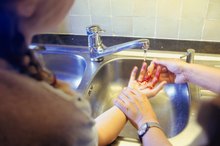
Clean the site. If the skin is simply dry and not open, daily washing is detrimental. Every third day wash the site quickly with a moisturising lotion cleanser. For open wounds, wash only the area around the actual site unless pus or blood are present, in which can these should be gently removed by moistened gauze twice a day according to the recommendations of wound care specialist Carol Calianno writing in the October 2003 issue of "Nursing."
Blot the site with a clean, dry wash cloth. Use gauze for this if infection may be present. Then cover the area with an antibiotic ointment if the wound is open, the area is blistered or infection is present. For closed skin irritation or after a wound is fully closed, use petroleum jelly to keep the area moist and prevent scarring.
How to Tell If a Suture Scar Is Healing Well
Learn More
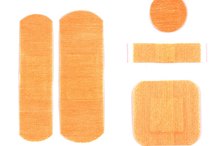
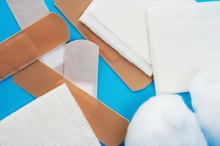
Cover the area with a bandage that keeps the site from becoming dirty and allows healing without further trauma. Some bandages are impregnated with substances designed to keep wounds moist, and these are of benefit in the treatment of many minor wounds, including small pressure ulcerations and abrasions, according to Calianno. Make sure the adhesive on any bandage does not touch any part of the wound.
Nourish the body to promote healing. Protein is the building block of healthy tissues and the number of servings should be increased if the skin is broken. Add a serving of lean meat, fish, eggs, bean or nuts to each meal and to each of two daily snacks. To compensate for the extra protein calories, drop all empty calorie foods such as soda pop, pasta, sweets, alcohol and white bread out of your diet. If you have any problems with your kidneys or liver, blood tests may be advised when you increase your protein intake and decrease carbohydrates. Drinking one or more sports bottles of water each day will help you stay hydrated and will protect these vital organs from the potential effects of a high protein diet.
Eat foods known to decrease inflammation and avoid foods that increase this process. Add multiple sources of omega-3 fatty acids such as avocados, walnuts, sunflower and flax seeds, salmon, tuna and olive oil each day and ensure that you're eating three whole fruits and five fresh vegetables a day as recommended by the work of Canadian researchers Corille Waters, a registered dietitian, and Dr. Edward Tredget in their joint program for the University of Alberta 2. This team specifies berries, peppers, citrus fruits, parsley, cilantro and dark green leafy vegetables as well as ginger and turmeric to simultaneously decrease inflammation and provide vitamin C, vitamin K and iron. Taking a multivitamin can help fill in any missing vitamins. Just as important is avoiding peanut and corn oil, saturated fats, sugar, flour and white rice--the foods known to increase inflammation.
Request that your physician test your hemoglobin A1C for diabetes or the prediabetic state of insulin resistance and your thyroid stimulating hormone, or TSH, for hypothyroidism if your skin does not begin to heal with topical treatment. In addition, if you are at risk for HIV, have this blood test performed too. Skin cancers can prevent skin from healing and so, more rarely can cancers of the liver, thyroid, pancreas and blood. Wounds on the legs and arms can also occur if there is a lack of blood flow to the area from arteriosclerosis or peripheral vascular disease. Take your lab test results to a wound care specialist who will likely advise culturing the wound for bacterial and fungal infections.
Warnings
Immediately seek medical attention if you are running a temperature above 101.6 or if the site becomes reddened, pus-filled, hot or tender to the touch. Other signs of infection include fainting, dizziness, weakness, and a fast pulse or respiratory rate. Rarely even mild skin breaks can lead to life threatening blood borne infections.
Related Articles
How to Use a Tegaderm
Learn More
How to Tell If a Suture Scar Is Healing Well
Learn More
How to Treat Turf Burns
Learn More

How to Lance a Wound
Learn More
How to Remove Gauze That Sticks to Wounds
Learn More
How to Apply Steri Strips
Learn More
Care of Skin After a Mole Has Been Removed
Learn More
How to Treat a Weeping Wound
Learn More
How to Use Promogran Prisma Matrix Wound Dressing
Learn More

How to Take Care of Steri Strips
Learn More
References
- "Nursing"; How to Choose the Right Treatment and Dressing for the Wound; Carol Calianno; March 2003
- "University of Alberta Continuing Education: Nutrition and Wound Healing"; C. Waters and Dr. E. Tredget; April 2002
- 3M Wound Resource Center. http://solutions.3m.co.uk/wps/portal/3M/en_GB/skin-care/wound-resource-centre/
- Mccaughan D, Sheard L, Cullum N, Dumville J, Chetter I. Patients' perceptions and experiences of living with a surgical wound healing by secondary intention: A qualitative study. Int J Nurs Stud. 2018;77:29-38. doi:10.1016/j.ijnurstu.2017.09.015
- Krafts KP. Tissue repair: The hidden drama. Organogenesis. 2010;6(4):225-33. doi:10.4161/org.6.4.12555
- Chetter IC, Oswald AV, Fletcher M, Dumville JC, Cullum NA. A survey of patients with surgical wounds healing by secondary intention; an assessment of prevalence, aetiology, duration and management. J Tissue Viability. 2017;26(2):103-107. doi:10.1016/j.jtv.2016.12.004
- Singh PK, Saxena N, Poddar D, et al. Comparative Study Of Wound Healing In Primary Versus Delayed Primary Closure In Contaminated Abdominal Surgery. Hellenic J Surg. 2016;88:314–320. doi:10.1007/s13126-016-0340-8
- Surgical Patient Education Program: Prepare for the Best Recovery. American College of Surgeons. 2018.
- Rushbrook JL, White G, Kidger L, Marsh P, Taggart TF. The antibacterial effect of 2-octyl cyanoacrylate (Dermabond®) skin adhesive. J Infect Prev. 2014;15(6):236-239. doi:10.1177/1757177414551562
- Lazar HL, Mccann J, Fitzgerald CA, Cabral HJ. Adhesive strips versus subcuticular suture for mediansternotomy wound closure. J Card Surg. 2011;26(4):344-7. doi:10.1111/j.1540-8191.2011.01257.x
- 3M Wound Resource Center.
Writer Bio
Walli Carranza is a professor, author, Certified Professional Coach and national speaker who brings medical and educational discoveries to front-line providers and the public alike. Her writings include "Six Seasons of Optimal Wellness," "8 Realms of Life by Intention," "Zero Balance Day" and "Body ReCreation." Carranza holds a Doctor of Nursing from the University of Texas, Austin.