What Pain Medications Are Prescribed for Bursitis?
Bursitis is inflammation of a bursa, a fluid-filled sac where muscles or tendons must glide over bony surfaces. The most familiar locations include the knee, shoulder, hip and elbow. Excessive use of the joint can cause an acute attack, which manifests as extreme pain and limited range of motion. Bursitis may also be chronic, with of continual pain and joint stiffness. Your doctor may prescribe pain control using steroids, non-steroidal anti-inflammatory drugs -- NSAIDs -- or corticosteroid injections.
If you are experiencing serious medical symptoms, seek emergency treatment immediately.
Naproxen
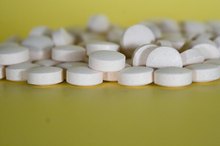
Naproxen is an NSAID prescribed to help manage the pain of bursitis. Naproxen is sold under the brand names Apo-Naproxen and Naprosyn. Naproxen sodium is also known as Aleve and Anaprox, according to MedlinePlus.com 147. Prescription-strength naproxen tablets begin at 250 milligram dosage. This medication is available over-the-counter as naproxen sodium in 200 milligram dosage.
- Naproxen is an NSAID prescribed to help manage the pain of bursitis.
- Naproxen sodium is also known as Aleve and Anaprox, according to MedlinePlus.com 1.
Indomethacin
Instant Pain Relief for Gout
Learn More
Indomethacin, an NSAID, sold under the brand name Indocin, may be prescribed for the acute pain of bursitis. The recommended initial dose is for 75 to 150 milligrams daily, divided into three or four doses. Once your pain symptoms subside, your doctor may reduce your dose, according MedlinePlus.com 147.
Kenalog
If your doctor wishes to use an injection it may be kenalog. Kenalog is given directly into the affected joint for bursitis pain control. The injectable solution may be combined with a local anesthetic in addition to the corticosteroid triamcinolone acetonide, according to a report from "American Family Physician."
Trolamine Salicylate
Kenalog Injection Vs. Cortisone Injection
Learn More
Trolamine salicylate, a topical pain reliever, is sold under the brand name Aspercreme Cream 2. Drugs.com states that trolamine salicylate works by reducing muscle and joint swelling and inflammation, according to Drugs.com 26. You must rub it into the skin until it is completely absorbed. Keep trolamine salicylate out of your nose, mouth and eyes 2.
Prednisone
Prednisone, a corticosteroid, may be given for severe inflammation associated with bursitis pain 3. The range for starting doses depends on the severity of symptoms. Expect to start from between 5 and 60 milligrams daily. Your doctor will lower the dose to a maintenance level of the lowest possible for pain control once the desired effect is reached, according to PDRHealth.com 3.
Ibuprofen
Ibuprofen is a non-steroidal anti-inflammatory drug is sold over-the-counter. The most familiar names include Motrin, Advil and Midol according to MedlinePlus.com 147. Ibuprofen is effective for pain management for mild to moderate pain. Higher dosages are available with a physician's prescription.
- Ibuprofen is a non-steroidal anti-inflammatory drug is sold over-the-counter.
- Ibuprofen is effective for pain management for mild to moderate pain.
Acetaminophen
Acetaminophen, commonly known as Tylenol, may be used for pain control in mild episodes of bursitis. It is not an anti-inflammatory, so it does not affect the stiffness or swelling of the bursa. It may be prescribed in conjunction with other treatments or medications for bursitis. Do not drink alcohol while using acetaminophen, as it can increase the risk of liver damage.
- Acetaminophen, commonly known as Tylenol, may be used for pain control in mild episodes of bursitis.
- It is not an anti-inflammatory, so it does not affect the stiffness or swelling of the bursa.
Related Articles
Instant Pain Relief for Gout
Learn More

Kenalog Injection Vs. Cortisone Injection
Learn More
Vitamins for Tendinitis
Learn More
What Is Naproxen 500 mg Used for?
Learn More

The Effect of Cayenne Pepper on Arthritis
Learn More

Ankle Tendinitis Symptoms and Treatment
Learn More

Common Rear Shoulder Injuries
Learn More
How to Treat Bursitis in the Arm
Learn More
Kinds of Anti Inflammatory Shots
Learn More
How to Treat Water on the Elbow
Learn More
References
Writer Bio
Norene Anderson has been a writer since 2003. She is also a registered nurse with expertise in a wide range of medical conditions and treatments. Anderson received her associate degree in nursing from Lincoln University in Jefferson City, Mo.