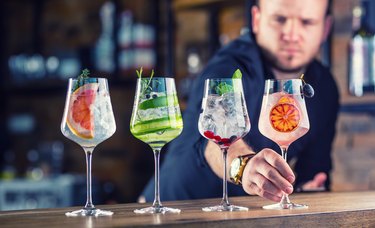
Trying to lose weight and going out with friends for a drink don't have to be mutually exclusive.
Yes, alcohol is considered "empty calories." And yes, there are a few other ways drinking can derail your progress — from overdoing it on the sugary mixers to having the evening lead into late-night noshing. But with a few tips and our top-recommended liquor picks, you can absolutely maintain your social calendar and keep on your weight loss journey at the same time.
Video of the Day
Video of the Day
The truth is liquors — vodka, tequila, rum, gin and whiskey — have the same amount of calories and grams of carbohydrates and sugar per shot, if they are the same proof. The higher the proof (aka, the more alcohol), the more calories per shot.
But what kind of differences are we talking about? An 80-proof liquor like Jack Daniel's Tennessee Whiskey or Grey Goose Vodka have 97 calories, 0 grams of carbohydrates and 0 grams of sugar per shot. A shot of 94-proof Tanqueray No. Ten gin or Teeling Irish Whiskey have 116 calories, 0 grams of carbohydrates and 0 grams of sugar. The difference really isn't all that significant.
Where you'll see a substantial difference is when you start ordering margaritas, old fashioneds or "craft cocktails" from the menu. More often than not, these include sugary mixers or simple sugars, sweetened liqueurs and other higher calorie, sugar-laden mix-ins. Ordering mixed cocktails can often take your 100-calorie drink with zero grams of sugar closer to 300 or more calories per drink, along with a hefty dose of added sugar.
Here are some of best types of liquors to sip on along with tips on how to order so that you can still go out on a Saturday night and stay on track with your weight loss goals.
1. Vodka
Skip the cosmopolitans, screwdrivers and Moscow mules. Vodka drinks with juice and ginger beer are going to have added sugar and extra calories. The good news is, there are so many other ways to enjoy vodka that don't require adding sugary sweetness to the mix.
Best Vodka Orders
- Vodka soda: Enjoy this one ice with lemon, lime or fresh herbs
to add flavor.
- Bloody Mary: A Bloody Mary is a good option if you're out to
brunch. You want to avoid them if they're made with mixers because this often
means you'll get added sugars and a bunch of additives. A traditional Bloody Mary is made
with vodka, tomato juice, hot sauce, horseradish, Worcestershire sauce, salt,
pepper and herbs. While a Bloody Mary has more calories than just a shot of liquor, most
of the additional calories are coming from tomato juice, which is actually a healthy mixer thanks to
its lycopene content. The drink can be high in sodium, so keep this mind if salt
intake is a concern.
- Vodka with a splash of juice: Ask for a vodka soda and a side of OJ or grapefruit juice. This way you can add a small splash of juice to top off the drink and give it a little extra flavor.
Read more: Are There Any Health Benefits of Vodka?
Another great thing to keep in mind when drinking vodka is that there are now many infused flavored options on the market running the gamut from Grapefruit and Rose to Watermelon and Mint. Infused vodkas are a win-win because they add the right balance and blend of flavors without added carbs and sugars — and they have less alcohol which means fewer calories per shot.
For instance, both Ketel One's Botanical line of infused vodkas and Smirnoff Zero Sugar Infusions pack in just 72 to 73 calories per shot and 0 grams of carbs or added sugars.
Tip
Just be sure you’re not buying “flavored” vodkas, which can have added sugar and calories. Infused is the way to go!
2. Tequila
For many, tequila is synonymous with a margarita, but we're here to change that. You can still have your salt-rimmed marg — there are just a few tricks to make it healthier along with other ways to sip your tequila drink.
Best Tequila Orders
- On the rocks or chilled neat: If you're drinking a good tequila, you can enjoy it on the rocks or neat after chilling.
- Modified margarita: First, if you're at a hole-in-the-wall or a chain bar or restaurant, this may not be the place to order a margarita. Chances are, you're going to be served a sugary margarita mix, although it's always worth asking. Otherwise, try this adapted margarita order: tequila, triple sec and lime juice on the rocks. And if that's too strong, you can add a bit of soda water. If you want to make it spicy, add sliced jalapenos. Skip the salt rim if you're watching your sodium intake.
- Paloma, slightly tweaked: A traditional, refreshing paloma includes tequila, fresh lime juice, salt and grapefruit soda. Instead, ask for tequila, lime juice, soda water and a splash of grapefruit juice.
3. Gin
Gin appears to be becoming a fan-fave. A May 2019 International Wine and Spirits Research (IWSR) report found that gin is currently the fastest-growing liquor. But before you order a gin and tonic, let us share some of our healthiest ordering practices.
Best Gin Orders
- Gin Rickey: Not to be confused with a lime rickey, which includes simple sugar, a traditional gin rickey is simply gin, freshly squeezed lime juice and soda water. You can specify to your bartender that you don't want any added juices or syrups, just to be safe so that there's no confusion.
- Gin and soda: You can add lime to this but cucumber also pairs really well. Ask for a few slices of cucumber to be muddled in the bottom.
Other liquors like rum and whiskey are also good options but, again, it just comes down to how you enjoy them. Avoid adding sodas, juices and sugary mix-ins.
Other Things to Keep in Mind
Going out for a drink or two with friends can certainly fit in with your weight-loss plans, especially if you follow some of the ordering options we've provided. But there are other factors to take into consideration.
Once you have a drink or two, your inhibitions are lowered. You might be tempted to order another drink… and then another. Just keep this in mind when going out. Pace yourself and drink water along with your adult beverage to stay hydrated.
Also, drinking messes with your sleep. You might fall asleep faster, but the quality of your sleep will suffer, according to the National Sleep Foundation. And we know that not getting enough shut-eye can wreak havoc on our weight-loss efforts. A June 2019 review paper published in Sleep Medicine Reviews found that sleep deprivation can leave us feeling hungrier, which results in us eating more — to the tune of an extra 250 calories a day!
The Bottom Line
You can absolutely go out and enjoy time with friends along with a drink or two. Know your limits and do your best to make healthier choices when ordering a mixed drink.
- USDA FoodData Central: "Alcoholic Beverage, Distilled, All (Gin, Rum, Vodka, Whiskey) 80 Proof"
- USDA FoodData Central: "Alcoholic Beverage, Distilled, All (Gin, Rum, Vodka, Whiskey) 94 Proof"
- International Wine and Spirits Research: "Worldwide Alcohol Consumption Declines - 1.6 Percent"
- National Sleep Foundation: "How Alcohol Affects the Quality—And Quantity—Of Sleep"
- Sleep Medicine Reviews: "Effects of sleep restriction on metabolism-related parameters in healthy adults: A Comprehensive Review and Meta-Analysis of Randomized Controlled Trials"