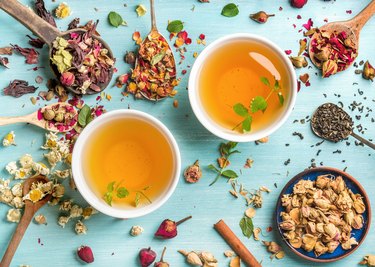
Tempted to reach for an herbal slimming tea to speed your weight loss? After all, "herbal" in the name makes the product seem benign — even healthy — and you welcome any help you can get when you're trying to lose pounds. The promises these teas make are usually too good to be true, though.
According to the label, the tea ingredients will help you drop pounds by boosting your metabolism and suppressing your appetite. But herbal teas don't promote long-term fat loss and aren't a replacement for exercise and a healthy, portion-controlled diet.
Video of the Day
Video of the Day
Herbal Teas: Diuretics and Laxatives
It's no coincidence that you're spending more time in the bathroom after sipping an herbal slimming tea. Many formulas contain diuretics or laxatives, increasing urination or defecation. You'll definitely notice a drop in the scale, but the tea is simply expediting a loss of waste, not fat, from your body. Natural diuretics and laxatives you might find in herbal teas include dandelion and aloe vera.
Out of 26 herbal weight loss and antidepressant products that were tested, eight contained diuretics — some of which weren't declared on the label — according to a study published in June 2013 in Food Additives and Contaminants.
Diuretics may be prescribed by a doctor for specific heart conditions, high blood pressure or excessive fluid retention. But some formulas react with specific medications or physical conditions, so you should consult your doctor before taking a diuretic — including one in an herbal tea. The fact that some herbal tea labels don't disclose that they contain diuretics makes them particularly risky.
Using laxatives, even natural ones in a tea (like the senna in China Slim Tea), is an ineffective way to lose weight. But by the time the laxative is active, most food has already been digested and the calories absorbed. If you aren't careful, too much of a tea with diuretics and/or laxatives could lead to dehydration, or a deficiency in electrolytes and minerals that support normal heart and muscle rhythms. This can cause cramping and diarrhea, too.
Long-term use of an herbal tea with a laxative effect could also interfere with colon function. Your colon may become dependent on the laxative, and you'll have trouble passing bowel movements without one.
Read more: The Most Effective Diet Pills
Those Metabolism-Boosting Ingredients
Some herbal teas contain ingredients said to boost your metabolism. Green tea, caffeine and capsaicin from hot peppers have metabolism-boosting properties, but the net effect on your daily calorie burn rate is negligible. The increase in calorie burn happens for just a short period after ingestion and doesn't provide enough of a boost to markedly change your weight.
For example, certain green tea preparations were shown to provide a statistically insignificant weight loss in overweight people, reported a review of the research published in the December 2012 issue of the Cochrane Database of Systematic Reviews. Researchers also found that the tea did not affect people's ability to maintain weight loss.
Other ingredients purportedly affect the way your body burns fat. Chitosan, white willow bark and green tea are ingredients manufacturers may claim can help you process fat more readily or turn on fat-burning mechanisms in your body. But research is scant on the effectiveness of these supplements, and their effect is slight, at best.
Herbal Tea as Appetite Suppressant
Certain ingredients in herbal slimming teas, such as caffeine, guarana and bitter orange, do help suppress the appetite slightly, so you might be inclined to eat less and lose some weight. Long-term use of any herbal slimming tea that contains guarana, bitter orange and green tea isn't recommended, because of potential misuse, abuse and adverse reactions associated with the ingredients.
Those that contain concentrated amounts of stimulants, such as guarana and caffeine, can interfere with sleep and make you jittery, for example. Bitter orange is especially unsafe as it can cause increased heart rate, high blood pressure and possibly even stroke or heart attack, according to the National Institutes of Health.
Some of these ingredients encourage your body to increase production of the brain neurotransmitter serotonin, which helps make you feel full. St. John's Wort may appear as one of several ingredients in a slimming tea, and it is known for it's ability to elevate serotonin.
St. John's Wort can interact with medications, such as prescription antidepressants and over-the-counter cough suppressants, as well as anesthesia, so you should check with your doctor before consuming it.
In some people, St. John's Wort causes anxiety, blood pressure spikes, dizziness and nausea. According to the Cleveland Clinic, St. John's Wort is potentially dangerous, so should not be used for weight loss.
Read more: Recommended Caloric Intake for Weight Loss
Sensible Practices for Slimming Down
You probably have good intentions when you're considering an herbal tea as a weight-loss tool, but the results may be meager at best. Instead, rely on the classic weight-loss strategies of exercise and eating healthier to effect change.
Many slimming teas recommend a specific diet and exercise plan in conjunction with their use, which makes you wonder if it's the tea — or moving more and eating less — that's causing you to lose weight. Given the potential danger of certain supplements and that not all ingredients are revealed on the label, it's best to stay away from these unregulated products.
Eating 500 to 1,000 calories fewer than you burn daily will help you lose 1 to 2 pounds a week. Use an online calculator to estimate your current calorie needs, based on your size, gender, age and activity level. Then, subtract from that number to determine your weight-loss calorie needs.
Make your food choices center on lean proteins, nonstarchy vegetables, whole grains, fruits and low-fat dairy, and get some exercise.
- Cleveland Clinic: "Over-the-Counter and Herbal Remedies for Weight Loss"
- Cochrane Database of Systematic Reviews: "Green Tea for Weight Loss and Weight Maintenance in Overweight or Obese Adults"
- Food Additives and Contaminants: "Determination of Diuretics and Laxatives as Adulterants in Herbal Formulations for Weight Loss"
- Texas Heart Institute: "Diuretics"
- National Eating Disorders Association: "Laxative Abuse"
- International Journal of Obesity: "Thermogenic Ingredients and Body Weight Regulation"
- Journal for Nurse Practitioners: "Using Herbal Remedies to Maintain Optimal Weight"
- National Institutes of Health: National Center for Complementary and Integrative Health: "Bitter Orange"