
What Muscles Are Worked During Neck Extensions? (Includes Video)

You don’t often hear of people doing neck exercises at the gym, but one popular exercise for neck flexion and strength is neck extensions.
Neck extensions are performed for a variety of reasons, including physical therapy after a neck, upper chest, or upper back injury like whiplash, to relieve arthritis or joint pain, increase your neck rotation range of motion, and as a strength building exercise.
By gently stretching and strengthening the muscles of the neck, you can gradually alleviate your neck pain with each repetition. Weight lifters use neck extensions with weights to build up their neck muscles. There are eight muscles involved in neck extensions.
Basic Neck Extension Exercise
The basic neck extension exercise is a simple and effective way to work the deep neck flexors, posterior neck muscles and ligaments around the base of the skull and in the upper body region.
Starting position: Stand with your feet set shoulder width apart and your arms by your sides
To complete a rep:
- Slowly tip your head back toward the ceiling, keeping your body straight and your shoulders relaxed
- Hold for 15 to 30 seconds, then slowly bring your head forward to its normal position
Repeat 10 to 15 times. Variations include using your hand to add slight pressure as you tip your head back and, once you've mastered the neck extension, weights to intensify the exercise.
Splenius Capitis
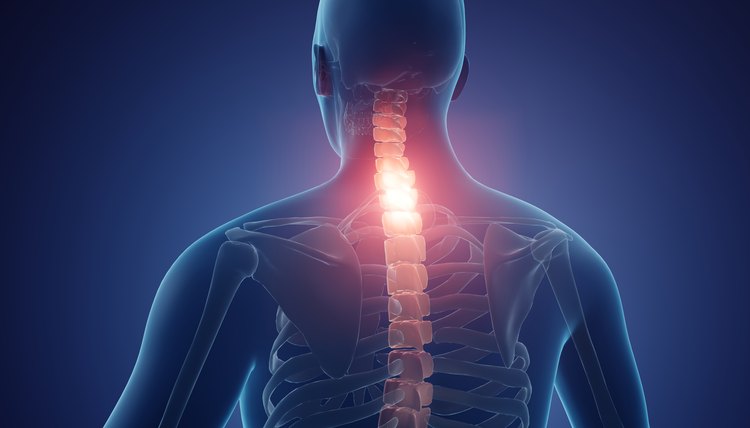
The splenius capitis is a thick muscle that resembles a strap. It is located in the back of your neck. It begins at the base of your skull and ends at the top of your thoracic spine. This muscle allows for head extension, as well as lateral flexion and rotation of the cervical spine.
Cervicis Muscles
The cervicis are a group of muscles -- including the semispinalis cervicis and the splenius cervicis -- located deep in the back of your neck. These muscles are narrow bands of tendons that run from the top of your neck to the sixth thoracic vertebrae. With the help of these muscles, you can rotate your head to the side, and extend and arch your neck.
Semispinalis Cervicis
The semispinalis cervicis is a thick band of muscle that contains a series of fibers and tendons. It is located in the upper back and runs into the cervical spinous processes. It rotates the head and extends the ribs.
Spinalis Capitis
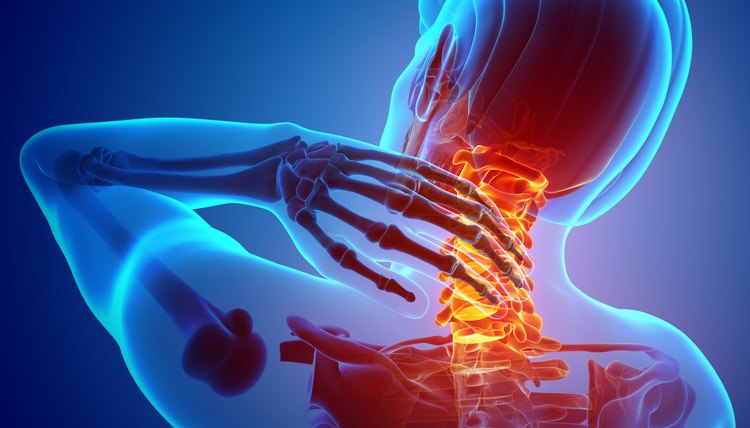
The spinalis capitis is a bundle of muscles and tendons that comprise a portion of the erector spinae. This muscle is closely connected to the semispinalis capitis and also works to rotate your head.
Semispinalis Capitis
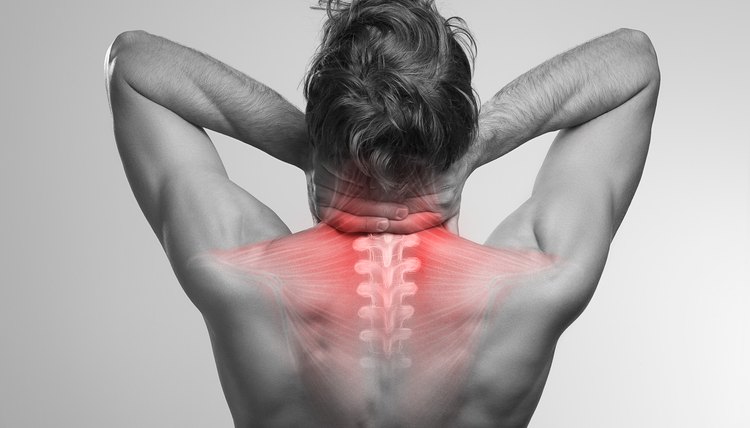
The semispinalis capitis is located in the upper back portion of your neck. It's a broad muscle that originates in the seventh cervical vertebrae and inserts into the occipital bone. This muscle allows you to extend and rotate your head.
Upper Trapezius
The upper trapezius is the largest muscle in the back. It extends from the occipital bone to the shoulder blade. The function of the upper trapezius is to move and support the arms and shoulders.
Longissimus Cervicis
The longissimus cervicis is part of the longissimus muscle group, and is located at the posterior portion of the cervical spine. The longissimus cervicis begins in the thoracic vertebrae and ends in the cervical vertebrae. It allows you to flex and extend your neck.
Levator Scapula
The levator scapula is located on the back and on the sides of your neck. The levator scapula begins at the base of your skull and ends at the scapula, or your shoulder blade. This muscle helps to lift your shoulders. If you carry weight on your shoulders, this muscle becomes tense in order to support the weight.
References
Writer Bio
Michelle Zehr started writing professionally in 2009. She has written on health, fitness, fashion, interior design, home decorating,sports and finance for several websites. Zehr possesses a Bachelor of Arts in communication from the University of Pittsburgh, a Master of Arts in professional writing from Chatham University and a graduate certificate in health promotion from California University of Pennsylvania.