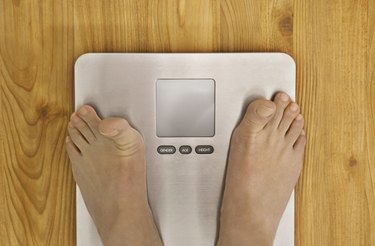
While it's possible to lose weight by changing your diet without exercising, you'll lose weight more quickly if your weight-loss plan includes diet and exercise, according to a study published in Obesity in 2012. The key to losing weight is to eat fewer calories than you burn during the day. You shouldn't expect to lose very much in just one week, especially if you're trying to lose weight through dieting alone. Aim for weight loss of 1 to 2 pounds weekly.
Weight Loss in 7 Days
Video of the Day
Each pound of fat contains about 3,500 calories, so eating 500 to 1,000 calories fewer than what is required to maintain your current weight will help you lose about 1 to 2 pounds per week. If you're a man, you need between 14 and 18 calories per pound to maintain your weight, depending on how active you are, and if you're a woman, you need between 12 and 16 calories per pound. Thus, a man who weighs 180 pounds and is sedentary needs about 2,520 calories per day to maintain his weight and about 2,020 calories per day to lose about 1 pound per week. A sedentary woman of the same weight needs about 2,160 calories to maintain her weight and 1,660 calories per day to lose about 1 pound per week.
Video of the Day
You shouldn't try to lose more weight than that safe 1 to 2 pounds a week using diet alone, as eating too few calories can slow down your metabolism and make it even more difficult to lose weight. Men need to eat at least 1,800 calories per day, and women need to eat a minimum of 1,500 calories per day to prevent this potential decrease in metabolism.
Diet Composition to Lose Weight
If you eat too much of the wrong types of foods while trying to cut calories, you may have trouble sticking to your diet, because you'll feel hungry; alternatively, you may end up not getting enough of the essential nutrients. When you're not trying to lose weight, you still want to eat plenty of vegetables, fruits and lean protein foods, so limit the amount of highly processed foods, fatty foods, sweets and refined grains that you eat.
Protein is particularly important to include in each meal and snack, as it helps you limit muscle loss and increase satiety. Aim for between 25 and 30 grams of protein in each meal, recommends a review article published in the American Journal of Clinical Nutrition in 2015. It isn't difficult to reach this goal. For example, a 3-ounce serving of salmon and a glass of skim milk provide a total of 30 grams of protein. You can also meet this recommendation by eating a cup of cooked lentils and an ounce of peanuts or a 3-ounce serving of turkey breast.
Protein isn't the only important nutrient; however, you also need carbohydrates, fat, vitamins and minerals. One way to get a good mix of essential nutrients is to divide your plate equally between your protein choice, whole grains, vegetables and fruits. If you have time for more involved meal planning, you can follow the diet composition for weight loss recommended by the University of Colorado Colorado Springs. Throughout the day, your diet should consist of about 30 percent protein, 25 percent fat and 45 percent carbohydrates. For a 1,500-calorie diet, this means about 112 grams of protein, 42 grams of fat and 75 grams of carbs per day; for a 2,100-calorie diet, this translates to about 158 grams of protein, 58 grams of fat and 236 grams of carbs per day
Beverage Choices for Weight Loss
Americans get a lot of calories each day from their beverages, but drinks aren't as filling as solid foods. It's better to choose non-caloric or low-calorie beverage options; among the better choices for weight loss include black coffee, tea without any sweeteners and water, which all may potentially increase weight loss. For example, drinking about 16 ounces of water before each meal as part of a low-calorie diet helped people lose more weight than following a low-calorie diet alone, reports a study published in Obesity in 2011.
Skip sugar-sweetened beverages, and don't add cream, whipped cream, flavor syrups or caloric sweeteners to your coffee or tea. Simple switches can make a big difference. A 12-ounce regular ginger ale has about 124 calories, so choosing seltzer water with a 2-ounce splash of 100-percent orange juice saves 94 calories.
Minimize Water Retention
Although it isn't healthy to lose a large amount of weight in one week, minimizing any extra water weight you may be carrying may help you look a bit thinner. Limiting the amount of sodium you consume and getting a sufficient amount of potassium to balance out the sodium you do consume can help reduce water weight gain and bloating. While it may sound counterintuitive, drinking plenty of water can also have this effect. If you're dehydrated, your body will hold onto extra water until you're properly rehydrated again. Skip alcohol as well, because it can first act as a diuretic to dehydrate you and then cause your body to retain more water to fix this problem.
- Obesity: Effect of Diet and Exercise, Alone or Combined, on Weight and Body Composition in Overweight-to-Obese Post-Menopausal Women
- American Council on Exercise: Caloric Cost of Physical Activity
- American College of Sports Medicine: Metabolism Is Modifiable With the Right Lifestyle Changes
- University of Illinois at Urbana Champaign: Dieting That Works
- University of Colorado Colorado Springs: Your Guide to Nutrition Basics
- The American Journal of Clinical Nutrition: The Role of Protein in Weight Loss and Maintenance
- Eating Behaviors: Beverage Consumption and Adult Weight Management: A Review
- Centers for Disease Control and Prevention: Rethink Your Drink
- Obesity: Water Consumption Increases Weight Loss During a Hypocaloric Diet Intervention in Middle-Aged and Older Adults
- The Times Picayune: How to Reduce the Water Weight That Gives Us That Puffy, Bloated Look
- CNN: What's Water Weight?
- HealthAliciousNess.com: Top 10 Healthy High Protein Foods - Everything You Need to Know
- U.S. Department of Agriculture: ChooseMyPlate