olgakr/iStock/Getty Images
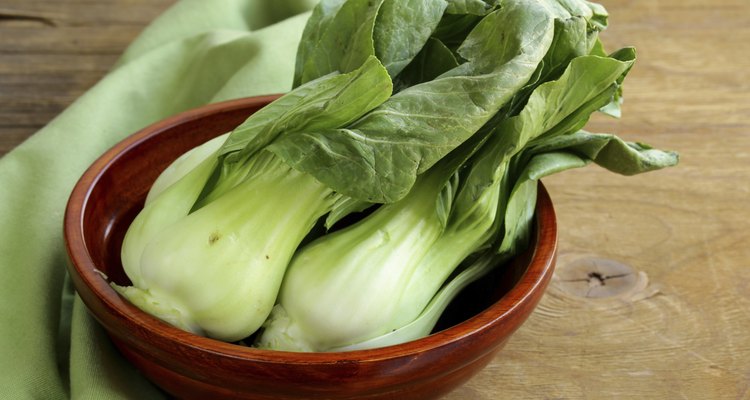
Boy choy, also known as Chinese mustard or pak-choi, belongs to the cruciferous family of vegetables which includes broccoli and cauliflower. The nutrient-packed fleshy stems and leaves of the bok choy plant are both edible and can be used raw in salads or cooked in stir-fry or soup.
Calories, Fat and Fiber
A cup of shredded bok choy has a mere 9 calories, 0.14 grams of which are from fat. You can eat a whole head of the crunchy, green cabbage for just over 100 calories. Compared to other vegetables, bok choy is not particularly high in fiber. One cup has less than a gram of fiber.
Minerals in Bok Choy
One cup of shredded bok choy has 76 milligrams of calcium -- good for bone and tooth health -- and 176 milligrams of potassium. The leafy green also contains magnesium, sodium and small quantities of zinc and iron.
Vitamins in Bok Choy
Bok choy is an excellent source of vitamins A and C. A shredded cupful also contains 66 micrograms of folate -- a vitamin essential for pregnant women, as it promotes healthy fetal development.
Related Articles
How to Freeze Bok Choy

How to Stop Female Facial Hair
How to Blanch Tomatillos
How to Blanch Kale for Freezing
How Fast Does Cooked Spaghetti Squash ...

Calories in One Slice Provolone Cheese

Nutrition Information on Blueberries
How to Cook Mixed Greens
How to Boil Celery
How to Cook Fresh Broccoli in a Slow ...
How to Julienne Jicama
How to Juice a Daikon Radish

How to Respond to a Compliment From a ...
How to Cook Brussels Sprout Greens
How to Cook Yucca Root

How Much Fiber Is in a Tangerine?
How to Freeze Ramps & Wild Leeks

How to Cook Cabbage in a Microwave Oven
Peeling the Spiny Chayote Squash
How to Crush Basil
References
Writer Bio
Carolyn Robbins began writing in 2006. Her work appears on various websites and covers various topics including neuroscience, physiology, nutrition and fitness. Robbins graduated with a bachelor of science degree in biology and theology from Saint Vincent College.
Photo Credits
olgakr/iStock/Getty Images