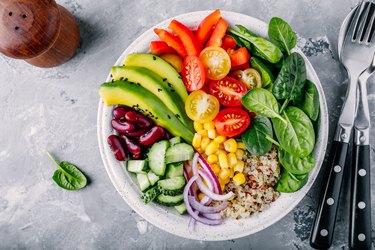
If you're getting cancer treatment, you might be wondering if there's a way to build up your immune system during chemotherapy. While eating certain foods might support immunity, getting enough calories and protein to keep your body well-nourished is also very important.
Good nutrition sets the stage for better tolerating chemo and staying as healthy as possible during treatment. A diet that's deficient in calories, protein and other nutrients, on the other hand, can contribute to immune dysfunction, per a June 2016 review in Trends in Immunology.
Video of the Day
Video of the Day
So what does it mean to eat well? Start by consuming a variety of foods throughout your day. The 2020-2025 Dietary Guidelines for Americans recommend a diet that includes protein, grains, fruits, vegetables and calcium-rich foods such as milk and yogurt.
If you've been eating poorly, lost weight without trying or you have underweight, increasing your calorie and protein intake — as well as incorporating the healthy foods below — can all help bolster your immune system during chemotherapy, according to the American Cancer Society (ACS).
1. Protein-Rich Foods
Protein-filled foods are important to eat while you're on chemotherapy, as they help build and maintain muscles, tissues and cells — including immune cells, according to ACS.
The National Cancer Institute recommends modest amounts of meat and milk products, so opt for plant-based proteins when you can. If you must have milk, stick to pasteurized dairy products to avoid food-borne illness and bacteria, per the U.S. National Library of Medicine.
Protein-rich foods include:
- Beans, peas and lentils
- Nuts or peanut butter
- Chicken
- Turkey
- Fish
- Tofu
- Eggs
- Cheese
Related Reading
2. High-Quality Carbs
Carbohydrates are a major source of energy for your body, according to the ACS. And getting your carbs through a plant-based diet full of grains, fruits and vegetables may have a beneficial effect on the gut, according to a September 2019 review in Translational Psychiatry.
This is important because a healthy gut is a key part of your immune system. The trillions of bacteria that line your digestive tract help protect your body from toxins, regulate inflammation (which is related to immunity) and produce substances that help fight disease-causing microorganisms, according to Johns Hopkins Medicine.
Whole Grains
Whole grains are high-quality sources of fiber and carbohydrates, per the ACS. The Dietary Guidelines recommend that at least half your grain choices be minimally processed whole grains, such as:
- Brown rice
- Whole-wheat pasta
- Barley
- Quinoa
- Buckwheat
- Bulgur
- Millet
- Oatmeal
- Sprouted whole-grain bread
- Whole-grain cereal
- Whole cornmeal
Refined grains like white rice, cream of wheat cereal, saltine crackers or white pasta aren't forbidden, but it's important that whole grains get more of an emphasis in your diet.
However, these low-fiber grains may be easier to eat or tolerate for people with no appetite or other treatment side effects like nausea. If that's the case, don't fret: You can incorporate more of these foods during treatment if doing so helps you eat enough calories, according to the ACS. When your treatment is over and you're feeling better, you can swap them out for whole grains.
Starches
As an alternative to grains, you can also choose starchy vegetables such as:
- Corn
- White and sweet potatoes
- Yams
- Winter squash (butternut, acorn)
Fruits and Vegetables
Fruits and vegetables are also rich in carbohydrates, according to the ACS. The pigments in red, purple, orange, green and yellow fruits and vegetables in particular contain plant chemicals linked to possible cancer-fighting and immune-building benefits, per the American Institute for Cancer Research.
According to Stanford Medicine Cancer Center, these include:
- Berries
- Apples
- Pears
- Tomatoes
- Broccoli
- Celery
- Brussels sprouts
- Bok choy
Just remember to wash or cook raw fruits and vegetables to avoid food-borne illnesses or microorganisms, as chemotherapy patients are more at risk for these infections than other people, according to August 2019 research in Nutrients.
Tip
Consume healthy carbs with the plant-based Mediterranean diet, which is linked to healthier gut bacteria, according to September 2015 research in Gut.
3. Healthy Fats
If you've lost weight or muscle mass during treatment, you'll need to prioritize gaining weight and eating more. That's why healthy fats are another one of the best foods to eat on chemotherapy, especially sources of unsaturated fat that tend to have favorable effects on cholesterol levels and inflammation, according to the Mayo Clinic.
Why? Being undernourished going into chemo puts you at risk for poor treatment tolerance and more side effects, according to February 2017 cancer nutrition guidelines in Clinical Nutrition.
Try these tips to get more healthy fats:
- Add slivered almonds or pine nuts to cooked vegetables
- Toss sunflower seeds or pecans in salad
- Spike oatmeal with walnuts or ground flax seeds
- Dip apples in peanut butter or almond butter
- Liberally use olive oil-based dressing on salad
- Add avocado or hummus to sandwiches, salads or toast
- Drizzle olive oil on pasta, rice or veggies
Related Reading
4. Other Immune-Supporting Nutrients
Although eating well supports immunity, there's no quality research that shows specific foods can boost your immune system during chemo. However, nutrition plays a role in the development, maintenance and functioning of the immune system, according to Harvard's T.H. Chan School of Public Health.
And certain nutrients — most notably, vitamins A, C, E and zinc — are essential to immune health, per the Academy of Nutrition and Dietetics. To further optimize your diet, start by including foods high in the nutrients below.
Vitamin A Foods
Vitamin A helps support immune function, good vision and may keep the heart, lung and kidneys healthy, according to the National Institutes of Health Office of Dietary Supplements (ODS). All of this helps the body keep bad bacteria and viruses out.
Vitamin A-rich foods to help build your immune system include:
- Green vegetables such as broccoli, greens, kale and spinach
- Orange fruits and vegetables including carrots, cantaloupe, apricots and yams
- Eggs
- Meat
- Liver
Vitamin C Foods
Vitamin C helps support immune function and has antioxidant properties that protect cells from damage, per the ODS. This can help shield your body from infection.
Foods rich in vitamin C include:
- Citrus fruit, such as oranges, grapefruit, lemon and lime
- Kiwi
- Bananas
- Papaya
- Red and green peppers
- Broccoli
- Tomatoes
Vitamin E Foods
Vitamin E is another antioxidant that protects the body from damaging free radicals and helps support immune function, according to the Mayo Clinic.
Sources of vitamin E include:
- Nuts
- Seeds
- Oils made from nuts or seeds
- Spinach and broccoli
- Fortified breakfast cereals
Foods High in Zinc
Zinc is a mineral that helps the immune system work properly. Both a deficiency and excess of zinc impair immunity, so the right balance is important, per December 2017 research in Nutrients.
You can get more zinc by including these foods in your chemo diet:
- Beans, peas, lentils
- Nuts and seeds
- Whole grains
- Lean meat, poultry and fish
What About Probiotics?
Probiotics — the live microorganisms found in yogurt, kimchi, miso and other fermented foods — are associated with regulating your immune function, according to Harvard Health Publishing.
They're also linked to alleviating treatment side effects, according to Memorial Sloan Kettering Cancer Center, which is why these are good foods to eat after chemotherapy (especially blander options, like plain yogurt, which may go easier on your stomach).
However, the safety of taking probiotics during chemo is not well-established, so discuss risks and benefits with your cancer care team before adding them to your diet.
Should You Take a Supplement?
Because many vitamins play a role in building immunity during chemotherapy, does this mean that taking dietary supplements will help? Well, the answer isn't so straightforward.
There are concerns that some supplements decrease the effectiveness of chemo, while others may help improve treatment tolerance, according to a March 2016 review in Nutrients. This illustrates the importance of talking with your cancer care team about supplements and only taking what is recommended.
Moreover, the FDA does not require supplements to be proven safe or effective before they are sold, so there's no guarantee that any supplement you take is safe, contains the ingredients it says it does or produces the effects it claims.
What's more important is the "symphony" of a diet rich in whole, unprocessed, plant-based foods like colorful fruits and vegetables, per the ACS. The interactions between different foods, nutrients and plant chemicals is something supplements alone can't provide.
Work on Staying Well
Ask your oncologist about other ways to protect yourself and improve immunity during chemo besides nutrition.
According to the ACS, some tips include:
- Washing your hands regularly with soap and water, particularly after being around people who are sick or after touching things that can make you ill, such as raw meat and eggs, garbage or animal waste
- Limiting contact with people who are sick and avoiding large crowds
- Staying current with your flu shot and other immunizations
Tip
Seek the assistance of a dietitian — preferably one from your cancer care team — so you have a clear understanding of the amount of calories and protein you need. They can also provide more tips to help you build immunity during chemo and counter treatment-related side effects such as nausea, mouth sores or poor appetite.
- Clinical Nutrition: "ESPEN Guidelines on Nutrition in Cancer Patients"
- National Cancer Institute: "Eating Hints: Before, During and After Cancer Treatment"
- Trends in Immunology: "Immune Dysfunction as a Cause and Consequence of Malnutrition"
- Academy of Nutrition and Dietetics: "Protect Your Health with Immune-Boosting Nutrition"
- Nutrients: "Micronutrients in Oncological Intervention"
- Gut: "High-Level Adherence to a Mediterranean Diet Beneficially Impacts the Gut Microbiota and Associated Metabolome"
- Memorial Sloan Kettering Cancer Center: "Probiotics"
- U.S. Department of Agriculture and U.S. Department of Health and Human Services: "2020-2025 Dietary Guidelines for Americans"
- American Institute for Cancer Research:"Phytochemicals: The Cancer Fighters in Your Foods"
- Mayo Clinic: "Dietary fat: Know which to choose"
- Nutrients: "Assessment of Food Safety Knowledge and Behaviors of Cancer Patients Receiving Treatment"
- American Cancer Society: "Benefits of good nutrition during cancer treatment"
- Harvard T.H. Chan School of Public Health: "Nutrition and Immunity"
- National Institutes of Health Office of Dietary Supplements: "Vitamin A"
- National Institutes of Health Office of Dietary Supplements: "Vitamin C"
- Mayo Clinic: "Vitamin E"
- Translational Psychiatry: "The effects of plant-based diets on the body and the brain: a systematic review"
- Johns Hopkins Medicine: "The Gut: Where Bacteria and Immune System Meet"
- American Cancer Society: "Watching for and Preventing Infections"
- U.S. Food and Drug Administration: "FDA 101: Dietary Supplements"
- U.S. National Library of Medicine: "Safe eating during cancer treatment"
- Stanford Medicine Cancer Center: "Phytochemicals (Phytonutrients) as Part of Your Cancer Diet"
- Harvard Health Publishing: "Should you take probiotics?"
Is this an emergency? If you are experiencing serious medical symptoms, please see the National Library of Medicine’s list of signs you need emergency medical attention or call 911.