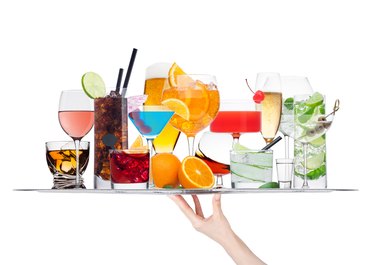
To beer or not to beer? If you have diabetes, that is a question you may have come happy hour. You may wonder if beer or other cocktails and spirits are OK for you to sip. Here's what to know about whether certain drinks are better for your blood sugar than others if you have diabetes.
If you have diabetes, drinking doesn't have to be a no-no, Johns Hopkins Medicine says, but it does have to be done carefully. "People with diabetes can drink beer and other alcoholic beverages, but they must be cautious," Plainview, New York-based Audrey Koltun, RDN, CDN, registered dietitian nutritionist and certified diabetes care and education specialist at Cohen Children's Medical Center, says.
Video of the Day
Video of the Day
This is because typically, your liver helps stabilize blood sugar by making and sending new glucose into your bloodstream, Johns Hopkins Medicine says. However, when you imbibe, your liver becomes busy breaking down the alcohol instead. Hence, your blood sugar can fall.
That’s the Spirit
However, if your blood sugar is well-controlled and you're mindful of what you drink, you can drink safely, Johns Hopkins Medicine says.
The American Diabetes Association (ADA) notes that many people with diabetes can have a moderate amount — moderate being the key word. Moderate, per the ADA, is one drink per day for women or two for men, with a drink being:
- 12 ounces of beer.
- 5 ounces of wine.
- 1 1/2 ounces of liquor.
And when choosing your drink, low-calorie options are best, the ADA says. This can include drinks like:
- Light beer.
- Dry wine.
- Skinny/sugar-free mixers (low-sugar margarita, light cranberry juice, diet tonic).
Koltun adds that spiked sparkling water or seltzer and liquor on the rocks can also be low-calorie choices.
Sips to Skip
Johns Hopkins Medicine notes that you should avoid drinks that are high in sugar, like:
- Sweet wines.
- High-sugar mixed drinks (piña colada, high-calorie margaritas).
In addition to these high-calorie, high-sugar drinks, the ADA suggests you avoid:
- Liqueurs (like Irish cream).
- Drinks with cream (like mudslides).
- Sugary mixers/sodas.
Safety First: Drinking With Diabetes
A few measures can help you drink safely. Koltun advises that you "check your blood sugar before drinking" and "never drink on an empty stomach."
The Diabetes Teaching Center at the University of California, San Francisco (UCSF), also offers these safety tips:
- Wear a medical ID bracelet.
- Tell the people you're out with how to recognize signs of low blood sugar.
- Carry a carb source (like glucose tablets).
- Keep an eye on your blood sugar by testing more (drinking can make symptoms harder to notice).
The ADA says you should also keep an eye on your glass size, as not all pours are one serving. And, Koltun adds: "Keep hydrated by drinking water or seltzer or other sugar-free beverages in between the beer or cocktail." And keep in mind, she cautions, they "can add a lot of calories to your diet and cause excess weight gain, as well as an increase in your triglyceride and cholesterol levels."
To further prevent low blood sugar, Koltun recommends "eating small snacks in between."
Read more: 5 Hidden Health Benefits of Alcohol
The Alcohol Aftermath
Still, some people with diabetes should steer clear of drinking beer and other alcoholic drinks altogether. Johns Hopkins Medicine says you should skip drinks if you have any of these long-term conditions:
- Burning/tingling in hands/feet from nerve damage (diabetic neuropathy).
- Eye damage (diabetic retinopathy).
- High blood pressure.
- High triglycerides.
- Kidney damage.
And if you do indulge, your liver takes up to one-and-a-half hours to break down each drink, UCSF says — and those drinks can affect your blood sugar for up to 24 hours, the ADA says.
So, before you call it a night and go to bed, test your blood sugar, Johns Hopkins Medicine says. As long as it's 100 to 140 milligrams per deciliter, you should be good. Otherwise, eat a simple snack to raise it, like yogurt, cereal, cheese and crackers or an apple with peanut butter.
And, ultimately, before you drink, chat with your doctor to ensure that nightcap won't clash with any medications or conditions you have, UCSF says. This is especially true if you're taking insulin or certain types of diabetes pills.
- Johns Hopkins Medicine: “Mixing Alcohol With Your Diabetes”
- Audrey Koltun, RDN, CDCES, CDN, registered dietitian nutritionist, certified diabetes care and education specialist, Cohen Children’s Medical Center, Plainview, New York
- University of California, San Francisco, Diabetes Teaching Center: “Diabetes & Alcohol”
- American Diabetes Association: “Alcohol”
Is this an emergency? If you are experiencing serious medical symptoms, please see the National Library of Medicine’s list of signs you need emergency medical attention or call 911.