Shahrokh Rohani/iStock/Getty Images
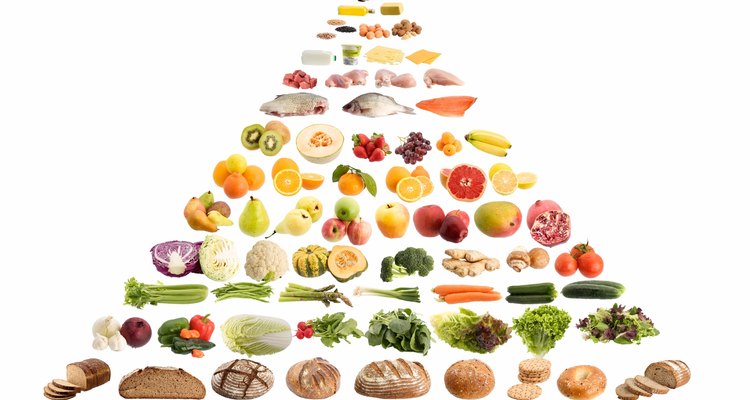
Receiving the proper nutrition information plays a key role in helping you make healthy food choices. That's why the government adopted the Food Pyramid -- a visual nutrition guide originally created at Tufts University. In an effort to improve this guide, the U.S. Department of Agriculture created a revised version and then finally retired the Food Pyramid in 2011 in favor of a completely redesigned guide with a different shape called MyPlate.
The Original Food Pyramid
The USDA adopted the original Food Pyramid -- named after its shape -- in 1992. The USDA intended the shape to help you remember which foods to eat more of and which ones to scale back on. The pyramid showed different food groups and recommended servings size. The bottom of the pyramid -- the largest section -- showed foods with the most recommended servings, which were breads, pasta and rice. The smallest section of the pyramid, listed foods to eat sparingly, such as fats, oils and sweets.
Food Pyramid Receives a Facelift
Nutrition experts felt the original pyramid lacked crucial nutrition information. For example, it failed to differentiate between whole grains and refined grains or between saturated and unsaturated fats. The USDA replaced the original Food Pyramid in 2005 to address these issues. Called MyPyramid, this more detailed guide provided added information for each food group. Subsequently, the Harvard School of Public Health created an alternate pyramid with additional considerations for factors such as exercise, weight control, multivitamins and alcohol consumption.
Out With the Old
After careful consideration, the USDA ditched the Food Pyramid and released a redesigned version called MyPlate in 2011. This modern version, in the shape of a plate, is meant to grab your attention and remind you to eat healthy, according to the USDA. The plate features four sections, one for fruit, vegetables, protein and grains, with a separate section next to the plate for dairy. Each section has a different color, to provide a better visual cue. For example, the vegetable section is green.
The Healthy Eating Plate
While MyPlate is meant to serve as a reminder to choose nutritious foods, it's not meant to provide specific messages, according to the USDA. Faculty members from the Department of Nutrition at the Harvard School of Public Health created an alternate version of MyPlate called the Healthy Eating Plate, which provides additional information and specific guidance. For example, it shows a recommendation to limit red meat, use healthy oils such as canola and to stay active.
Related Articles

Proper Placement of Medals on a USMC ...

How to Make a Guitar Out of Cupcakes

How to Calculate Portions

Culinary Plating Techniques

How Many Calories in Beef & Cheese ...

How to Cut Hair Into Chunky Layers

DIY Himmeli-Style Christmas Star Tree ...

Christian Harvest Crafts

When Was the First Hair Clipper ...

Birthday Guest Book Ideas

What is Effective Communication?
The Impact of Petrarch
How to Tie an Army Necktie

How to Convert a 2D House Plan Into a ...

Can You Use Vegetable Oil Instead of ...

How to Write Using French Script ...

What Information on a Food Label Is ...

How to Frame War Medals

How to Blend Hair Extensions With Two ...

How to Cook a Tender Steak Using a ...
References
Writer Bio
Janet Renee is a clinical dietitian with a special interest in weight management, sports dietetics, medical nutrition therapy and diet trends. She earned her Master of Science in nutrition from the University of Chicago and has contributed to health and wellness magazines, including Prevention, Self, Shape and Cooking Light.
Photo Credits
Shahrokh Rohani/iStock/Getty Images