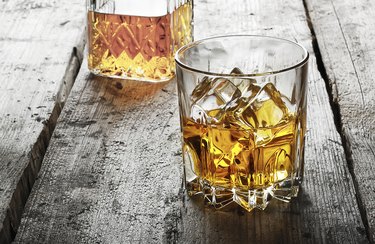
Having diabetes means you must be vigilant about closely monitoring your diet, but if you find yourself at a bar with friends, don't throw caution to the wind. Although people with diabetes can safely consume spirits because they're low in calories, be careful about enjoying whiskey in a mixed drink. Many types of mixers are high in calories, but by switching your mixer for a diet version -- using diet ginger ale instead of regular ginger ale, for example -- you can safely avoid consuming too many calories.
Practice Moderation
Video of the Day
People with diabetes should practice moderation when planning to consume an alcohol such as whiskey, according to the American Diabetes Association. Although whiskey doesn't contain any carbohydrates and the ADA reports that alcohol leads to minimal change in your blood glucose, the organization still recommends that people assigned female at birth who have diabetes should consume only one alcoholic beverage per day. Men can consume two. One serving of whiskey is 1.5 ounces, which is a standard serving size. The ADA recommends only drinking alcohol when you're effectively managing your blood glucose and drinking a calorie-free beverage such as water at the same time. Avoid mixed drinks, as they often contain high-sugar, high-calorie mixers.
Video of the Day
- American Diabetes Association: Alcohol
- U.S. Department of Agriculture National Nutrient Database for Standard Reference: Alcoholic Beverage, Distilled, All (Gin, Rum, Vodka, Whiskey) 80 Proof
- University of California, San Francisco: Diabetes & Alcohol
- National Institute on Alcohol Abuse and Alcoholism: Consequences of Alcohol Use in Diabetics