What does fact checked mean?
At Healthfully, we strive to deliver objective content that is accurate and up-to-date. Our team periodically reviews articles in order to ensure content quality. The sources cited below consist of evidence from peer-reviewed journals, prominent medical organizations, academic associations, and government data.
The information contained on this site is for informational purposes only, and should not be used as a substitute for the advice of a professional health care provider. Please check with the appropriate physician regarding health questions and concerns. Although we strive to deliver accurate and up-to-date information, no guarantee to that effect is made.
Facts About Personal Hygiene
Personal hygiene refers to cleaning, grooming and caring for your body at the most basic level. While personal hygiene helps you put your best foot forward, the Better Health Channel says that it is also one of the most effective ways to protect yourself and others from illnesses and diseases such as head lice, pubic lice, body lice, ringworm, scabies, pinworms, Hepatitis A and athlete’s foot 1. Good personal hygiene also keeps bad breath and body odor at bay so your friends will want to stick around.
Your Hands Hold The Key
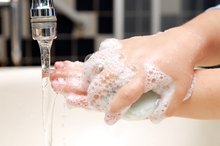
Many infections, like colds and the stomach flu, are the result of bringing germ-filled, unwashed hands into contact with your mouth. Other infections are contracted when you eat food that has been contaminated by the dirty hands of other people. Make a rule of always washing your hands and wrists before making or eating food, after using the toilet, after touching animals and after coming into contact with someone who is sick, sneezing or coughing. Use hot water and vigorously rub soap over your palms, back of hands, wrists, fingers and under the fingernails for at least 20 seconds.
- Many infections, like colds and the stomach flu, are the result of bringing germ-filled, unwashed hands into contact with your mouth.
Put Your Best Smile Forward
Good Personal Hygiene Practices & Procedures
Learn More
Poor oral hygiene can lead to tooth decay, bleeding gums, periodontal disease and even loss of teeth; but aside from working to prevent cavities, brushing your teeth and tongue helps to keep your breath fresh so you don’t scare off your friends and family 7. Teeth should be brushed at least twice a day -- once in the morning and once before bed -- but brushing after each meal is ideal. Brush the outer and inner surfaces of the teeth and the front and back of your tongue. If you can't find the time to brush, at least floss. Flossing removes decay-causing bacteria that is lodged between teeth and hiding from toothbrushes.
- Poor oral hygiene can lead to tooth decay, bleeding gums, periodontal disease and even loss of teeth; but aside from working to prevent cavities, brushing your teeth and tongue helps to keep your breath fresh so you don’t scare off your friends and family 7.
Say No to B.O.
Body odor is caused by a number of factors, including the chemicals in sweat, the waste secreted through the skin, bacteria that lives on the skin, and unwashed clothes.cause:
- Body odor is caused by a number of factors
- including the chemicals in sweat
- the waste secreted through the skin
- bacteria that lives on the skin,
- unwashed clothes
Keep your body smelling sweetly by taking daily showers. Use a mild, non-abrasive cleanser to wash your face and ears. Opt for a scented or non-scented moisturizing body wash to cleanse your body, and thoroughly wash your genital area with a gentle, non-scented soap. Always scrub between your toes and under your feet, and use a nail brush to remove the dirt from under your toe nails. Wash your hair and scalp with shampoo at least twice a week.
- Body odor is caused by a number of factors, including the chemicals in sweat, the waste secreted through the skin, bacteria that lives on the skin, and unwashed clothes.cause: * Body odor is caused by a number of factors
* including the chemicals in sweat
* the waste secreted through the skin
* bacteria that lives on the skin,
* unwashed clothes Keep your body smelling sweetly by taking daily showers. - Always scrub between your toes and under your feet, and use a nail brush to remove the dirt from under your toe nails.
It's That Time, Again
Disorders Related to Lack of Personal Hygiene
Learn More
Women should take extra care to keep the genital area clean during menstruation. Wash the external area as you normally would with a gentle cleanser and warm water. Change tampons and sanitary napkins at least four to five times per day. If you have a heavy cycle, you may need to change them more frequently. Wash your hands thoroughly both before and after changing your tampons and sanitary napkins. Do not wear a tampon to bed; leaving a tampon in overnight can encourage bacterial overgrowth that can lead to toxic shock syndrome, a potentially fatal bacterial infection. The Better Health Channel warns against using douches or any other internal cleansers, as this can disrupt the vagina's natural environment 1.
- Women should take extra care to keep the genital area clean during menstruation.
- Wash the external area as you normally would with a gentle cleanser and warm water.
Related Articles
Good Personal Hygiene Practices & Procedures
Learn More
Disorders Related to Lack of Personal Hygiene
Learn More

Definition of Personal Hygiene
Learn More

How to Sterilize Against Pinworm Eggs
Learn More

Types of Personal Hygiene
Learn More
How to Clean a Toothbrush
Learn More
Toenail Cuticle Problems
Learn More
Causes of Neck Skin Odor
Learn More

How to Remove Splinters That Won't Surface
Learn More
How to Clean Clear Retainers
Learn More
References
- Better Health Channel: Personal Hygiene
- Centers for Disease Control and Prevention: Body Hygiene
- NHS Choices: Food and Hygiene Facts
- Children's Hospital of the King's Daughters: Personal Hygiene
- Michigan Food Law: Food Employee Personal Hygiene
- Tufts University: Handwashing: The First Line of Defense
- Mouth Healthy: Brushing Your Teeth
- Children's Hospital of the King's Daughters: Menstruation and Hygiene
Writer Bio
Lindsay Boyers has a Bachelor of Science in nutrition from Framingham State College and a certificate in holistic nutrition from the American College of Healthcare Sciences. She is also a licensed aesthetician with advanced training in skincare and makeup. She plans to continue on with her education, complete a master's degree program in nutrition and, ultimately, become a registered dietitian.