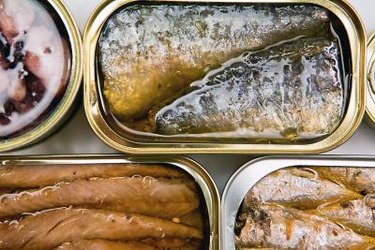
Sardines and anchovies are both small fish species, most often sold oil-packed in tins. They add protein, healthy fats and other nutrients to pizzas, shish kebabs, cold salads or snack trays. Both fish types are low in mercury and high in omega-3 fatty acids. For people watching their sodium intake, sardines may make a better choice than notoriously salty anchovies.
Calories, Saturated Fat and Cholesterol
Video of the Day
A 3.5-ounce serving of either sardines or anchovies canned in oil contains about 210 calories, once the fish pieces have been drained. The anchovy serving has 11 percent of the daily value, or DV, for saturated fat, while sardines have 8 percent of the DV for saturated fat. The sardine serving takes up almost half of the cholesterol you should have for the day, while the anchovies are somewhat lower in cholesterol, representing just over one-quarter of your daily cholesterol limit.
Video of the Day
Sodium
Because manufacturers typically preserve anchovies in salt, the small fish is a high-sodium addition to foods. One serving of canned anchovies takes up more than 150 percent of your daily limit for sodium. Tinned sardines are less salty but still represent about 20 percent of your DV for sodium.
Omega-3 Fatty Acids
The University of Michigan Health System suggests that women consume at least 1.1 grams of omega-3 fatty acids each day, and men 1.6 grams. Consuming 2 to 3 grams provides even greater benefits to heart health, according to UMHS. Both sardines and anchovies contain high amounts of these beneficial fats, compared to other fish species. Anchovies canned in oil contain about 2 grams of omega-3s, while sardines have about 1.6 grams of omega-3s.
Protein
Both sardines and anchovies provide significant protein in each 3.5-ounce serving. Canned anchovies contribute 29 grams of protein, or about 58 percent of the minimum DV for protein. Canned sardines provide 25 grams of protein, or about 50 percent of the minimum DV for protein.
Calcium
Both fish types are excellent sources of calcium, especially for people who dislike or are allergic to dairy or soy products. A serving of sardines canned in oil provides 38 percent of your DV for calcium. The anchovy serving contributes 23 percent of the DV for calcium. Calcium helps build and maintain strong bones and teeth.
Iron and B-12
The UMHS notes that fish are especially good sources of iron and vitamin B-12, two nutrients that help maintain strength and energy. Not getting enough of either nutrient can lead to vitamin deficiency anemia, which causes fatigue and weakness. Each serving of anchovies provides about 25 percent of your DV for iron and 15 percent of your vitamin B-12 needs of the day. Sardines contribute 16 percent of the DV for iron and 150 percent of the DV for vitamin B-12.
Additional Nutrients
The oil in which sardines and anchovies are packed boosts the vitamin E content of each fish serving. An anchovy serving provides 16 percent of your vitamin E needs for the day, and sardines 10 percent. Both fish types are also high in B-complex vitamins and minerals. Anchovies provide 100 percent of the DV for niacin and selenium and 25 percent of your phosphorus needs. Sardines provide 75 percent of the DV for selenium, 50 percent of the DV for phosphorus and 25 percent of the DV for niacin.
Alternatives
It's possible to get sardines and anchovies fresh or packed in water or another non-oily liquid. The USDA provides nutrition facts on fresh anchovies, which are lower in calories, cholesterol, saturated fat and sodium than oil-packed anchovies, but also lower in nutrients like iron, calcium, niacin and vitamins E and B-12. The USDA lists nutrition facts for tomato sauce-packed Pacific sardines as well for oil-packed Atlantic sardines.