yanyong/iStock/Getty Images
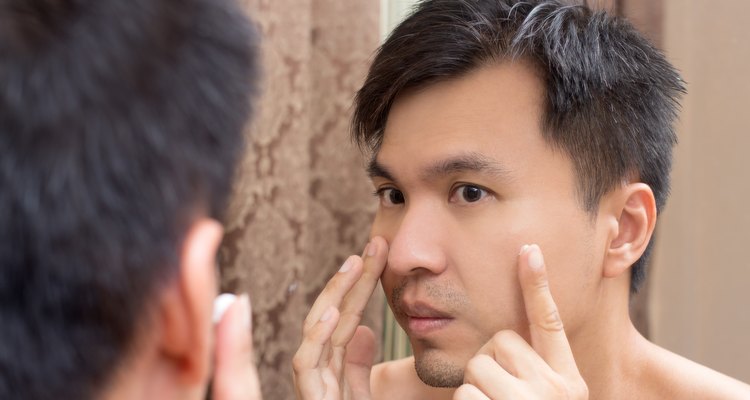
Acne occurs when oily secretions, also known as sebum, and dead skin cells, accumulate in the hair follicles and pores of the skin. Bacteria called Propionibacterium acnes (P. acnes) can infect the clogged pore, feed on the sebum and cause inflammation. If a hard, painful cyst forms from the debris and bacteria that feed on it, this acne is called cystic acne.
Theory
Low intensity blue light can kill P. acnes, the bacteria that infects clogged pores to create cystic acne. Molecules produced by the bacteria are changed into free radicals by the blue light and go on to destroy the bacteria that created them. A 2005 study published in the "Journal of Drugs in Dermatology" found that blue light therapy in combination with aminolevulinic acid (ALA) was highly effective in treating cystic acne in an Asian case study. The United States Food and Drug Administration has approved a specific high-intensity narrow band blue light therapy for the treatment of acne.
Treatment
Treatment using blue light therapy for cystic acne is usually done once or twice a week for up to eight weeks. A single session takes between eight and 20 minutes. Treatment can be done in a dermatologist's office or at home, using home kits. Topical treatments, such as ALA can be used along with blue light therapy to increase the effectiveness and destroy more of the harmful bacteria. Some systems also use a red light in conjunction with blue light therapy to help ease inflammation and swelling.
Cost
The cost can range between $40 and $200 per session to over $1,000 for a full series of in-office treatments that also include ALA application before the light therapy treatment. A handheld home unit can cost from $300 to $400.
Advantages
Blue light therapy for cystic acne is convenient and quick, since it can be scheduled in a doctor's office or done on a set schedule at home. It also tends to be gentle on the skin, which can be especially important for people with sensitive skin who react poorly to harsh topical acne treatments.
Disadvantages
Because the bacteria that cause cystic acne multiply quickly, multiple treatments are usually needed. The cost can be another disadvantage, since creams, antibiotics and other methods of treating acne tend to be less expensive than blue light therapy.
Considerations
Potential side effects are mild, but include temporary redness and dryness of the treated skin. However, because blue light therapy to treat cystic acne is a relatively new process, there may be potential side effects that are still undiscovered. Also, blue light therapy treatment can only help with acne that is cased by bacterial infection. Other types of acne will not be affected by using this type of treatment.
Related Articles
Phototherapy Vs. Tanning Bed
Fraxel Laser Treatment Dangers

Fraxel Repair Vs. Restore Results

What Are the Dangers of Electrolysis ...
Uses for Selsun Blue

Photofacial Vs. Microdermabrasion

Subungual Warts and Treatment

What Are the Dangers of Photofacials?

What Are the Dangers of Fraxel Repair?

The Average Prices for Laser Skin ...
What Is Mercury Mist Topaz?

How to Get Rid of Facial Hair After a ...

How to Substitute Mayonnaise for Sour ...

How to Cover a Scab From a Zit

Mesotherapy & Weight Loss Results

List of Retinoids
Review of New-Skin Scar Therapy
How to Get Rid of Aftershave Allergies
How to Remove Hair Follicles to Prevent ...

Can LED Light Get Rid of Brown Spots on ...
References
- Derma Network: Blue Light Acne Treatment
- "Journal of Drugs in Dermatology;" Cystic Acne Improved by Photodynamic Therapy with Short-Contact 5-Aminolevulinic Acid and Sequential Combination of Intense Pulsed Light and Blue Light Activation; Nov./Dec. 2005
Writer Bio
Bridget Coila specializes in health, nutrition, pregnancy, pet and parenting topics. Her articles have appeared in Oxygen, American Fitness and on various websites. Coila has a Bachelor of Science in cell and molecular biology from the University of Cincinnati and more than 10 years of medical research experience.
Photo Credits
yanyong/iStock/Getty Images