
Can a Runner Steal a Base in Little League Baseball?
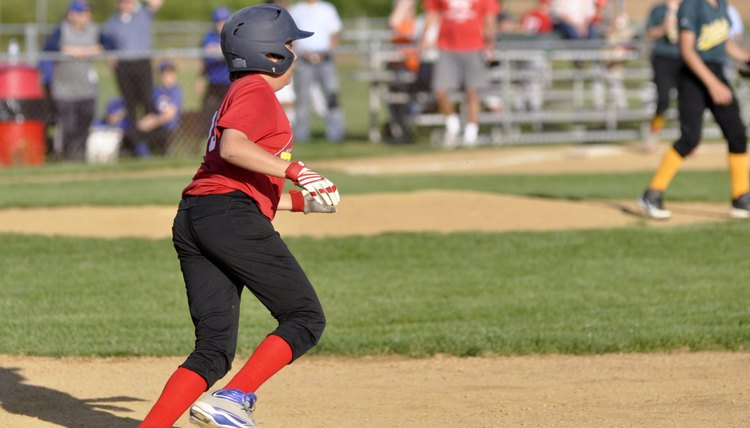
The rules in Little League baseball generally mirror those of Major League Baseball. A few, however, have been adapted to better serve the needs of youngsters. The rules governing stealing bases are a good example. You can steal bases in Little League, but only after a pitch reaches the hitter. Otherwise, Little League games would become more like track meets than baseball games.
Stealing is a Good Thing
You can steal bases in the major leagues or in high school or college ball at virtually any time. Usually, the runner will take off when the pitcher is still in his wind-up or just as he releases the ball. But in Little League, you have to remain on the base until a pitched ball reaches the hitter -- as opposed to crossing the plate, a subtle and often overlooked distinction. Without this rule, base runners would steal at will, since Little League catchers don't have arms as strong or accurate as their elders. So you can steal your way around the diamond, as long as you don't leave the base too early.
Writer Bio
Jim Thomas has been a freelance writer since 1978. He wrote a book about professional golfers and has written magazine articles about sports, politics, legal issues, travel and business for national and Northwest publications. He received a Juris Doctor from Duke Law School and a Bachelor of Science in political science from Whitman College.