
What is Traveling in Basketball? The NBA Travel Rule and the Eurostep (with Video)
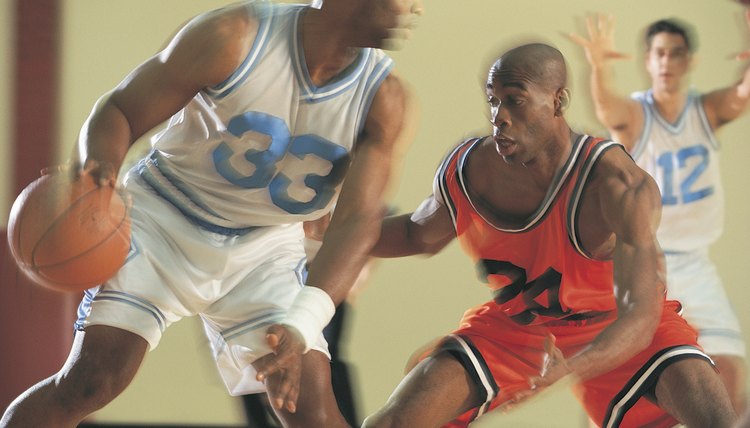
Traveling is one of the most common -- and misunderstood -- rules in the NBA and all of basketball. The traveling call is intended to prevent players from gaining an advantage by moving with the ball without dribbling. Traveling is a violation in basketball and is penalized by awarding the ball to the opposing team out of bounds closest to where the travel occurred. It is one of the most common fouls called by referees during a game, and many NCAA and NBA players have committed it throughout many games.
What is the traveling rule in basketball?
The basic concept of traveling is based on the “pivot foot”, which can be either the left foot or right foot. Once an offensive player receives the ball or picks up his dribble, he is allowed to move one foot, while the other foot has to remain on the floor as a pivot foot. This foot is allowed to rotate, as long as the ball of the foot remains on the floor at all times. A travel occurs when the player lifts the pivot foot, taking a second step, and then returns it to the floor before releasing the ball on a pass or a shot. For instance, if a player receives a pass and jumps with both feet to attempt a shot and returns to the floor without shooting, it is considered a traveling violation by the refs.
The gather step is a recent rule change in the NBA rulebook that helps to clarify what happens when a basketball player receives the ball, or takes two handed possession of the ball after the completion of a dribble. It states that “A player who gathers the ball while progressing may (a) take two steps in coming to a stop, passing or shooting the ball or (b) if he has not yet dribbled, one step prior to releasing the ball to start his dribble.” This rule has been especially controversial because James Harden is noted for using the gather step rule in his stepback jumper during many NBA games. However, it is legal because he gets control of the ball and takes two steps back, which can be seen in slow motion. The gather step goes hand in hand with the jab step move, where the player takes a step forward and then shoots it off his back foot.
What is the jump Stop?
The jump stop rule is part of the traveling rule that allows a player to make a jump stop move, which can be useful when trying to change directions quickly. According to the traveling rule, if a player, while in possession of the ball, jumps off one foot, he may then land on two feet and use either one as the pivot foot or jump again off both feet before passing or shooting the ball. However, if the player jumps off one foot and then returns both feet to the floor at slightly different times, it is considered a travel, as the first foot would then be considered the pivot foot.
The Euro Step, popularized by Manu Ginobili, is a fundamental basketball move that functions similar to the gather step and takes very good footwork to accomplish. The move is achieved when a player that is driving to the basket picks up his dribble and takes two jump steps before turning into a layup or a dunk. Since the player is gathering the ball he can use his two steps to create forward movement and use the change in speed to fool the defense.
Other Traveling Rules
There are other situations which constitute a travel that aren’t covered under the main traveling rule. For instance, if a player is standing and holding onto the ball and falls to the floor, it is considered a travel. Also, if the player is kneeling or laying on the floor and stands up without first dribbling the ball, it is also considered a travel. A player is also not allowed to touch any part of the body to the floor -- other than the hand -- while holding the ball. If he does, he will be called for a travel. If a player, without possession of the ball, slides across the floor to retrieve a loose ball, he is permitted to slide with the ball without being called for a travel.
References
Writer Bio
James Patterson specializes in health and wellness topics, having written and produced material for the National Institutes of Health, the President's Cancer Panel and an Inc. 500 Hall of Fame company. He is also a former sportswriter with writing experience in basketball, baseball, softball, golf and other popular sports.