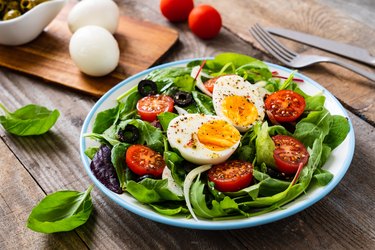
Low-carb and vegetarian diets don't often go together. After all, people who follow a low-carb diet often delight in the opportunity to up their intake of animal proteins, while avoiding the carbs found in fruits, beans, vegetables, grains and other staples of the vegetarian diet.
But with a little ingenuity and planning, you can eat low carb and vegetarian. Here's exactly what you need to know and tips for crafting a low-carb vegetarian diet meal plan.
Video of the Day
Video of the Day
Related Reading
What Counts as Low Carb?
The number of carbs you take in on a low-carb diet depends somewhat on which particular diet you follow. But as a general rule, you'll likely take in less than 20 to 57 grams of carbohydrates a day, according to the Mayo Clinic. That means carbs will account for only 80 to 240 calories each day.
What Can You Eat on a Low-Carb Vegetarian Diet?
If you're a vegetarian, these are tough but doable limitations. To succeed, you'll need to be mindful of your carbohydrate intake and up your protein intake (without adding meat, of course). Check out this low-carb, vegetarian food list for suggestions.
Carbohydrates
There are plenty of vegetables that are lower in carbs that form the foundation of a low-carb, vegetarian diet.
Vegetable | Serving Size | Carbs |
|---|---|---|
Arugula | 1 cup | 0.7 g |
Spinach | 1 cup | 1.1 g |
Eggplant | 1 cup, cooked | 8.6 g |
Asparagus | 1 cup | 7.4 g |
Yellow Squash | 1 squash | 8 g |
Broccoli | 1 cup, cooked | 11 g |
Celery | 1 stalk | 1.9 g |
Spaghetti Squash | 1 cup, cooked | 10 g |
Green Beans | 1 cup, cooked | 8.7 g |
Mushrooms | 1 cup | 2.3 g |
Bell Pepper | 1 cup, chopped, cooked | 7 g |
Snow Peas | 1 cup | 4.8 g |
The total carbohydrates in each of these vegetables depends on the serving size and the makeup of the vegetable — that is, a cup of chopped romaine lettuce only has 1.5 grams of carbohydrates, according to the USDA, while the same amount of broccoli has 11 grams of carbohydrates.
On a low-carb vegetarian diet, you'll need to limit higher-carb vegetables, such as:
What About Fiber on a Low-Carb Diet?
Fiber is a type of carbohydrate, but it’s a bit of a special case, because your body doesn’t completely digest or absorb all the fiber in food, according to the Mayo Clinic.
That’s why sometimes people track net carbohydrates — that is, subtracting a food’s fiber (and sometimes sugar alcohols) from the total carbohydrates, per the American Diabetes Association. For example, a cup of cooked chickpeas contains 45 grams of carbs and 12.5 grams of fiber, according to the USDA. So the net carbs for that cup of chickpeas is 32.5.
While assessing a food’s net carbs may be helpful, note this term isn’t regulated by the FDA, so be cautious when it comes to packaging claims.
Low-Carb Vegetarian Proteins
Good sources of low-carb, high-protein foods include the following.
Food | Serving Size | Protein | Carbs |
|---|---|---|---|
Eggs | 1 large hard-boiled | 6 g | 0.6 g |
Low-Fat Cottage Cheese | 1 cup | 24 g | 11 g |
Greek Yogurt | 100 g | 9 g | 4 g |
Tempeh | 1 cup | 20 g | 7.6 g |
Tofu | 1 cup | 44 g | 7 g |
It's true that many protein sources in a vegetarian diet contain a fair amount of carbs, like quinoa and dairy products. But many foods — such as beans — provide protein along with lots of filling fiber.
Fat
Healthy meat-free sources of fat include unsaturated oils (think: sunflower and olive oil), nuts and seeds and dairy.
Be careful with your serving size when it comes to nuts. While they're a good source of vegetarian protein and considered a healthy unsaturated fat, per the Mayo Clinic, they're also high in calories and can add up when it comes to carbs, too.
For instance, an ounce of almonds — about 23 nuts — contains 164 calories, 6 grams of protein and 6 grams of carbs, according to the USDA.
Designing a Low-Carb Vegetarian Diet Meal Plan
Armed with your low-carb vegetarian shopping list, you can put the foods above together in a meal-by-meal, low-carb vegetarian meal plan.
Breakfast
Eggs are a versatile option that fit both the low-carb and vegetarian parameters. Use them in omelets and frittatas with or without the addition of low-carb vegetables and low-fat cheese, or have boiled, poached or scrambled eggs.
Another breakfast option is plain Greek yogurt mixed with berries.
Berries are lower in carbs than other fruits. For example, a cup of sliced strawberries has 13 grams of carbohydrates, according to the USDA, while that same portion size of bananas has 34 grams.
Lunch
Try having salad or soup to keep your lunch low-carb.
Load your salad with the low-carb veggies mentioned above. You can add low-fat cheese or cottage cheese for protein.
If you go the soup route, combine vegetables with a small serving of lentils or beans. While higher in carbohydrates — a cup of lentils, for instance, has 40 grams of carbs, but less than 15 grams of net carbs, per the USDA — these foods offer plenty of protein and fiber.
Related Reading
Snacks
If hunger strikes between meals, choose from plenty of low-carb, vegetarian snacks, such as:
- Nuts and seeds
- Slices of low-fat cheese
- Hard-boiled eggs
- Greek yogurt, cottage cheese or low-fat cream cheese mixed with nut butters or chopped nuts
- Vegetable sticks with homemade salsa or hummus
Related Reading
Dinner
Along with plenty of vegetables, try using meat substitutes or soy products during dinner time.
For instance, a tofu and bok choy stir-fry contains 19 carbs.
- Mayo Clinic: "Low-carb diet: Can it help you lose weight?"
- USDA: "Arugula"
- USDA: "Spinach"
- USDA: "Cooked Eggplant"
- USDA: "Asparagus"
- USDA: "C.h. Robinson Company - Fresh Yellow Squash"
- USDA: "Broccoli (Cooked)"
- USDA: "Celery"
- USDA: "Cooked Spaghetti Squash"
- USDA: "Cooked Green Beans (Previously Frozen)"
- USDA: "White Button Mushrooms"
- USDA: "Red Bell Peppers (Cooked)"
- USDA: "Snow Peas"
- USDA: "Romaine Lettuce"
- USDA: "Peas"
- USDA: "Cooked Yellow Sweet Corn"
- USDA: "Sweet Potatoes"
- USDA: "Baked Potatoes (With Skin)"
- Mayo Clinic: "Dietary fiber: Essential for a healthy diet"
- American Diabetes Association: "Get to Know Carbs"
- USDA: "Chickpeas (Garbanzo Beans) (Cooked)"
- USDA: "Hard Boiled Eggs"
- USDA: "Lowfat Cottage Cheese (2%)"
- USDA: "Greek Yogurt (Plain)"
- USDA: "Tempeh Cooked"
- USDA: "Firm Tofu"
- Mayo Clinic: "Nuts and your heart: Eating nuts for heart health"
- USDA: "Almonds"
- USDA: "Stawberries"
- USDA: "Bananas"