How Chinese Massage Might Help With Muscle and Joint Pain
Ancient Chinese medicine experts and practitioners believe that energy in the body has to flow continuously to help relieve stress and prevent diseases. Chinese massage therapy, also known as tui na, is a part of Chinese medicine that has been used for thousands of years.
If you are experiencing serious medical symptoms, seek emergency treatment immediately.
Read more: 8 Traditional Chinese Medicine Practices That Seem Strange But Work
What Is Chinese Massage?
The goal of Chinese massage involves creating a balance of qi (a term for energy) and blood flow in the body, according to an October 2014 study published in Trials. According to the theory of Chinese massage, pain is caused by a blockage or obstruction of this qi.
Practitioners of tui na use their fingers and hands to apply pressure at specific points on the body, similar to acupuncture, according to the Pacific College of Oriental Medicine 2. They use gliding and kneading motions to promote the flow of blood and qi, with the goal of healing and alleviating pain.
Tui na techniques typically involve stretching, kneading and pushing the muscles, according to the Pacific College of Oriental Medicine 2. However, the practitioner uses specific methods like compression, vibration, friction, pinching and joint manipulation intentionally, deciding which technique is best depending on their client's needs, according to Fremont College 6.
Read more: Sore Muscles? 8 Tips to Ease the Pain
- The goal of Chinese massage involves creating a balance of qi (a term for energy) and blood flow in the body, according to an October 2014 study published in Trials. Tui na techniques typically involve stretching, kneading and pushing the muscles, according to the Pacific College of Oriental Medicine 2.
Benefits of Chinese Traditional Massage
Differences Between Shiatsu & Swedish Massage
Learn More
A typical Chinese massage therapy session lasts between 30 minutes and an hour and targets sore and injured muscles, according to the Pacific College of Oriental Medicine 2. Unlike other types of massage that aim to provide overall relaxation, Chinese massage tends to focus on alleviating pain in certain areas of the body.
Massage in general may help reduce stress and may be helpful for managing anxiety, according to the Mayo Clinic. Regular massage sessions may also help soothe headaches, digestive disorders or stress-related insomnia.
Chinese Massage for Healing
While there is no scientific evidence that Chinese massage can heal injuries, the practice has been shown to have pain-relieving affects for certain conditions. When combined with core stability exercises, tui na proved beneficial for lower back pain in a February 2015 study published in Complementary Therapies in Medicine 5.
Chinese massage may also help in alleviating joint stiffness in patients with knee osteoarthritis, according to a small August 2015 study published in The Journal of Traditional Medicine 4. While researchers found that tui na did not improve the patients' range of motion, the therapy did help alleviate knee pain and improved gait speed and step width.
- While there is no scientific evidence that Chinese massage can heal injuries, the practice has been shown to have pain-relieving affects for certain conditions.
Related Articles
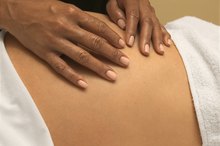
Differences Between Shiatsu & Swedish Massage
Learn More
Differences Between Shiatsu & Swedish Massage
Learn More

Pilates for Piriformis and the Gluteus Medius
Learn More
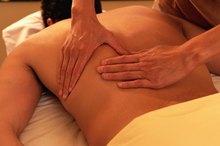
The Difference Between Myofascial Release & Massage Therapy
Learn More
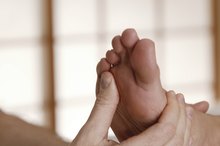
About Pressure Points for a Foot Massage
Learn More

Tai Chi Exercises for the Sciatica Nerve in the Back
Learn More
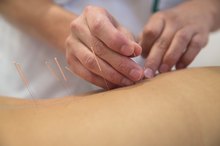
Acupuncture and Inner Meniscus Tear
Learn More
Does Acupuncture Help Fatty Liver Disease?
Learn More
Taping Techniques for Morton's Neuroma
Learn More
Pain in the Quadriceps
Learn More
References
- Mayo Clinic: "Massage: Get in Touch With Its Many Benefits"
- Pacific College of Oriental Medicine: "Benefits of Tui Na Massage"
- Scientific World Journal: "Deep tissue massage and nonsteroidal anti-inflammatory drugs for low back pain: a prospective randomized trial."
- The Journal of Traditional Medicine: "Gait analysis of patients with knee osteoarthritis before and after Chinese massage treatment"
- Complementary Therapies in Medicine: "Chinese massage combined with core stability exercises for nonspecific low back pain: A randomized controlled trial"
- Fremont College: "An Overview of Basic Techniques for Traditional Chinese Massage Therapy"
- Complementary, Alternative, or Integrative Health: What’s In a Name? National Center for Complementary and Integrative Health. Updated July 2018.
- Sherman KJ, Ludman EJ, Cook AJ, et al. Effectiveness of therapeutic massage for generalized anxiety disorder: a randomized controlled trial. Depress Anxiety. 2010;27(5):441-50. doi:10.1002/da.20671
- Massage Therapy for Health. NCCIH Clinical Digest for health professionals. National Center for Complementary and Integrative Health. Published December 2018.
- Massage Therapy: What You Need To Know. National Center for Complementary and Integrative Health. Updated May 2019.
- Falkensteiner M, Mantovan F, Müller I, Them C. The use of massage therapy for reducing pain, anxiety, and depression in oncological palliative care patients: a narrative review of the literature. ISRN Nurs. 2011;2011:929868. doi:10.5402/2011/929868
- Seaward BL. Managing Stress: Principles and Strategies for Health and Wellbeing. 7th ed. Burlington, MA: Jones and Bartlett Learning; 2011.