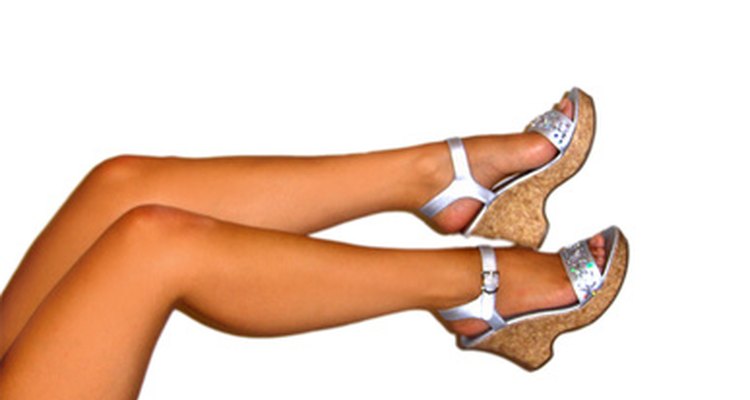
Elastic wax is used to remove unwanted hair from any location on the body. It is a type of body wax that is easier to remove than other types. If done properly, waxing will remove the hair and gradually make the regrowth of hair thinner over time. If done improperly, even an elastic wax will not remove all of the hair and rewaxing will be necessary to remove all of the unwanted hair.
Clean the area of the body where waxing will take place. For example, removing hair from the arm requires cleaning the arm and removing all dirt. A clean surface makes waxing easier.
Warm the wax in a wax warmer. If a warmer is not available, place the wax in the microwave for increments of 20 seconds until the wax is melted. Be careful when heating the wax because high temperatures can result in burns. The wax is ready when it is fully melted.
Apply the wax to the area using an application spatula or similar application device. Spread the wax evenly over the area. The wax layer should be around 3mm thick, so that it dries quickly and should only cover small areas at one time. Never cover an area that is larger than the removal paper. Elastic wax spreads easily when warm and tightens on the hair as it dries, so it pulls away without leaving sticky residue.
Pull the area of skin tight and hold it, so the skin remains tight. Use only one hand to hold the skin tight.
Press the paper strip to the area. Press down firmly, so it is fully attached to the wax, and wait a few minutes, so the wax can dry.
Pull the strip off. Pull from the bottom up or in the opposite direction of the hair growth to remove the hair. If pulled the wrong direction, the hair will not come off and the process must be repeated to remove the hair. Continue to hold the skin tight because it makes the hair removal much easier. Start slowly to make sure it is pulling in the correct direction. Pull quickly to remove the hair with less pain.
Repeat the process until all unwanted hair is removed.
Related Articles

Surgi-Wax Directions

How to Use Stripless Film Wax

Ways of Removing Hair From Nipple
How to Remove Perianal Hair

How to Use Surgi-Wax

How to Use Home Waxing Kits Without a ...
How to Wax With Duct Tape

Correct Way to Wax the Labia

Side Effects of Veet Waxing Strips
How to Use Nair Wax Strips
How to Remove Eyebrow Wax From Clothing
Ways of Shaving Without a Razor

What Is a Good Way to Get Rid of Hair ...
How to Trim Male Pubic Hair
Instructions for How to Use Hard Wax ...
How to Do a Brazilian Sugaring Wax at ...

How to Stop Hair From Growing at the ...
How to Wax Arm Hair
Does Waxing Hair Make It Grow Back ...
How to Remove Silicone Sealant From ...
References
Writer Bio
Helen Jain has been writing online articles since December 2009 for various websites. She has studied English and psychology and hopes to get a Ph.D. in English in the future.
Photo Credits
legs image by Leticia Wilson from Fotolia.com