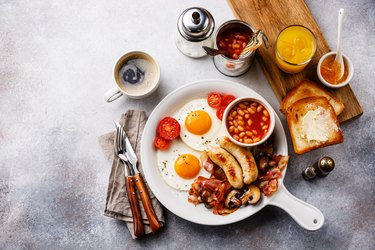
If you're trying to add more iron to your diet to prevent or combat iron-deficient anemia, breakfast is a good time to do so. You can craft many tasty breakfast dishes from foods that are sources of iron.
Tip
Breakfast foods high in iron include fortified cereals and eggs. Add raisins to oatmeal or have a tofu scramble as other ways to add the mineral without adding lots of unhealthy fat.
Video of the Day
Types of Iron
Iron is present naturally in many foods. Other foods are fortified with it and, when you can't get enough from food, your doctor may recommend iron as a supplement.
Video of the Day
Dietary iron has two forms: heme and nonheme.
Heme iron is found in animal products, namely beef, pork, seafood, eggs and poultry. According to the National Institutes of Health Office of Dietary Supplements, heme iron has a higher bioavailability compared to plant-based iron.
A person absorbs animal-based iron two to three times more effectively than plant-based iron. This type of iron is also less compromised by other dietary components, meaning that little interferes with its absorption.
Nonheme iron is found in plant products and fortified foods. Your body doesn't absorb nonheme iron as well, and phytate (a compound in grains and beans) and polyphenols (found in cereals and legumes) can compromise what you do absorb.
How Much Iron to Eat
You don't need large amounts of iron. The Recommended Dietary Allowance of iron for adults is 8 milligrams per day for men and 18 milligrams per day for females (due to blood loss from menstruation). Once a woman has passed through menopause, she needs just 8 milligrams per day like her male counterparts.
Women who are pregnant need a higher amount of iron to support a growing baby: 27 milligrams. And women who are lactating usually aren't menstruating, so they benefit from about 9 milligrams per day.
To put this in perspective, consider the iron amounts in these common breakfast foods:
- One serving of fortified breakfast cereal: 18 milligrams
- 1/2 cup cooked spinach: 3 milligrams
- 1 hard-boiled egg: 1 milligram
Complicating matters is that certain compounds found in common foods can interfere with your ability to absorb iron. For example, calcium interferes with the bioavailability of both heme and nonheme iron. Grains, beans, cereals and legumes can interfere with the bioavailability of nonheme iron (such as that found in spinach).
Ascorbic acid, or vitamin C, as well as meat, poultry and seafood, improve your body's ability to absorb nonheme iron. But, you have to carefully craft your iron-rich breakfast to ensure you actually absorb the mineral.
Why Worry About Iron?
Iron is essential to your body's ability to make hemoglobin, part of your red blood cells that transport oxygen to the cells and remove carbon dioxide — a waste product — from them. If you don't get enough iron from the food you eat, you become deficient and eventually can progress to iron-deficient anemia.
When you have anemia, your iron stores are so low that your body can't keep up with red blood cell production and you end up with symptoms described by the Academy of Nutrition and Dietetics that include:
- Pale skin and nails
- Weakness and fatigue
- Dizziness
- Hair loss
A large data review published in Nutrients in May 2018 showed that breakfast consumption is generally associated with higher overall intakes of many nutrients — iron included.
Sources of Iron
Iron is found in many common foods, not all of them typical at breakfast, however.
The Cleveland Clinic reports that some major sources of heme iron include:
- Oysters and clams
- Beef or chicken liver
- Tuna and shrimp
- Lean ground beef
- Eggs
Major nonheme sources of iron are:
- Beans, such as navy or lima, and lentils
- Instant oatmeal
- Enriched cereals, such as raisin bran
- Whole-wheat bread
- Tofu
- Spinach
- Peanut butter
Breakfast Foods High in Iron
Prevent iron deficiency by eating a balanced diet that includes plenty of sources of iron. Having iron-rich foods at meals and for snacks, not just for breakfast, helps you achieve your daily requirement and prevent deficiency.
Breakfast is a great time to commit to healthy eating. In general, include foods like eggs and lean meats, such as lean ground beef.
If you do eat vegetarian sources of iron, such as spinach or fortified cereals, have vitamin C alongside. Foods rich in vitamin C include strawberries, citrus fruits, potatoes, red or green bell peppers, broccoli, kiwi fruit and tomatoes. These increase your body's ability to absorb the iron and give you the best nutritional support.
Examples of iron-rich breakfasts include:
- Fortified cereal with strawberries and almond milk (16 to 18 milligrams)
- Two-egg omelet with half of a bell pepper and 1/2 cup chopped tomato (2.7 milligrams), glass of orange juice
- One packet instant oatmeal with 1/4 cup raisins (4.6 milligrams)
- Scramble made with 1/2 cup tofu, 1/2 cup garbanzo beans and 1/2 cup cooked spinach (8 milligrams)
- Breakfast taco filled with 3 ounces of cooked ground beef and diced potato (2.27 milligrams)
You may want to skip your coffee or have it a few hours before or after your breakfast, too. Research published in StatPearls and updated in April 2019 notes that polyphenols in coffee inhibit iron absorption.
Other Ideas for Iron
Processed meats, such as bacon and pork breakfast sausage, do have iron. One cooked piece of bacon contains 0.11 milligrams, and a typical two-link serving of sausage contains 1.36 milligrams. You'll need to eat a lot of these high-fat foods to get a day's worth of your mineral. If you enjoy it, have a bit in moderation, but include more healthy iron-rich foods as your primary source of the mineral.
If you're a fan of avocado toast — take heart. One entire avocado has 0.8 milligrams of iron, which, when included with other iron-rich foods throughout the day, contributes to your entire intake. Whole-wheat bread contains about 1 milligram of iron per slice.
Fill in with snacks high in iron to further boost your intake. Pistachio nuts, pumpkin seeds and cashew nuts are good options.
- Academy of Nutrition and Dietetics: "Foods to Fight Iron Deficiency"
- Cleveland Clinic: "Iron-Rich Foods and Anemia: Management and Treatment"
- National Institutes of Health: Office of Dietary Supplements: "Iron"
- Nutrients: "Breakfast in Human Nutrition: The International Breakfast Research Initiative"
- Academy of Nutrition and Dietetics: "How Vitamin C Supports a Healthy Immune System"
- USDA National Nutrient Database: "Pork, Cured, Bacon, Pre-Sliced, Cooked, Pan-Fried"
- USDA National Nutrient Database: "Rainbow Bell Peppers"
- USDA National Nutrient Database: "Chopped Tomatoes"
- USDA National Nutrient Database: "Instant Oatmeal"
- USDA Food Composition Database: "Iron-Rich Foods"
- USDA National Nutrient Database: "Breakfast Links, Pork Sausage"
- USDA National Nutrient Database: "Avocados, Raw, California"
- USDA National Nutrient Database: "Beef, Ground, Unspecified Fat Content, Cooked"
- StatPearls: "Biochemistry, Iron Absorption"