Possible Side Effects of Feeding a Baby Infant Oatmeal
Starting solid foods is an exciting milestone in a baby's first year, but it involves many important decisions. You must decide when to begin giving your baby solids, how often to feed her and which foods to offer. Awareness of the possible side effects of infant oatmeal can help you decide whether to feed this food to your baby.
Baby Oatmeal
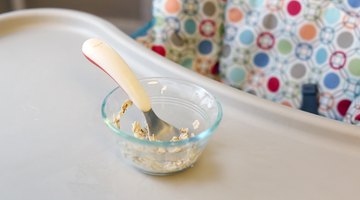
When your baby is ready for solids, you should begin with a single-grain baby cereal, such as infant oatmeal or rice cereal, according to the MayoCinic.com. A runny cereal -- 1 tablespoon of oatmeal mixed with 4 or 5 tablespoons of breast milk or formula -- provides your baby with good practice in learning how to manipulate and swallow solid food. Feeding him an iron-fortified cereal also helps prevent iron-deficiency anemia. Babies build up a reserve of iron during the last weeks of pregnancy, but by 6 months, these iron reserves start becoming depleted.
Allergic Response

Which Baby Foods Could Cause an Upset Stomach in Babies?
Learn More
Baby oatmeal makes a good first food for infants, since it has a low risk of causing an allergic reaction. However, it still could cause an allergic response as a side effect, particularly if it is contaminated with wheat gluten. Signs your baby is having an allergic reaction to infant oatmeal include eczema, hives, diarrhea, vomiting and difficulty breathing. If your baby is allergic to infant oatmeal, symptoms typically show up within two hours after eating the food.
Relieves Constipation
A change in diet, such as introducing solids, can lead to constipation -- dry, hard, difficult-to-pass stools. Breastfed babies in particular are at risk of becoming constipated when they start eating solid foods, since solids are so much more difficult to digest than breast milk. One side of effect of feeding your baby infant oatmeal is that it may help soften her stools. Pediatrician Dr. Paul recommends feeding constipated babies oatmeal rather than rice cereal since it has a laxative effect.
Reduces Infant Reflux

Should You Add Rice Cereal to Baby Formula?
Learn More
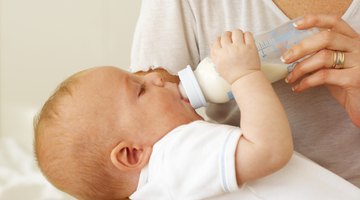
Babies who suffer from gastrosophageal reflux disease -- a severe form of infant reflux -- experience significant pain and discomfort from eating. They may arch their backs when they eat, act irritable while eating and spit up frequently. Adding an infant cereal, such as oatmeal, to your baby's bottle of formula or breast milk may have the side effect of reducing infant reflux. The weight of the cereal helps keep milk in a baby's stomach. Discuss whether you should add infant oatmeal to your baby's bottle with his pediatrician to ensure that the treatment is safe for him.
Related Articles

Which Baby Foods Could Cause an Upset Stomach in Babies?
Learn More
Should You Add Rice Cereal to Baby Formula?
Learn More

Feeding a Baby Kiwi & An Allergic Reaction
Learn More

Baby Rice Cereal & Gas
Learn More

How to Use a Syringe to Feed Newborn
Learn More

Should You Change Formula if Your Baby is Gassy?
Learn More

Should Babies Eat Lemons?
Learn More

How to Add Rice Cereal to Bottles for Infants with Acid Reflux
Learn More
Cooking Oats for a Baby
Learn More

Foods to Avoid When Breastfeeding Gassy Newborns
Learn More
- MayoClinic.com: Solids Foods -- How to Get Your Baby Started
- Better Health Channel: Iron Deficiency -- Children
- WholesomeBabyFood: Learn All About Oatmeal for Use in Baby Food Recipes
- BabyCenter: Food Allergies
- AskDrSears.com: Constipation
- WholesomeBabyFood: Baby Constipation
- WholesomeBabyFood: Learn About Infant Reflux and Introducing Solid Foods to a Reflux Baby

Based in southern Idaho, Michelle Johnson started writing in 1991. Her work has been published in the science fiction and fantasy journal, "Extrapolation." Johnson holds a Bachelor of Arts in creative writing and a Master of Arts in fantasy literature, both from Hofstra University in New York.
