Environmental Factors that Influence Social Development in Children
Parents often believe that their children's social skills are a fundamental part of who they are. Some children are shy while others are outgoing, and with these traits come a particular set of social skills. However, research published in the textbook "Child Psychology" indicates that most of a child's personality is determined by environmental factors. These environmental inputs are frequently subtle, or occur so early in life that parents fail to notice their influence. Social development plays a central role in children's adult personalities and there are many ways parents can create an environment that encourages the development of strong social skills.
Stress
Stress can profoundly affect a child's social development. Neurologist Lise Eliot points out in her book "What's Going On In There?" that children exposed to maternal stress in the uterine environment tend to be more fearful and reactive and could grow up to become shy children. Parental conflict, stressful and impoverished neighborhoods and chronic illness also predispose children to shyness and difficulty with social development. However, "Child Psychology" argues that some stress can have a positive impact. Children who witness their parents effectively resolving conflict, for example, often are better able to resolve conflict themselves. Kids who periodically face moderate stress while receiving parental support tend to be more resilient than children who grow up in completely stress-free environments.
Parental Social Skills

Long-Term Effects of Spoiling Children
Learn More
Parents model social skills to their babies even before they begin talking. Shy parents tend to raise shy children because the children witness fewer social interactions and may see other people as sources of stress, according to developmental psychologist Richard Weissbourd. Parents who are interested in raising children with strong social skills and outstanding personalities should expose their children to a variety of people even in infancy. This helps children become accustomed to new faces and decreases their likelihood of struggling with shyness and social anxiety.
Verbal Skills
Verbal skills strongly affect children's social development. According to "Child Psychology," children whose parents talk to them frequently are typically better-equipped to engage with other children. Babies listen to their parents' conversations even before they can understand language and learn the basics of conversation before they begin speaking. Talk to your child frequently to encourage strong verbal skills, which will encourage good social skills.
Stimulating Envrionments
Factors Affecting Early Childhood Development
Learn More
Social development is strongly correlated with exposure to a stimulating environment. The American Academy of Pediatrics advises that exposure to television prior to the age of two can stunt developmental growth, and particularly social and intellectual development. Access to a variety of toys including blocks, dolls and games encourages children to develop a variety of skills that can improve social interaction. Keep your child's environment interesting, varied and free of television and she is more likely to develop strong social skills.
Related Articles

Long-Term Effects of Spoiling Children
Learn More
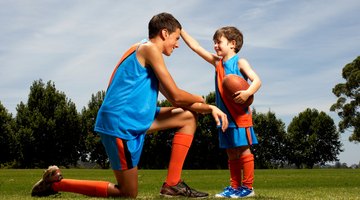
Factors Affecting Early Childhood Development
Learn More

Parents' Effect on Child Behavior
Learn More

The Effects of Environment on a Child's Behavior
Learn More
The Impact of Parenting Styles on Children's Development
Learn More
The Long-Term Effects of Physical Punishment on a Child
Learn More
The Effects of Isolation on a Child's Social Development
Learn More
What Is the Family Impact on Early Childhood Development?
Learn More
A Lack of Affection in Childhood Development
Learn More

What Are the Causes of Bad Behavior in a Child?
Learn More
- The American Academy of Pediatrics: Caring for Your Baby and Young Child
- Child Psychology: Development in a Changing Society; Robin Harwood, et al.
- The Parents We Mean to Be; Richard Weissbourd
- What's Going on in There?; Lise Eliot

Brenna Davis is a professional writer who covers parenting, pets, health and legal topics. Her articles have appeared in a variety of newspapers and magazines as well as on websites. She is a court-appointed special advocate and is certified in crisis counseling and child and infant nutrition. She holds degrees in developmental psychology and philosophy from Georgia State University.
