
Bungee Jumping in Tennessee
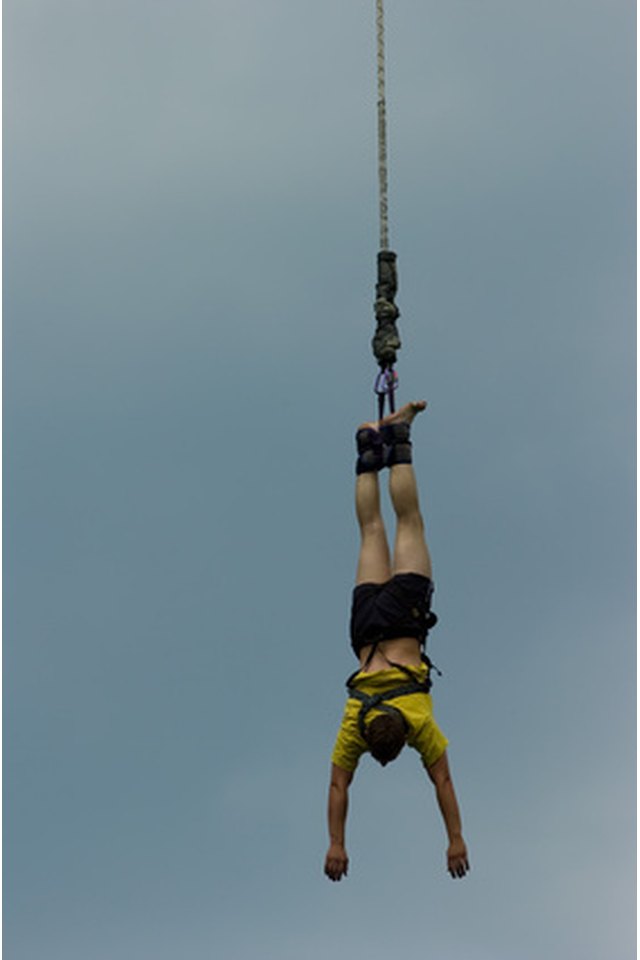
Bungee jumping can be a thrill-seeker's recreational activity or an extreme sport for a jumper to leap head-first off a structure high above the ground. Bungee jumpers are tethered to an elastic bungee cord attached at their ankles or a chest harness. After dropping for a short period of time, the cord recoils and the bungee jumper bobs up and down in the air like a yo-yo. Tennessee offers places to experience the adventure of bungee jumping.
About
In Tennessee, dare devils can pay an extreme sport company to provide equipment and a place to bungee jump, or they can take a jump from a platform at an amusement park. The jump from the amusement park is 65 feet compared with heights of 75 to 300 feet offered by extreme sport companies.
Extreme Sport Jumps
An extreme sport company, Luxergy, located in the Chattanooga area, offers bungee jumping for individuals. The company organizes jumps from bridges and other man-made and natural structures. Individuals can experience the excitement of jumping with the safety of a body harness and/or ankle straps. Jumps range in height depending on the jumping platform chosen. All equipment is provided. To schedule a jump or to learn more about bungee jumping opportunities, call 888-589-3749.
Bungee Jumping Operations
The Track Recreation Center located in Pigeon Forge is a theme park offering a 65-foot plunge designed to get the heart pumping. Jumpers can jump alone from a platform or with as many as two other people. A single jump costs $18 purchased from the ticket counter and $14 online. Individuals must weigh between 80 and 240 pounds and be at least 3 feet 6 inches tall to jump. In addition, jumpers under age 18 must provide a parental consent form prior to taking the plunge. The Track is currently the only amusement park that offers bungee jumping in a controlled environment of this kind in Tennessee.
Risk and Safety
A certain amount of risk is involved no matter where an individual bungee jumps. An individual can bruise, break bones or even die if something goes wrong during the jump. Before you take a leap, make sure the operator is certified by the federal Occupational Safety & Health Administration that watches over all workplace issues, including bungee jumping clubs, either private or in a park setting. You also can thoroughly check each piece of equipment you use with the operator to make sure each piece is sound.
Regulations
Certain states have regulations governing the recreational activity of bungee jumping and its safety requirements.
Legislators in Georgia put forth a bill to ban bungee jumping altogether, although it failed to pass.
The state of Tennessee allows the operation of bungee jumping and imposes very limited regulatory restrictions, mostly involving age, height and weight requirements of jumpers.
References
Writer Bio
Christie Gross has been writing since 1998. Her work writing public policy platforms for elected officials nationwide has been featured in national and local newspapers under various client pen names. Gross has a Bachelor of Arts in English and political science, as well as a Master of Public Administration from the University of Delaware.