What if we told you that you could save up to three lives in just one hour? Want in? Schedule an appointment to give blood today, and know what to expect at your visit with our guide for how to donate blood.
Blood transfusions are essential for surgeries, traumatic injuries, chemotherapy treatments and chronic illnesses like sickle cell disease, according to the American Red Cross. That's why giving a unit of blood is one of the easiest and most effective ways you can help out people in need.
Video of the Day
Video of the Day
If you're a first-time donor, consider this your crib sheet. We've got all the info you need to know before, during and after this safe and simple procedure.
In light of the coronavirus pandemic, LIVESTRONG.com is raising awareness about the urgent need for people to donate blood with our Give Blood, Give Back series.
Before You Donate
Here's a step-by-step guide for what to do before your appointment:
Step 1: Make Sure You Qualify
First, the basics: You have to weigh a minimum of 110 pounds and must be at least 17 years old (or 16 with parental consent), according to the American Red Cross.
You should also be feeling healthy. Stay home if you have the flu, a cold, a productive cough or a fever over 99.5 degrees (allergies are OK). Certain diseases — including hepatitis, some STIs and specific kinds of cancer — might affect your ability to donate, so check the American Red Cross website for details.
Although most medications won't influence your eligibility, there are exceptions. For example, if you're taking oral antibiotics for an infection, you should hold off on giving blood until you've completed treatment, per the American Red Cross. (For injected antibiotics, you need to wait 10 days post-treatment.)
There are other meds, as well as a few vaccines (though not the COVID-19 vaccine), that preclude donation — an alphabetical list is available from the American Red Cross or your local blood center's website.
Other considerations that might require deferring your donation include:
- You have low iron
- You've recently traveled to a malaria-risk country
- You participate in certain types of sexual activity
- You recently got a tattoo
- You're pregnant or have recently given birth
People who have used IV drugs are not eligible for donation.
For answers to more FAQs, check out the donor section of the America's Blood Centers' website.
Recent Changes to Blood Donor Eligibility Guidelines
In light of the coronavirus pandemic, the FDA has announced looser restrictions on who can donate blood, including the following changes:
- If you're a person assigned male at birth (AMAB), you must wait three months (instead of a year) after having sex with another person AMAB.
- If you're a person assigned female at birth (AFAB), you must wait three months (instead of a year) after having sex with a person AMAB who has had sex with other people AMAB.
- You must wait three months (instead of a year) after getting a tattoo or piercing.
- You must wait three months (instead of a year) after traveling to a malaria-endemic area.
Blood donation organizations are not required to implement these changes, so it's best to check with your donation center if you fall into any of the above categories.
Step 2: Book an Appointment
You can search for a blood donation center or drive near you and schedule an appointment to give using our interactive map or by visiting RedCrossBlood.org, AmericasBlood.org or AABB.org.
Even though it only takes about 10 minutes to draw a unit of blood, set aside an hour for the appointment so you have time to answer the screening questions, get a mini physical (more on that later) and then recover in the refreshment room afterward.
Tip
Encourage your partner or a friend to make an appointment for the same time so you can go together.
Step 3: Rest Up
The day before your appointment, forgo any partying (alcohol dehydrates you) and get a good night's sleep. This helps prevent adverse reactions like dizziness or fainting, according to the American Red Cross.
When you get dressed, choose comfortable clothes with short sleeves or sleeves you can roll up past your elbow so the technician can easily insert the needle.
Step 4: Fuel Your Body
An hour or two before your appointment, drink an extra 16 ounces of water, per the American Red Cross.
"A unit of blood is 500 milliliters, which means we are extracting the equivalent of two soda cans' worth of fluid from your body," says Yvette Miller, MD, executive medical director of the American Red Cross. "If you're not well hydrated, you might feel lightheaded."
Just avoid downing an entire bottle of water immediately before your appointment — that way, you won't have to pee in the middle of the procedure.
While it's fine to have a cup of coffee beforehand, keep your caffeine intake in check.
"Caffeine increases your heart rate, and if your heart rate is too high, you won't be able to donate," Dr. Miller says.
You should also eat a small, well-balanced meal to keep your blood sugar stable and prevent nausea.
Fatty foods can make it difficult to perform the pre-donation safety screening on your blood (we'll get to that in the next section), so skip the burgers, fries and ice cream. And chow down at least an hour beforehand to give yourself time to digest.
Step 5: Pack Your Bag
Bring a government-issued ID — like a driver's license, passport or a school photo ID if you're in college — as well as a list of medications you're taking, per the American Red Cross.
Bring along something relaxing to do while your blood is drawn, like a book, or your (fully charged) phone and a pair of headphones so you can listen to music or a podcast, watch a movie or call a friend.
It's safe to donate blood during the COVID-19 pandemic, but you'll need to take some extra precautions. Learn exactly how to donate blood safely now.
During Your Appointment
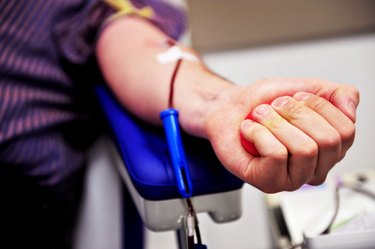
Here's what to expect at your appointment:
Step 6: Register and Get a Health Check
When you arrive at the collection center, you'll sign in, show your ID, give your address and read some information about eligibility and the donation process, according to the American Red Cross.
Next, you'll be asked a series of questions, either via an online form or in a private interview, to determine if it's safe for you to donate and if your blood is safe for others.
The questionnaire will touch on your health, travel history, medications, sexual activity and more. It's important to answer all of the questions honestly.
Next, a staff member will take your temperature, measure your pulse and blood pressure and test your hemoglobin levels using a finger stick.
How to Get Your Heart Rate Down for Donating Plasma
If you're nervous and your heart is pounding before your blood donation, here are a few tips to help lower it, per the Cleveland Clinic:
- Meditate
- Take deep breaths
- Drink some water
- Move around
You can also help prevent a fast heart rate by avoiding caffeine and nicotine and getting a good night's sleep before your appointment.
Step 7: Sit Back and Relax
Here's what to expect during the donation itself: While you're lying down or seated comfortably, a staff member will examine your arms to find a suitable vein, clean the area and then insert a new, sterile needle.
"If you're anxious, look away and take a few deep breaths to calm down," Dr. Miller says. Your phone is also a great distraction to take your mind off things.
Although you'll feel a pinch right when the needle goes in, it shouldn't hurt afterward. Let an employee know if you're experiencing any pain. "Also, tell someone if you're feeling lightheaded," Dr. Miller says. "Elevating your legs or having a drink or snack should help."
In addition to the pint of blood for donation, the collection center will also fill some small test tubes to check your blood for infectious disease.
"Once the procedure is complete, a staffer will place a pressure bandage on your arm," says Ruth Sylvester, director of regulatory services for American's Blood Centers. You'll need to keep the bandage on (and dry) for the next five to six hours to help the area heal.
Tip
Try this technique from the American Red Cross to reduce dizziness: Lift one leg slightly, hold for a few seconds, and then lower it back down. Switch sides. Repeat several times on each leg.
After Your Donation

Once your blood donation is complete, here's how to recover:
Step 8: Refuel
When you're done, a staff member will help you stand and you'll be asked to spend 15 minutes in the canteen to rest up. Grab a seat and a drink or two to replenish your fluids, per the American Red Cross, and let a staff member know if you feel dizzy, nauseous or otherwise unwell.
Before you leave, you'll be given a post-donation information sheet with basic care instructions, symptoms to watch for and a number to call in case you have a problem.
Step 9: Take It Easy
For the rest of the day, avoid heavy lifting, strenuous exercise and too much alcohol, per the American Red Cross. Eat well-balanced meals and drink plenty of fluids.
People seldom experience symptoms post-donation. Still, here's what to do if you're feeling nauseous or dizzy after donating blood: "Lay down and elevate your legs, or sit with your head between your legs," Dr. Miller says.
Step 10: Care for Your Arm
About an hour after leaving the collection center, Dr. Miller suggests removing the elastic wrap from your bandage and gently cleaning the area around the bandage so it doesn't get irritated. You can take off the bandage itself after a few more hours.
"If it starts bleeding again, or you notice swelling or bruising, apply pressure and lift your arm straight up over your head for several minutes," Sylvester says. "An ice pack can help relieve discomfort."
Step 11: Make Your Next Appointment
Someone in the U.S. needs blood every two seconds, according to the American Red Cross — but there's not always enough supply to meet that demand. Be a part of fixing that!
You're eligible to donate whole blood again after eight weeks (56 days), per America's Blood Centers, so now that you know how to donate blood, get your next appointment on the calendar ahead of time.
- American Red Cross: "Medications and Vaccinations"
- American Red Cross: "Eligibility Criteria: Alphabetical"
- American Red Cross: "Give Blood. Find a Drive."
- America's Blood Centers: "Find a Blood Center"
- American Red Cross: "A Student's Guide to Blood Donation"
- American Red Cross: "Blood Needs & Blood Supply"
- U.S. Food & Drug Administration: "Coronavirus (COVID-19) Update: FDA Provides Updated Guidance to Address the Urgent Need for Blood During the Pandemic"
- America's Blood Centers: "For Donors"
- America's Blood Centers: "Blood Donation FAQs"
- American Red Cross: "What to Do Before, During and After Your Donation"
- Cleveland Clinic: "How to Lower Your Heart Rate"
- American Red Cross: "What to Do Before, During and After Your Donation"
- American Red Cross: "First Time Donors"
- Centers for Disease Control and Prevention: "Blood Safety Basics"
- World Health Organization: "Blood Donor Counselling: Implementation Guidelines"
- America's Blood Centers: "Blood Donation 101"
Is this an emergency? If you are experiencing serious medical symptoms, please see the National Library of Medicine’s list of signs you need emergency medical attention or call 911.