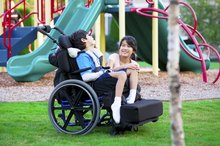
Even with training wheels, falls still happen, but you can protect your little one from serious injury by using proper safety equipment. Start teaching your child bicycle safety at a young age, and she'll be more likely to stay...
Mastering basic techniques will allow you to remain safe while navigating your bike across any terrain. Identifying the working components of your bike will enable you to perform a necessary safety check before each ride. Weari...
The National Bicycle Safety Network is a coalition of state and federal groups and agencies; non-profit advocacy groups for bicycling safety; and professional groups that meets quarterly to network and discuss issues related to...
Many bicycle accidents result in serious head injuries or even death and can occur due to bad weather, faulty equipment or improper use of helmets. If you recognize the basic safety rules for bicycling, you can ensure a fun and...
Safety guidelines are vital when biking for both children and adults. According to 2009 data from the Centers for Disease Control and Prevention, more than half a million people in the United States are treated in emergency roo...
Downhill mountain bikers as well as BMX racers usually don a full-face helmet. The extended chin bar of the full-face helmet protects your jaws and teeth during collisions and slideouts. While the full-face helmet has added ben...
Of that number, about 700 people die from their injuries. While riding a bicycle may seem like child's play, riding one improperly can result in serious injury or even death. Whether you're an avid rider or your child is just b...
Preschoolers who are just learning to ride and control a bike need help to prevent falls and injury. This age group lacks precise control of muscles and fails to anticipate potential dangers as they bike. Safety techniques and ...
The safety helmet has been designed to offer protection for all disciplines of bike riding. While the shape of the safety helmet varies slightly depending on the genre of cycling, each helmet model has been designed for maximum...
has more than 1.4 million military personnel on active duty. About a million of these personnel are stationed at one of the more than 400 military bases in the U.S. and the remaining are spread around the world at one of the a...
According to the City of New York website, while the majority of bikers ride during the day, 45 percent of biker fatalities occur at night. As a result, red tail lights and white front lights will help improve your visibility a...
Bicycle lights do you no good unless motorists can see them. According to the Consumer Product Safety Commission, bicyclists riding their bicycles at night run four times the risk of death in motor vehicle accidents as cyclists...
There is nothing more exhilarating than coasting down a hill on a bicycle, wind at your back on a sunny day. In addition to it being a good form of aerobic exercise, bicycling is just plain fun. Accidents do happen, though. In ...
Bicycle safety is as important for adults as it is for kids of all ages. Traumatic brain injury, commonly known as TBI, is the result of nearly 25 percent of bicycle injuries in California in one year alone, according to the Ca...
While early cyclists rode machines without helmets, brakes, gears or inflatable tires, modern cycling typically involves all these safety features and more. As non-racing cyclists took up bicycling as a form of commuting in the...
Organized by public agencies, nonprofits such as Kiwanis clubs, schools or private companies, bicycle safety rodeos teach and test students up to age 13 or so on bicycle handling, rules of the road and safety. These courses use...
Many of these injuries involve collisions where a driver was unable to see the bike rider, especially at night. Some of these accidents can be avoided through safety equipment such as flashing bicycle lights.
Whether you're towing a child, gear or groceries, bicycle trailers add concerns about the bike's additional size, the rider's ability to handle the bike, and safety for rider and passengers. Kids and pets should always travel i...
Whether you ride your bike for leisure, exercise or to get from Point A to Pint B, doing it safely is critical. More than 700,000 visit emergency rooms each year as a result of bicycle injuries, the U.S. Centers for Disease Con...
By now, most cyclists know that they should wear a helmet and have reflectors and lights on bikes that will be ridden after dark. Even so, a 2008 National Survey of Bicyclist and Pedestrian Attitudes and Behavior found that onl...
However, safety must be kept in mind. It's not enough just to be cautious in traffic. The International Bike Fund points out that 90 percent of bicycle accidents occur off busy streets. Wearing the right bicycle safety items wi...
Riding a bike is a big step toward freedom for children. By sixth grade, or age 12, that need for freedom is intense. Unfortunately, skills and cognitive ability might not provide the sixth-graders with everything they need to ...
Visibility is a top priority when it comes to bicycle clothing. However, with the clothing selection available today you really don't have to look like a traffic cone. Many clothes on the market are fashionable, functional and s
Riding bicycles at night can be a great experience in Oregon, especially if traffic is subdued and you have the road to yourself. Nonetheless, the greatly reduced visibility after dark demands special attention on the part of t...
Using the proper hand signals will allow you to remain safe while navigating through congested areas. Make sure surrounding motorists have clearly seen your signal before attempting a turning maneuver. Always wear an appropriat...
Road cyclists, mountain bikers and BMX riders wear protective helmets to prevent head injuries. BMX and mountain bikers use additional safety gear, including knee pads and shin guards. Hazards in the riding terrain as well as f...
Certain genres of bike riding, including mountain biking and BMX, involve high speed maneuvers that could result in painful falls. Even recreational riders should wear a helmet when riding on paved cycling trails. According to ...
Whether used for racing, doing tricks or because you favor the style, the popularity of BMX bikes continues to grow. But be warned a day of riding can easily be ruined by an injury, so knowing how to use BMX safety equipment ca...
Riding a bicycle is a good way to get exercise and fresh air. Biking is also good for the environment: riding a bike instead of driving a car reduces pollution and makes the air a little easier to breathe. When you're riding yo...
The National Highway Traffic Safety Administration reports that in 2008, the injury rate for United States bicycle riders aged 5 to 9 was 147.2 injuries per million. This rate jumps to 405.1 per million for ages 10 to 15. As ch...
It means more independence, more responsibility and, unfortunately, more ways to potentially get hurt. Because of this, it is important that parents and teachers begin talking about bicycle safety early. While children shouldn'...
Enforcing safety skills among bicycle riders is extremely important. According to the National Highway Traffic Safety Administration, bicycle-related accidents resulted in 52,000 injuries and 716 deaths in 2008. You can measure...
When riding your bike in traffic, safety is of paramount importance. That means making yourself as visible as possible. One way to accomplish this is with a bicycle safety flag. A bright orange flag waving high in the air over ...
Like similar triangles affixed to the backs of horse-drawn carriages and farm equipment, a bicycle safety triangle alerts motorists to the presence of a slow-moving vehicle. Used in conjunction with other safety and protective ...
The Crash-Type Manual for Bicyclists notes that 4.3 percent of all bicycle crashes involved a bicyclist making a left turn in front of passing traffic in his lane, with smaller percentages of crashes including right turns in fr...
Various agencies analyze bicycle safety standards in the United States, and standards exist for roads, automobile behavior, manufacturing, use of helmets and other equipment on the bike. The U.S. Consumer Product Safety Commiss...
Bicycling is a popular sport, hobby and mode of transportation in many U.S. cities. Since bicycling is so common, U.S. states, cities and towns often enact bicycle safety laws designed to protect both bicyclists and motorists. ...
A number of government agencies have begun offering bicycle safety grants to municipalities that wish to improve their roads, bike trails and other amenities to make their areas more bike-friendly. Encouraging bicycle use by ma...
While it doesn't have an engine, a bicycle is more of a vehicle than a toy. The entertainment value of riding bikes sometimes overshadows the potential dangers of whizzing down the street on two wheels. Bike safety instruction ...
Walking and bicycling are good for your health. You burn calories and build muscle every time you walk or ride. In addition to the health benefits, you avoid traffic congestion, save fuel costs and help the environment. Staying...
Since the late 1990s, major U.S. cities like New York have launched campaigns to encourage citizens to ride bicycles for personal and municipal benefit. Riding bikes provides cardiovascular exercise, it's cheap, and it helps th...
You might think of bicycling as child's play, but adults need to be just as aware of proper bicycle safety as children. In fact, more adults than children are involved in fatal bicycle accidents. While many aspects of bicycle s...
While touring, however, you are likely to share the road with many motor vehicles and other cyclists, and your non-riding time also presents logistical safety concerns. With some forethought and the right equipment, you can inc...
With the right equipment, you can decrease your risk of injury in a bike accident. No matter where you ride or on what terrain, you need certain equipment to be safe. A common mistake is to assume certain items are necessary o...
Commuting to work by bicycle can save money related to owning and operating a car, provide excellent exercise and help the environment. Women commuters need to know general bicycle safety, how to perform basic repairs and maint...
According to the Centers for Disease Control and Prevention website, more than 500,000 people per year visit the emergency room for treatment related to bicycle injuries, while more than 700 people die from bicycle-related inju...
Bicycle lights make you more visible to motorists, pedestrians and other bicyclists. They are a critical part of nighttime riding. Many jurisdictions have laws mandating the use of bicycle safety lights. The website BikeWheneve...
Also, many bicyclists enter the flow of traffic, so they experience potential hazards during merging and turning, when motorists may not notice them. For information about bike safety regulations specific to your area, contact ...
The Centers for Disease Control and Prevention reported in 2009 that 700 bicycle-related fatalities occur annually, and that U.S. emergency rooms see more than 500,000 people each year with cycling-related injuries. Of those 50...
A lot of grownups can't tell you how to fit a helmet properly, what hand signals to use when turning or whether their bicycles are in good working condition. The good news is that local bike stores and nonprofit groups can prov...
You save money by leaving the car parked, and you get exercise by biking. However, most U.S. urban areas offer only limited bike paths or designated bike lanes. As a bicycle commuter you must cope with traffic. Bike safety is a...
Learning to safely navigate these areas provides a safe bicycling experience for you and for those around you. When you're cycling, using signals, wearing safety gear and practicing other safety methods informs motorists and pe...
The issue of bicycle safety became more important in the United States in the first decade of the 21st century, as some transportation attention shifted from gas-powered vehicles to more environmentally friendly forms of transp...
Bicycle safety is about much more than simply wearing a helmet—it’s about information, preparation, anticipation and reaction. By understanding the rules of the road, both on a bicycle and in a car, a cyclist will b...
Children are never too young to learn the importance of bicycle safety. Learning at a young age sets children up for a fun, successful and safe life of bicycling. You can help children learn the rules of the road, safety tips a...
Bicycle safety equipment includes everything from protective gear that cyclists can wear, like helmets and gloves to clothing, padding, bicycle modifications and lights. Depending on your cycling habits, ideal bicycle safety is...
Unfortunately, more than 500,000 people in the United States are taken to the emergency room every year because of bike-related injuries, while about 700 people are killed in bike accidents. Obeying safe cycling rules and using...
Safe bicycling on public roadways requires concentration, observance of traffic laws and the use of proper safety devices. Every year, cyclists failing to follow safe practices or drivers disregarding cyclists' rights to operat...
Individuals of all shapes, sizes and ages bicycle. Bicycling accommodates all ability levels and is an enjoyable activity in which families can participate. Safety tips are intended for use by everyone, not just the young and i...
Males and urbanites are at greatest risk, as are young adolescents between the ages of 10 to 13, according to research published by the National Institute of Health (NIH).
This same NIH study indicates that inpatient costs al...
He'll probably want to reign over the neighborhood. To allow him that, you should carefully teach your child about bicycle safety. The National Highway Traffic Safety Associations notes that 15 percent of all people killed in b...
According to the National Highway Transportation Safety Administration (NHTSA), approximately 43,000 cyclists were injured in accidents involving a bike and a car in 2007. Many of these accidents are caused by motorists who eit...
Bicycle safety is an important topic for educators, parents and other caregivers who wish to teach new bicycle riders, generally children, how to be safe. Teaching bicycle safety through activities can be both effective and fun...
Bicycle accidents account for 44,000 injuries and 2 percent of traffic-related deaths each year, according to the latest statistics from the national Highway Traffic Safety Association. While biking can be an effective way to s...
Biking is an activity that can be experienced alone on a country road or with the family in the park. You can cycle for pleasure or sport as long as you are prepared. Bicycle safety includes watching for others on the road, avo...
Unfortunately, more than 600 children die each year from bicycle falls, with thousands more injured, according to the Academy of American Pediatrics (AAP). Following AAP recommendations for bicycle safety will help decrease the...
One safety precaution that comes to mind when thinking about bike safety is wearing a helmet. Many people neglect to realize the safety benefits of checking the bike itself to ensure that everything is in order and ready for th...
Seniors who have trouble driving can still use a bicycle to run errands or visit family and friends who live nearby. Bicycles are also a good way for anyone, including older adults, to get exercise. The normal rules of bicycle ...
Riding a bicycle is good exercise, and can be enjoyable and relaxing. It can also be dangerous if you do not follow proper safety rules and take certain precautions. Bicyclists often ride among other cyclists, pedestrians and e...
Every year, more than 50,000 people are injured in the United States in bicycle-related accidents. Learning the basics of bicycle safety, including proper equipment and road safety, can go a long way toward helping cyclists sta...
According to an article on KidsHealth.org, 300,000 children wind up in the emergency room each year after being injured on a bicycle. To prevent an accident, use a checklist for safety each time you get on a bicycle. It won't r...