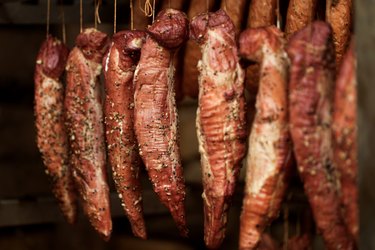
Cold smoking aids in preserving bacon, and serves as part of the curing process. For centuries, curing and smoking meats preserved them prior to refrigeration. Cold-smoking takes longer than hot smoking, because it's performed at a low temperature. It's essentially a drying process, in contrast to hot smoking, which cooks the meat. Curing bacon results in desirable color and flavor. Cold-smoking reduces the meat's moisture, diminishing the risk of microorganisms and spoiling.
Equipment
Video of the Day
A smoker, homemade smoker or a covered barbeque such as a kettle grill will work for cold smoking. A roasting pan large enough for the pork, a pot holder mitt and long-handled barbeque tongs are convenient for home cold-smoking. For cold-smoking at home, use an instant-read thermometer -- the thermometer supplied with certain barbeque grills won't be useful for the low temperatures used to cold-smoke bacon.
Video of the Day
Wood
To create a flavorful smoke requires sawdust or small wood chips from hardwood. Briquettes work well to keep the wood smoking during the cure. The type of wood influences the flavor. Apple and hickory are popular for smoking bacon.
Ingredients
Pork belly or pork shoulder are the usual choices for homemade bacon. The belly meat makes bacon that becomes crisp when cooked. Shoulder meat contains less fat and gives you flavorful, meaty, cold-smoked bacon. Most recipes call for salt and sugar. Using salt and sugar before smoking assists in preserving the meat. Using molasses in place of sugar provides the curing benefits of sugar and imparts the color and flavor of the molasses to the meat. Maple syrup or brown sugar offer options for curing cold-smoked bacon in the traditional manner.
Preparation
Bacon is often cured in a bath of water combined with sugar or other natural sweeteners and salt. Heavy plates on top help keep a pork belly or shoulder immersed in a covered stainless steel bowl or other container. The pork must be refrigerated during the soaking process. Traditionally, bacon remains in the brine for about a week, and you turn the bacon daily for even absorption. Contemporary recipes may call for using an instant cure product and soaking the pork for as little as 36 hours for shoulder bacon or 72 hours for belly bacon. Rinsing the meat removes excess salt prior to smoking. After patting the pork dry, you can add dry seasonings such as pepper.
Cold-Smoking Bacon
After the briquettes are glowing, adding a layer of the chips or sawdust over the coals creates the smoke for cold-smoking with a grill. The usual method involves slicing the pork in half and putting it in a roasting pan. Place the uncovered pan on the grill rack and close the barbeque grill's lid. Keep the grill vents open. it may be necessary to relight the coals to keep the hardwood chips or sawdust smoking. Cold-smoking involves keeping the pork's temperature below 110 degrees Fahrenheit, generally in a range of 80 degrees to 100 degrees. To dry the meat as part of a traditional cold-smoke cure requires at least 15 hours of smoking, and can take much longer, depending on the pork's weight, the amount of fat and the desired color.
Food Safety
Although the salt and the drying effect of cold-smoking reduce the risk of bacteria, it's crucial to keep bacon refrigerated below 40 degrees Fahrenheit after the smoking process. Chill the bacon before slicing it. Use the bacon or freeze it within seven days. Always cook bacon thoroughly before eating it.
- National Center for Home Food Preservation: Some Solutions to Difficulties of Home-Curing Pork
- Epicurious: Molasses-Cured Pork Shoulder Bacon
- National Center for Home Food Preservation: Curing and Smoking: Sausage Making Equipment and Procedures
- U.S. Department of Agriculture: Smoking Meat and Poultry
- USDA: Bacon and Food Safety
Is this an emergency? If you are experiencing serious medical symptoms, please see the National Library of Medicine’s list of signs you need emergency medical attention or call 911.