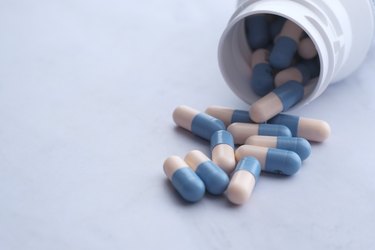
Iodine is found naturally in soil and seawater. In your body, the thyroid gland needs it to produce hormones. Without enough iodine, side effects may occur. These can include an enlarged thyroid, as well as learning disabilities in infants from mothers who are iodine deficient.
How Much Do You Need?
Video of the Day
Your body doesn't make iodine, so you must get it from food or supplements. Sufficient iodine is required to make thyroid hormones that are secreted into your blood and carried to every tissue in the body. They regulate your metabolism and supply energy, maintain your body temperature and help keep your brain, heart and muscles working normally.
Video of the Day
The National Institutes of Health (NIH) suggests the recommended amount of iodine you need to consume each day from food or supplements to maintain good health. These amounts vary depending on your age as follows:
- Children ages 1 to 8 years — 90 micrograms;
- Children ages 9 to 13 years — 120 micrograms
- Adults: 150 micrograms
- Pregnant and lactating women: 220 to 290 micrograms
Some foods are naturally rich in this nutrient. Dried seaweed, such as nori, kelp, kombu and wakame, is one of the best dietary sources, but the amount of iodine varies significantly from one variety to another. Per gram, whole or sheet seaweed may contain anywhere from 11 to 1,989 percent of the daily recommended intake, according to the NIH.
Other good iodine food sources are seafood, dairy products, grains and eggs. The content of iodine in fruits and vegetables depends on the soil and fertilizers used, and that of meat and dairy products varies depending on the iodine concentrations in the food the animals consume.
Most Americans can easily maintain adequate iodine intakes from iodized salt used at the table and in cooking. Iodized salt is often added to commercial food during processing and preparation. One teaspoon contains about 180 micrograms of iodine.
Read more: 10 Myths About Salt Debunked
What Causes Iodine Deficiency?
Amounts of iodine below 10 to 20 micrograms per day can result in hypothyroidism, which occurs when an insufficient amount of hormones are produced by the thyroid. This often leads to an enlarged thyroid gland, causing goiter. Evidence of goiter is usually indicated by a swollen neck, notes the U.S. National Library of Medicine.
Historically, iodine deficiency was in epidemic proportions in the U.S., but with the addition of iodine to salt, Americans having a low level of iodine is uncommon. However, in some countries, iodine deficiency remains a public health problem. Approximately 30 percent of the world's population is at risk for this condition, as reported by the American Thyroid Association.
Some factors may increase the risk for inadequate iodine levels, as the NIH points out:
- Living in regions with iodine-deficient soils or consuming food from these areas.
- The consumption of goitrogens, which are substances that interfere with the absorption of iodine in the thyroid. Foods high in goitrogens include soy, cabbage, broccoli, cauliflower and other cruciferous vegetables.
- Individuals who do not use iodized salt. Using pink Himalayan salt or unfortified sea salt may not supply adequate amounts of iodine.
- Pregnant women who don't consume dairy products or those who restrict their salt intake.
Do You Need a Supplement?
If you're at risk for a deficiency, you may need to take an iodine supplement. The consequences of iodine deficiency can be serious. By taking an iodine supplement, benefits could include reducing some ill effects, such as thyroid disease and even cancer.
According to the U.S. National Library of Medicine, some consequences of low iodine levels, as well as the ways this nutrient may benefit your health include:
- Infertility: Iodine deficiency may cause women to stop ovulating, leading to infertility.
- Breast pain: Adequate iodine levels may help relieve the pain from fibrocystic breast disease, a benign condition characterized by lumpy, painful and fibrous breasts, as reported by the NIH. Taking 3,000 to 6,000 micrograms of molecular iodine for five months may help reduce tenderness and pain in breast tissue relating to their menstrual cycle, points out the U.S. National Library of Medicine.
- Risk of cancer: Iodine deficiency may contribute to an autoimmune disease of the thyroid, which could increase the risk of thyroid cancer and possibly other cancers, such as prostate, breast, endometrial and ovarian.
- Pregnancy: Iodine deficiency in pregnant women can result in severe impairment in brain development and growth in the fetus, as well as stillbirth and miscarriage. Sufficient intakes after birth are also important to provide iodine in breast milk for the proper intellectual and physical development in infants and children.
- Benefits of iodine on skin: Iodine is often applied to the skin for inflammatory disorders such as dermatitis, eczema and psoriasis. It helps kill germs and heal wounds and is used in the treatment of venous leg ulcers and may reduce the chance of future infection.
- Gum infection: Iodine is sometimes applied inside the mouth to prevent soreness or to treat gum disease, or periodontitis, and reduce bleeding after tooth removal.
- Thyroid conditions: iodine supplements can improve thyroid hyperthyroidism
and lumps on the thyroid called thyroid nodules_._
- Eye health: Iodine may help decrease swelling in the eyes of infants and reduce vision loss in people with ulcers of the cornea. It may also be effective in the treatment pink eye.
- Radiation exposure: Iodine supplements are effective at protecting against radiation exposure in a radiation emergency.
Read more: Foods to Avoid for Goiter
Iodine Side Effects
Excessive intake of iodine from supplements may cause some of the same symptoms as iodine deficiency, including goiter and hypothyroidism. Upper limits for iodine have been established as a guide to the maximum doses you should take from supplements.
For teens, this amount is 900 micrograms. For adults 19 years and older, the maximum dose is 1,100 micrograms, according to the NIH.
Taking iodine liquid or tablet supplements as well as iodine-containing multivitamins may cause side effects in some people, as the U.S. National Library of Medicine notes. These may include:
- Nausea
- Stomach pain
- Runny nose
- Headache
- Metallic taste
- Diarrhea
Taking large amounts of iodine or using it for long periods in doses higher than the tolerable upper level without your doctor's supervision may increase the severity of health risks, such as thyroid gland inflammation and thyroid cancer.
Some individuals may have an increased sensitivity to iodine from supplements. Those with pre-existing thyroid disease, including multiple goiter nodules, autoimmune Hashimoto disease, Graves disease and a history of thyroid gland removal, should use these products with caution.
Infants, seniors and pregnant or lactating women may also be at a higher risk for the development of iodine-induced thyroid dysfunction with symptoms of:
- Swelling of the lips and face, called angioedema
- Severe bleeding
- Easy bruising
- Fever
- Joint pain
- Enlargement of lymph node
- Hives
Before taking iodine supplements, always consult with your doctor to discuss the appropriate dosage for your condition.