The Long Term and Short Term Effects of Marijuana Use
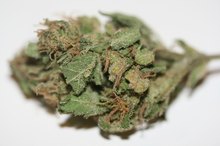
Marijuana, derived from the hemp, Cannabis sativa, is the most frequently used illegal substance in the United States, where it continues to be a controversial topic of legal debate. Marijuana has many slang names, such as pot, weed and grass. According to the National Institute on Drug Abuse (NIDA), in 2007 nearly 6,000 people per day tried marijuana; and, of special concern, more than 62 percent were under 18 years, which indicates marijuana’s continued experimentation among youth 1. Of 400 chemicals in this substance, delta-9-tetrahydrocannabinol (THC) is responsible for marijuana’s effects on the brain.
If you are experiencing serious medical symptoms, seek emergency treatment immediately.
Brain Effects
Upon inhaling marijuana, THC quickly gets transported from the respiratory system to the circulatory system and enters the blood. Consequently, the blood transports THC to the brain and elsewhere throughout the entire body. Different areas of the brain have varying quantities of receptors (for cannabinoid) on neurons (brain nerve cells) which are affected by THC as they bind with the THC chemical; for example, areas with multiple such receptors include thinking ability and concentration, sensory perception as well as perception of time, areas of memory, pleasure and coordination.
Short-Term Effects
Side Effects of MDMA
Learn More
Almost immediately after first smoking marijuana the effects begin and may continue as long as two or three hours. A burning sensation in the mouth, a dry throat, bloodshot eyes and increased appetite are common. Also, consistent with brain areas most affected, short-term effects may include:
- impairments in thinking
- problem-solving
- judgment
- comprehension
- as well as impaired short-term memory
Time perception is altered and behaviors become limited due to impaired speech, concentration and coordination abilities. Sensory perception becomes distorted in terms of vision, hearing and touch. Physiologically, marijuana lowers blood pressure while increasing heart rate by 20 to 100 percent, which can last up to three hours. This drop in blood pressure, combined with an increased heart rate, is serious because, as the NIDA reports, a person smoking marijuana has four times the risk of experiencing a myocardial infarction (heart attack) within the first hour after inhalation. Moreover, while this substance is known for its euphoric state or sleepiness, it also can produce anxiety, paranoia with hallucinations or panic attacks.
- Almost immediately after first smoking marijuana the effects begin and may continue as long as two or three hours.
- Also, consistent with brain areas most affected, short-term effects may include: * impairments in thinking
* problem-solving
* judgment
* comprehension
* as well as impaired short-term memory Time perception is altered and behaviors become limited due to impaired speech, concentration and coordination abilities.
Long-Term Effects
Chronic use of marijuana may produce multiple health problems later on in life beyond addiction to the substance itself. For example, chronic use is associated with high scores for anxiety and depression, with increased suicidal thinking patterns as well as the diagnosis of schizophrenia. Another important long-term effect is how THC acts on the immune system, that is, it decreases the function of the immune system, which may leave you more susceptible to frequent illnesses and infections. In terms of respiratory effects, marijuana is more potent than tobacco because, as the NIDA states, it has 50 to 70 percent more carcinogenic properties than tobacco; thus, it may increase the likelihood of developing lung cancer or at least increased susceptibility to frequent lung infections or obstructed airway conditions. Sexual dysfunction also may be a long-term effect.
- Chronic use of marijuana may produce multiple health problems later on in life beyond addiction to the substance itself.
- In terms of respiratory effects, marijuana is more potent than tobacco because, as the NIDA states, it has 50 to 70 percent more carcinogenic properties than tobacco; thus, it may increase the likelihood of developing lung cancer or at least increased susceptibility to frequent lung infections or obstructed airway conditions.
Related Articles

Side Effects of MDMA
Learn More

What Are the Effects of Marijuana Use on College Students?
Learn More

The Effects of Tar in Smoking
Learn More

Interesting Facts About Depressants
Learn More

Side Effects of Fastin Diet Pills
Learn More

Differences Between Smoking Cigarettes & Marijuana
Learn More

Smoking and respiratory rate
Learn More
How Would Marijuana Addiction Affect a Family?
Learn More

What Are the Side Effects of Laudanum?
Learn More

Side Effects of Quitting Smoking Marijuana
Learn More
References
- National Institute for Drug Addiction: Marijuana
- Whitehouse Drug Policy Information Site: Marijuana Facts and Figures
- The Partnership for a Drug-Free America: Marijuana
- Substance Abuse and Mental Health Services Administration. Key Substance Use and Mental Health Indicators in the United States: Results from the 2018 National Survey on Drug Use and Health. 2019.
- National Institute on Drug Abuse. What is Marijuana? Updated April 2020.
- Meier MH, Caspi A, Ambler A, et al. Persistent cannabis users show neuropsychological decline from childhood to midlife. Proc Natl Acad Sci USA. 2012;109(40):E2657-2664. doi:10.1073/pnas.1206820109
- Ribeiro L, Ind PW. Marijuana and the lung: hysteria or cause for concern? Breathe (Sheff). 2018;14(3):196-205. doi:10.1183/20734735.020418
- Huang YH, Zhang ZF, Tashkin DP, Feng B, Straif K, Hashibe M. An Epidemiologic Review of Marijuana and Cancer: An Update. Cancer Epidemiol Biomarkers Prev. 2015;24(1):15-31. doi:10.1158/1055-9965.EPI-14-1026
- Patrick ME, Bray BC, Berglund PA. Reasons for Marijuana Use Among Young Adults and Long-Term Associations With Marijuana Use and Problems. J Stud Alcohol Drugs. 2016;77(6):881-888. doi:10.15288/jsad.2016.77.881
- National Academies of Sciences, Engineering, and Medicine; Health and Medicine Division; Board on Population Health and Public Health Practice; Committee on the Health Effects of Marijuana: An Evidence Review and Research Agenda. The Health Effects of Cannabis and Cannabinoids: the Current State of Evidence and Recommendations for Research. Washington, DC: the National Academies Press; 2017.
- National Institute on Drug Abuse. Is marijuana a gateway drug? Updated July 2019.
- Centers for Disease Control and Prevention. Marijuana: How Can It Affect Your Health? Updated February 27, 2018.
- Colizzi M, Bhattacharyya S. Cannabis use and the development of tolerance: a systematic review of human evidence. Neurosci Biobehav Rev. 2018;93:1-25. doi:10.1016/j.neubiorev.2018.07.014
- Hasin DS, Saha TD, Kerridge BT, et al. Prevalence of Marijuana Use Disorders in the United States Between 2001-2002 and 2012-2013. JAMA Psychiatry. 2015;72(12):1235-1242. doi:10.1001/jamapsychiatry.2015.1858
- Winters KC, Lee CY. Likelihood of developing an alcohol and cannabis use disorder during youth: Association with recent use and age. Drug Alcohol Depend. 2008;92(1-3):239-247. doi:10.1016/j.drugalcdep.2007.08.005
- Bonnet U, Preuss UW. The cannabis withdrawal syndrome: current insights. Subst Abuse Rehabil. 2017;8:9-37. doi:10.2147/SAR.S109576
- National Institute on Drug Abuse. Available Treatments for Marijuana Use Disorders. Updated April 2020.
Writer Bio
A.M. Tacon is an associate professor of health at Texas Tech University. Her research interests include psychosocial factors in cancer, complementary therapies and stress reduction in individuals with cancer. Dr. Tacon runs mindfulness-based stress reduction programs for women with breast cancer, which is based on various forms of mindfulness meditation.