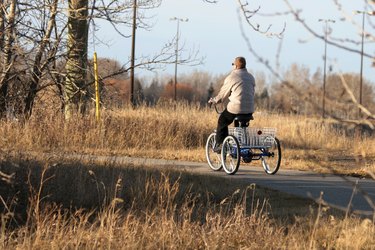
Adding one wheel to a bicycle can make a world of difference. While they may look alike, bicycles and tricycles function in very different ways. Tricycles feature two wheels at their back end, rather than just one on a bicycle. This extra wheel provides stability by preventing the tricycle from tipping over, eliminating the rider's need to maintain balance. Tricycles also feature a flat seat that allows the rider to sit upright rather than leaning forward. This is more leisurely and less effective at generating power, but it is also more comfortable and desirable for recreational riding. As easy and common as it is to ride a bike, tricycles are even easier.
Step 1
Place the tricycle on a flat surface and sit on the seat. Place your hands on both handlebars and put your feet on the pedals. You should be able to sit there without pedaling and maintain an upright position -- one of the advantages of tricycles.
Video of the Day
Step 2
Pedal the tricycle slowly. Initially, you will want to ease yourself into riding the tricycle and give yourself time to get adjusted. You'll be sitting lower than you would on a typical bicycle so it may take some time to get used to riding near traffic or around other bikes. Use the handlebars to steer the tricycle as needed along paths and around obstacles.
Step 3
Test the brakes to make sure you can slow the tricycle properly. Most tricycles have hand brakes close to where you grip the handlebars. Before heading out on your ride, tighten your hand around these levers to increase friction on the wheels and slow the tricycle to a stop in your driveway or front yard.
Tip
Always wear a helmet when you ride a tricycle.
Do not try too ride fast on a tricycle. Although you have extra stability, tricycles are harder to handle than bicycles. High speeds around tight corners put you at greater risk of tipping over or losing control.
A tricycle has a larger profile than bicycle. This could make you more imposing when riding on sidewalks or other recreational paths. Watch out for oncoming pedestrians and keep close to the right edge of the sidewalk. Pull off the path if needed to allow others to pass.
Become familiar with your local rules regarding tricycles. Different governments have different rules about when and where you are allowed on the sidewalk and when you are required to use the streets.
Video of the Day