




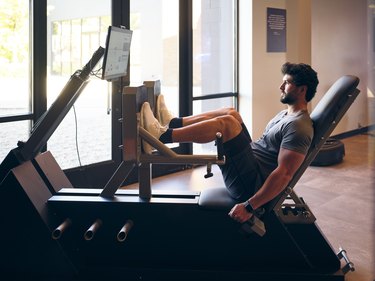

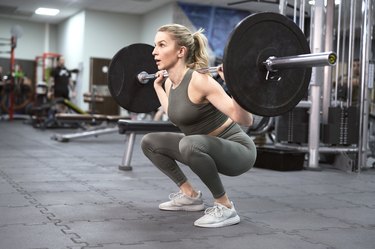
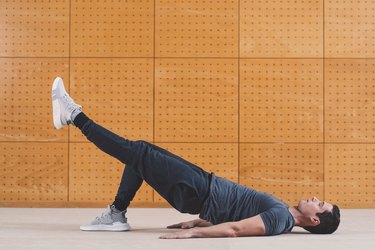
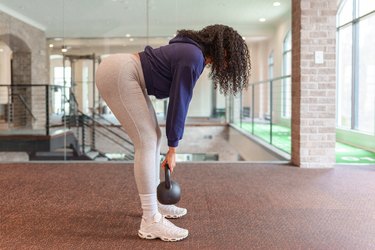

Lower Body: Squat Variations

Last Update: September 18, 2008

Video By:

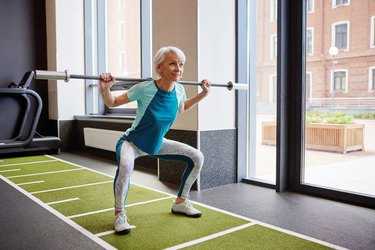
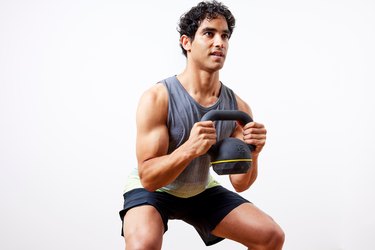
For toning, as well as muscle building, squats really work the upper quads and glutes. Learn how to strengthen the lower body by performing squat variations properly from a certified trainer in this workout video.

Take Action

  • Feet & shoulders square
  • Take short side steps & bend
  • Put footprints down
  • Add variations

About this Author

Keith Irace has been a certified trainer for 16 years. He is currently the regional group fitness manager for Equinox Fitness Clubs in southern California and a trainer for iTRAIN.com is your own "Hollywood personal trainer right in your pocket." Each audio and video workout consists of an elite Hollywood Trainer or World Champion Athlete mixed with original music to satisfy your workout needs. iTRAIN provides more than 275 workouts in its library ranging from treadmill to elliptical, cycling, strength training, and many more.

Member Comments

Request a New Article or Video

We are regularly adding new articles and videos to the site to enhance our members' experience. Tell us what topics you want to read about or watch and we'll make sure you always find the content you need!

Video Transcript

Hi everybody. I'm Keith Irace, and welcome to Lower Body. Today's move is going to be a squat variation, so check it out. We're going to start our move by just stepping our feet together about 2 inches, and we're going to move laterally or to the sides. So we're just going to step, side and in and side and in. Good. So I want you to think about minimizing that side pressure on your knee or lateral pressure on your knee by exaggerating stepping down into the move, so it's almost like you're putting a footprint onto the floor. Put your footprint down. Good. Now if it helps you to add just a little arm balance here, that's okay. Get that upper body moving. We're going to add some variations but let's do this perfectly eight more times. Here we go. Seven and six, you got it looking good, sink, and four. So we're just going to add a little tempo to this. We're going to be adding a pulse three times on this side. Let's start it and we go three, two, one. All the way up. Three, two, one, and stand. Get deep into that move, yes, and stand, its three, two, one. Push off the floor, three, two, one. Feel that level change so you get low, two, three. You stand tall. Low, three, two, stand tall, low, three, two. Two more times, sink, three, two. One more time, sink, three, two. Back to singles. Now I want you on this next set to go for a little bigger range, right? So we're warm now, right? So we reach as far away to the side as we can. Safely go right, foot to the floor. That's it. Eight more, and seven, go for range, looking good, six, open it up, five, and four, go deep, three, and two. Last one here, come back to those pulses. It's three, two, one, stand tall. That's it. Three, two, one, and up again. Three, two, one, and up. Again, three, two, one. Two more here. Ready for a big finish, three, two, one. Last one, three, two, one. We're going to add a little hop squat. So it's here, and here. Good. Up and side, side and side. You just replace the foot. You see where your foot is going? Right foot, left foot, right foot, left foot. Here's 10, nine, feel the heart rate, and four, three, two, and one. Good work. That was lower body. Today's move was squat variation. I'm Keith Irace. I'll see you next time.

Tools

Track your daily calories. See how many calories you burn and consume.

BMI is a measurement of body fat based on height and weight.

Map your local running, cycling, walking and hiking routes and track your calorie burn.

Find us on the web, receive emails and use our mobile app to keep you motivated.

This tool will help you to decide whether to treat at home or see a doctor.