









































About Moles and Skin Melanoma

About Moles and Skin Melanoma
Photo Credit Jupiterimages/Brand X Pictures/Getty Images

Moles (or melanocytic nevi) are a benign collection of cells (melanocytes) which produce melanin or the color seen in the skin. On sun exposure melanocytes produce more melanin which is seen as a tan. Moles appear in the first year of life and peak in the thirties but the number of moles will increase with sun exposure. They are often pink, tan, brown or flesh color. Melanoma, which is cancer of the melanocytes, is the most serious form of skin cancer though diagnosed early it is almost 100 percent curable.

Significance

Dysplastic nevi or atypical moles may be inherited or occur sporadically. Ultraviolet light is known to cause the mutations that cause the melanocytes to become abnormal (atypical) or cancerous as in melanomas. A study by Tucker et al in the Journal of the American Medical Association in 1997, however, showed that one atypical mole on the body increased the risk of melanoma twofold, while ten or more abnormal moles increased the risk of melanoma fourteenfold.

Melanoma can arise in an atypical mole (dysplastic nevi) but can also originate in an area of skin which did not have a mole. Though the risk of a single normal mole turning cancerous is extremely low (1 in 200,000), Geller et al in the American Journal of Academic Dermatology in 2007 showed that 50 percent of melanomas were associated with an atypical mole in patients under the age of 30.

Symptoms

Moles that show any changes should be reviewed by a physician. These changes may include any increase in size, change in color, sign of inflammation or color that spreads beyond the mole. Moles that have an irregular border, asymmetrical, are larger than 0.5 inch (1 cm) or have a change in sensation, pain, itching or bleeding should also be checked.

Risk Factors

Those with familial atypical mole and melanoma syndrome (FAMM) have been shown to have an overall lifetime risk of developing melanoma of 100 percent. This syndrome has a history of melanomas in the family, large number of moles some may be atypical and the atypical moles show certain characteristics.

A single family history of melanoma in mother, father, sibling, or child increases the risk by 50 percent. Other relatives (grandparents, aunts or uncles) with melanoma also slightly increase the risk. Atypical moles increase the risk of melanoma by as much as fourteen fold depending on the number of atypical moles. While the exposure to ultraviolet light (by the sun or tanning booths) increases the risk of both atypical moles and melanoma particularly if there is a history of sunburn as a child. Those with a fair complexion, freckles, blue, green or gray eyes also have an increased risk to melanoma, according to the Mayo Clinic.

Treatment

Early melanoma and dysplastic nevi (atypical moles) can be removed by surgery with the laboratory checking that all the abnormal tissue has been removed. A large melanoma where there is chance of recurrence will also be removed by surgery, but the surgeon will remove more normal tissue (wider excision) and may decide to remove nearby lymph nodes. This can be a big operation depending on where the melanoma is located. Melanoma that has spread to other organs will be treated by chemotherapy, radiotherapy or biological therapies.

Protection

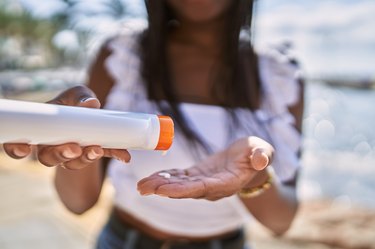
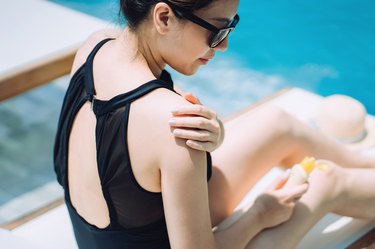
Moles, atypical moles and melanoma develop because of sun exposure. A Canadian study on children conducted by Green in 1999 and published in the Lancet showed that correct application of sunscreen reduced the number of new moles developing in children and may therefore reduce the risk of melanoma. Correct use of sunscreen involves frequent reapplication (every two hours) especially after swimming and the cream should be applied thickly (1 tsp. to each limb, back and front and 1/2 tsp. for the face, neck and ears). The sun should be avoided when at its maximum (between 11 a.m. and 3 p.m.). The best protection is a hat, clothing and sunglasses. Children need extra protection.

References

Article reviewed by Loredana Tiron-Pandit Last updated on: May 3, 2011

Must see: Photo Galleries