
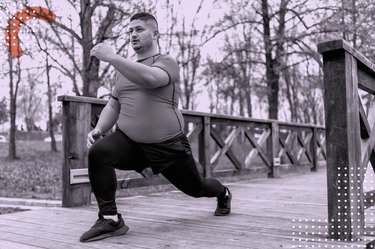

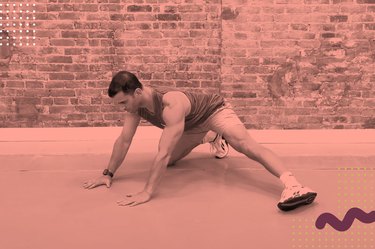
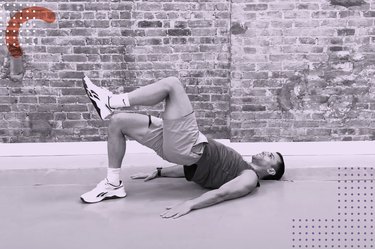

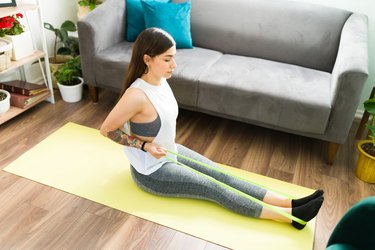
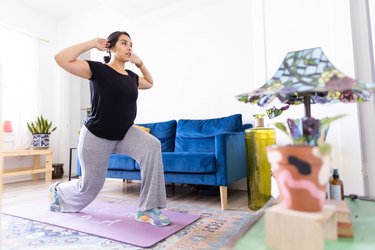


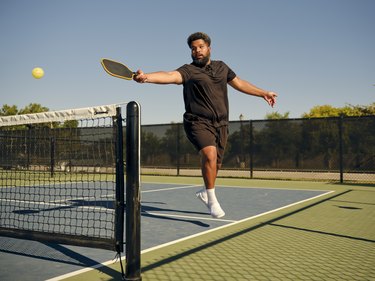
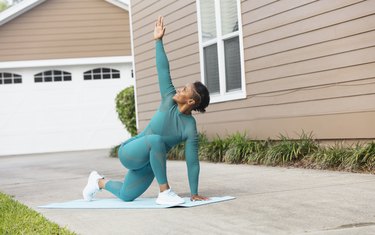

Maintaining and increasing hip and leg flexibility and strength helps to prevent injuries during athletic and non-athletic movement. Cherri Brightridge, a Triathlon Academy Coach, with Lifetime Fitness, follows the advice of the American College of Sports Medicine, and encourages her athletes to strengthen and increase the flexibility in the hip flexors, "because weak psoas muscles may lead to compensation injuries in the knees, hips and lower back making biking and running harder than necessary, thus increasing the possibility of further injuries and the reduction of performance." Even those not training for a triathlon can benefit from strong, flexible hip muscles to maintain a healthy lifestyle, a healthy back and a functional range of motion.
Piriformis Stretch
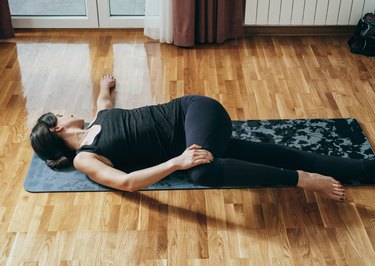
The piriformis stretch works on the flexibility of the muscles that are responsible for lateral rotation of the hip. Debbie Pitchford, a physical therapist, states that this stretch is "particularly important to athletes who have to change direction." Keeping the piriformis muscle flexible can help prevent injury to other leg muscles. Lie on your back and cross your legs by placing one foot on the opposite knee. Hold on to the other thigh with both hands and pull your knee toward your chest until you feel resistance in your buttocks and hips.
Hip Adduction
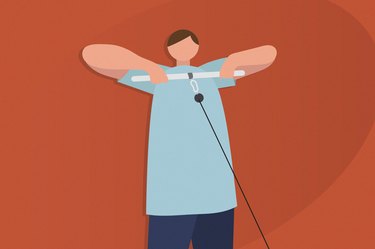
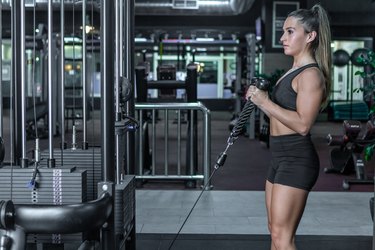
The hip adduction exercise strengthens the largest hip muscle, the gluteus maximus and the inner thigh muscles. From a standing position with your feet apart, keep your hips straight and move your thigh inward, towards the center of your body. Repeat this exercise in sets of ten.
Boat Pose
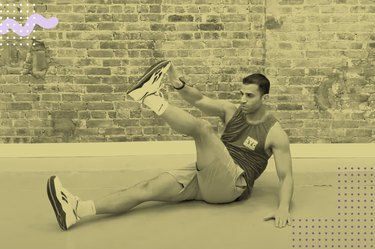
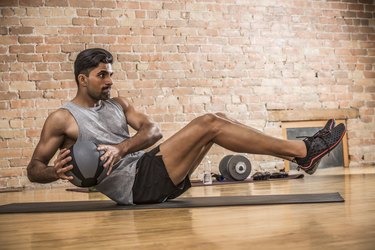
Julie Gudmestad, a licensed physical therapist and certified Iyengar Yoga teacher, writing on YogaJournal.com, encourages yoga poses to strengthen and stretch the hip area. Boat Pose, or Navasana, strenghtens the iliopsoas muscles, which "cross the floor of the pelvis, emerge at the outer edges of the pubic bones, and finally insert on the inner upper femur (thighbone)." To complete the boat pose, sit on the floor with your legs extended in front of you. Lean back slightly, inhale and without bending your back, raise your legs straight off the floor. Reach with your arms along side your legs. The ideal boat pose would have your legs straight and at a 45 degree angle to the floor. You may need to work up to this goal. Hold the pose for ten seconds to begin, with a goal of being able to hold the pose for one minute at a time.


Member Comments