



















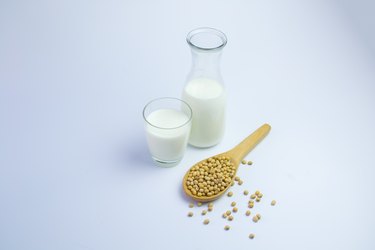





Soy infant formula is a popular alternative to formula made with cow's milk. Parents might choose soy formula if an infant is diagnosed with milk allergies or for moral reasons, like vegetarianism. Twenty-five percent of formula-fed babies in the United States now consume soy formula. With so many parents choosing soy-based formula, it is wise to explore some of the controversy regarding soy formula and the possible dangers of soy in general.
Allergies
Many parents switch from standard cow milk-based formula to soy formula after lactose intolerance diagnosis. However, soy allergies are also quite common. Stuart Berger, M.D., labeled soy as one of the top seven allergens in the 1980s. Symptoms of a soy allergy occur between two hours to days after the food is eaten. Symptoms might include sinus and ear infections, crankiness, joint pain, fatigue or stomach pain.
Inhibited Intestinal Development
Professor Sharon Donovan of The University of Illinois has conducted two studies that look at the soy isoflavone genistein affecting intestinal growth in babies. In the first study, Donovan focused on treating intestinal cells in culture with genistein in the amount present in soy infant formula. In the second study, Donavan fed newborn piglets formula with added genestein. Both studies showed evidence of decreased proliferating intestinal cells.
Hormonal Imbalances
The isoflavones found soy formula include genistein, daidzein and glycitein. These isoflavones, also referred to as phytoestrogens, may act like the hormone estrogen in the body. According to the National Institute of Environmental Health Sciences (NIEHS) website, "Animal studies indicate that health effects of possible concern include early onset of puberty in females and alterations in development of breast tissue." The NIEHS website goes on to explain that an infant who is fed soy formula is at a higher risk for hormonal issues than adults who eat soy products along with a variety of other foods, since the infant will eat 100 percent formula. The Weston A. Price website estimates that a baby on soy formula will receive the estrogen equivalent of at least five birth control pills per day.
Thyroid Disease
According to the Soy Online Service website, whose mission is to"expose the deceit of the major soy companies and to uncover the truth about soy products," soy phytoestrogens can cause thyroid dysfunction in humans. The website says that the high levels of phytoestrogens found in soy-based formulas act as an anti-thyroid, which can cause goitre, a swelling condition caused from the thyroid gland not functioning properly. Manufacturers now add iodine to soy formulas to alleviate this risk of goitre, but Soy Online Service points out that soy formula-fed infants could still be at risk of long-term thyroid damage.
References
- Soy Online Services: Phytoestrogens & Your Baby
- Science Daily: Research Studies Effects Of Soy Baby Formula On Intestinal Development
- The Weston A. Price Foundation: Soy Infant Formula: Birth Control Pills for Babies
- National Institute of Environmental Health Sciences: Since You Asked- Soy Infant Formula
- Allergy, Asthma & Sinus Relief Resource Center: Soy Allergens: Shock of the New


