




























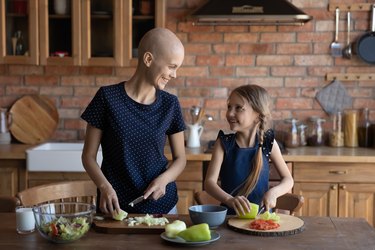













One of life's most difficult challenges is seeing a loved one suffer from illness. Those who are undergoing chemotherapy face not only the frightening reality of living with an illness, but the painful and disheartening side effects of the treatments that aim to cure it. Those who provide care to persons undergoing chemotherapy can be overwhelmed by the responsibilities involved in providing their loved one with comfort and support. Caregivers need to be aware of the impact of such stressors on their own well-being.
Physical Risks
Caregivers should protect themselves against the potential risks involved in exposure to chemotherapy drugs. Chemotherapy drugs remain in the patient's body fluids for up to 72 hours after therapy ends. Today's Caregiver explains that unintentional contact with cancer drugs can occur when a caregiver is exposed to the vomit, stool or urine of a chemotherapy patient, and trace amounts of chemotherapy drugs may be present in the bathroom or laundry.
These drugs can be absorbed by caregivers through skin contact, or inhaled in vapor form, leading to skin rashes, gastrointestinal symptoms, headaches and allergic reactions. Long-term exposure can cause pregnancy complications or even cancer.
Aside from the direct risks of exposure, the challenges of taking care of a person who is on chemotherapy may impact the caregiver's health due to exhaustion or self-neglect. It's important to keep as well-rested, nourished and relaxed as is possible during this difficult time.
Emotional Distress
The feelings experienced by a caregiver can be overwhelming. The desire to ease a loved one's suffering may clash with the stress, frustration, and, sometimes, resentment that the caregiver tries to repress. Feelings of resentment towards the patient are often followed by feelings of guilt and a vicious cycle of emotional negativity evolves.
The website Strength for Caring stresses that it is important for caregivers to acknowledge their feelings, and to ask for help when needed. A caregiver needs to take care of herself first, so that she'll be in good shape to care for others.
Pride
Ultimately, the ability to provide care for our loved ones during chemotherapy should be a source of fulfillment and pride. The difficulties involved in facing such huge life challenges can strengthen family bonds and bring us face to face with what is truly important.
The American Cancer Society advises that caregiving is a powerful way to demonstrate love and respect for another person. Caregiving can enrich a person's life by forcing them to cultivate the inner strength to cope with one of life's most challenging roles.


