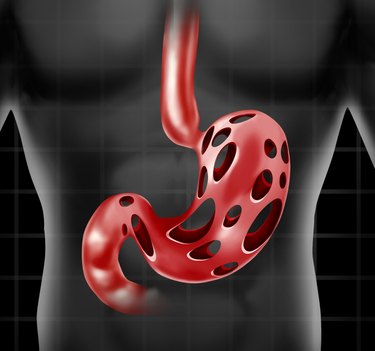
You are probably familiar with the gassy, abdominal pain referred to as bloating. You may even know that acid reflux is a result of some of the acidic contents of the stomach leaking back up into the esophagus, where it burns or irritates the lining. But you may be unaware that bloating and acid reflux are sometimes linked to each other. Bloating can sometimes contribute to and result in acid reflux.
Understanding Acid Reflux
Video of the Day
Escape of the acidic contents of the stomach up into the esophagus is normally prevented by a muscular ring called the lower esophageal sphincter. But sometimes the sphincter relaxes and allows regurgitation of the stomach's acidic contents. This can cause the lining of the esophagus to become irritated and damaged, leading to heartburn -- a pain in the area of the breastbone. There are several things that can cause relaxation of the sphincter and may allow acid to enter the esophagus. For example, certain medications such as calcium channel blockers used to treat high blood pressure are known to cause relaxation of the sphincter, and in some people this could lead to more episodes of acid reflux. The sphincter also opens to allow escape of built-up gas in the stomach, commonly referred to as belching.
Video of the Day
Understanding Bloating
Bloating is an uncomfortable feeling of fullness in the abdomen that can sometimes be painful. You may feel gassy and belch a lot. This is natural and is your body's way of releasing some of the pressure that can build up in your stomach and intestines. Bloating can be caused by numerous things -- most of them not serious. You may feel bloated after eating certain types of foods such as beans, broccoli or cabbage. Eating large or fatty meals can cause distension as these meals stay in the stomach longer. Also, eating too quickly or drinking carbonated beverages can cause you to swallow more air, leading to bloating. Bloating can result from constipation, irritable bowel syndrome, lactose intolerance and other medical conditions as well.
Bloating and Acid Reflux
Because bloating leads to increased abdominal pressure, it can cause acid reflux as it pushes stomach contents back up into the esophagus. More frequent swallowing -- to get rid of stomach contents that have entered the esophagus -- could make you swallow more air and cause more bloating. When you feel bloated, you may even try to relieve some of that pressure by belching intentionally, which can also cause some reflux of the acidic stomach contents up into the esophagus. This may be more likely to occur if your bloating is due to consuming a large meal or is a result of delayed stomach emptying, which can be related to certain medications or conditions.
Treatment
If you find that you are experiencing acid reflux during times when you are bloated, there are several steps you can take to decrease the likelihood of feeling the burn. Eating small meals, eating slowly and not lying down for a few hours after a meal can be successful strategies to minimize your symptoms. If you experience acid reflux at night, raising the head of your bed may help. Consider eliminating foods that lead to heartburn symptoms or cause you to feel bloated. Drugs like simethicone can help alleviate excess gas, and there are medications such as antacids and acid reducers that treat acid reflux. While temporary bloating is common and usually not a symptom of a serious condition, see your doctor if you are experiencing regular bloating or if you have more than occasional heartburn symptoms.
Medical advisor: Jonathan E. Aviv, M.D., FACS
- Merck Manuals Professional Edition: Gas-Related Complaints
- American Gastroenterological Association: Gastroesophageal Reflux Disease (GERD)
- American College of Gastroenterology: Management of Dyspepsia Guidelines
- National Institute of Diabetes and Digestive and Kidney Diseases: Indigestion
- International Foundation for Functional Gastrointestinal Disorders: Understanding Bloating and Distension
- Gastroenterology Hepatology: Pathophysiology, Evaluation, and Treatment of Bloating: Hope, Hype, or Hot Air?
- British Journal of Clinical Pharmacology: Do Calcium Antagonists Contribute to Gastro-Oesophageal Reflux Disease and Concomitant Noncardiac Chest Pain?
Is this an emergency? If you are experiencing serious medical symptoms, please see the National Library of Medicine’s list of signs you need emergency medical attention or call 911.