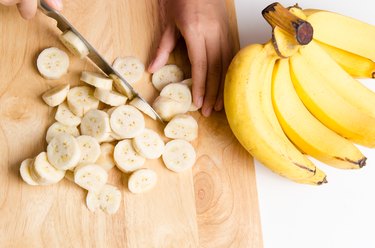
When you're experiencing a bout of food poisoning, the last thing you want to do is eat, but it's important to stay hydrated. After your food poisoning symptoms subside, you can ease back into eating with the BRAT diet, which calls for bland, low-fiber foods.
Tip
If you experience food poisoning, stay hydrated and follow the BRAT diet for a few days. This dietary plan consists of bland foods that are gentle on the stomach, including rice, bananas, crackers, toast and applesauce.
Video of the Day
Food Poisoning Symptoms
Food poisoning is caused by eating contaminated food. Infectious organisms — including bacteria, viruses and parasites — or their toxins are often the culprits.
Video of the Day
A February 2019 article published in the journal Frontiers in Microbiology explains that food poisoning is often started by the Bacillus cereus group of bacteria. Members of the B. cereus group cause about 63,400 foodborne disease cases per year in the U.S. alone.
The Mayo Clinic notes that food poisoning symptoms vary depending on the source of contamination. Most types of food poisoning cause one or more of the following signs and symptoms:
- Nausea
- Vomiting
- Watery or bloody diarrhea
- Abdominal pain and cramps
- Fever
Its symptoms usually start within hours after eating contaminated food. They may also begin days or weeks later. Sickness caused by food poisoning generally lasts from a few hours to several days.
Infectious organisms or their toxins can contaminate food at any point of processing or production, even during the growing or harvesting stage. Contamination can occur at home if food is incorrectly handled or cooked. Cross-contamination, or the transfer of harmful organisms from one surface to another, is a cause of food poisoning as well.
Practice food safety in your kitchen by not leaving food out for more than two hours at room temperature. Make sure surfaces and cooking utensils are kept clean when you are preparing food.
Food Poisoning Treatment
The U.S. National Library of Medicine describes most cases of food poisoning as being acute, meaning that food poisoning comes on suddenly and lasts for a short amount of time. Most people with foodborne illness get better without treatment, but it's important to quickly replace lost fluids and electrolytes to prevent dehydration. In severe cases, you may need treatment at a hospital.
Food poisoning remedies at home typically involve rest and hydration. As soon as you feel you're on the way to food poisoning recovery, you may follow the BRAT diet to soothe your battered system.
The BRAT diet stands for bananas, rice, applesauce and toast. However, you may consume other products too, including crackers, biscuits, toast and bland foods, in general.
Since BRAT foods are typically low in fiber and gentle on the stomach, they'll make your stools firmer. Additionally, bananas are high in potassium and may help replace the nutrients your body has lost because of diarrhea or vomiting.
Another option is to use probiotics, which are foods or dietary supplements that contain live bacteria. These microorganisms replace or add to the beneficial bacteria found in the gastrointestinal tract, according to the Cleveland Clinic. Though you'll want to avoid dairy when you're recovering from food poisoning, yogurt or kefir, a fermented milk drink, are acceptable because they contain probiotics.
In general, if you have food poisoning, it's best to ease back into your normal eating pattern gradually. Start by eating bland foods and then slowly introduce new foods. Avoid high-sugar and high-fat foods during food poisoning recovery. Fiber supports colon health and aids in digestion, but it also increases bowel movement frequency. For this reason, it's not recommended when you're dealing with food poisoning.
Read more: 13 Surprising and Beneficial Probiotic Foods
- Mayo Clinic: "Food Poisoning"
- Frontiers in Microbiology: "Characterization of Emetic and Diarrheal Bacillus cereus Strains From a 2016 Foodborne Outbreak Using Whole-Genome Sequencing: Addressing the Microbiological, Epidemiological, and Bioinformatic Challenges"
- U.S. National Library of Medicine: "Food Poisoning"
- Cleveland Clinic: "Mom’s Advice Is Still the Best for Treating Diarrhea"
Is this an emergency? If you are experiencing serious medical symptoms, please see the National Library of Medicine’s list of signs you need emergency medical attention or call 911.