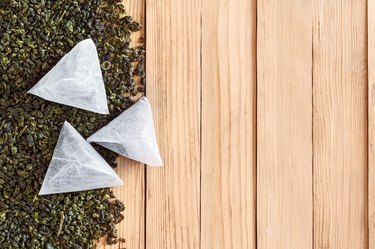
Does caffeine give you jitters, anxiety or headaches? Coffee isn't the only culprit — the caffeine in a tea bag can have similar effects. This stimulant occurs naturally in most types of tea, especially those made from the Camellia sinensis plant.
Tip
The amount of caffeine in a tea bag depends on the type of tea. Herbal tea has little or no caffeine, while black or green tea contains 30 to 50 milligrams of caffeine per cup.
Video of the Day
Caffeine in Tea Versus Coffee
Thousands of products available on the market contain caffeine in one form or another. Tea, coffee, chocolate and energy drinks are just a few to mention. In fact, caffeine is the most widely used stimulant worldwide, according to a May 2017 review published in the journal Frontiers in Psychiatry. It not only boosts your energy and stamina but also enhances cognition, memory and alertness.
Video of the Day
Coffee and tea are the primary sources of caffeine for most adults, as noted in the above review. Children get about 50 milligrams of caffeine per day from chocolate and other sweets. The maximum recommended dose is 400 milligrams a day for adults, 100 milligrams for teens and 2.5 milligrams per kilogram of body weight per day for children. However, some people are highly sensitive to caffeine and may experience adverse effects at much lower levels.
If you fall into this category, consider the caffeine in tea versus coffee. As reported by the Food and Drug Administration, one cup of coffee (8 ounces) provides 80 to 100 milligrams of caffeine. Some varieties contain up to 165 milligrams, points out the Mayo Clinic.
Espresso supplies 47 to 64 milligrams of caffeine per serving (1 ounce), while instant coffee has about 63 milligrams of this stimulant. Surprisingly, decaf coffee contains a small amount of caffeine too — and so does decaf black tea (2 to 5 milligrams per cup).
According to the FDA, there are 30 to 50 milligrams of this compound in each cup of green or black tea. Generally, one tea bag is about 0.07 ounces (2 grams) — that's enough for a cup of tea. Herbal tea, on the other hand, contains little or no caffeine, depending on the plants used. Hibiscus tea, for example, is caffeine-free.
Does Iced Tea Contain Caffeine?
Green, black, white and oolong teas all come from the Camellia sinensis plant and contain caffeine in varying amounts. One cup of oolong tea, for instance, has about 38 grams of caffeine. Therefore, the iced versions of these drinks contain just as much caffeine as hot tea.
Bottled iced tea is a different story. Some brands have caffeine added for greater energy and mental focus, while others are made with caffeine-free tea. You can also find decaf iced tea in most stores. These beverages, though, are often high in sugar, artificial flavors and other additives that may harm your health.
The content of caffeine in Lipton Iced Tea, for example, depends on what variety you choose. Lipton Mango Iced Herbal Tea is caffeine-free. The same goes for the Strawberry Watermelon Iced Herbal Tea.
Lipton Black Diet Iced Tea Peach, which is made with black tea, has 20 milligrams of caffeine per bottle (16.9 ounces). Likewise, all of the company's iced teas containing black, green or white tea contain this stimulant.
Whether you opt for hot or iced tea, there's less caffeine in a tea bag than in a cup of coffee. If, for some reason, you're trying to cut back on stimulants, opt for herbal teas.
Read more: What Types of Tea Are Caffeine Free?
These beverages are packed with antioxidants that fight inflammation and oxidative stress, points out a review published in the Journal of Traditional and Complementary Medicine in October 2018. Many varieties possess cholesterol-lowering, antibacterial and anti-cancer effects, leading to improved overall health.
- Frontiers in Psychiatry: "The Safety of Ingested Caffeine: A Comprehensive Review"
- FDA: "Spilling the Beans: How Much Caffeine Is Too Much?"
- Mayo Clinic: "Caffeine Content for Coffee, Tea, Soda and More"
- USDA: "Black Tea"
- USDA: "Tea, Hot, Herbal"
- USDA: "Tea, Hot, Hibiscus"
- Horticulture Research: "Varietal Identification of Tea (Camellia Sinensis) Using Nanofluidic Array of Single Nucleotide Polymorphism (SNP) Markers"
- USDA: "Tea, Hot, Leaf, Oolong"
- Lipton: "Mango Iced Herbal Tea"
- Lipton: "Strawberry Watermelon Iced Herbal Tea"
- Lipton: "Black Diet Iced Tea Peach"
- Journal of Traditional and Complementary Medicine: "Herbal Beverages: Bioactive Compounds and Their Role in Disease Risk Reduction - a Review"
- Lipton: "FAQ"