































Each woman has a combination of several different sex hormones secreted from the pituitary gland and produced from the sex organs. Women produce testosterone as well as estrogen and progesterone. The testosterone levels in a woman are much lower than testosterone levels in men, however, certain conditions that cause a decrease in the female hormones estrogen or progesterone may result in testosterone being the dominant hormone. This can result in physical changes in a woman's menstrual cycle and even her hair growth pattern. There are ways however to control the testosterone levels in women.
Step 1
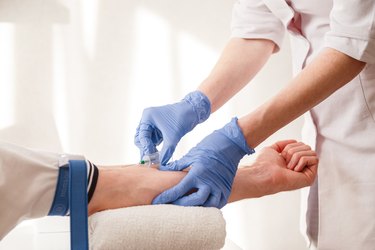
Have a blood test to confirm if your testosterone levels are indeed high. Women with polycystic ovary syndrome tend to have higher than normal testosterone levels, along with women that have other conditions. Blood tests in most cases can display hormone levels, but it can also point the doctors into the direction of what exactly is causing the hormonal increase. This will help with diagnosis and treatment.
Step 2
Reduce your intake of sugar and refined carbohydrates. Dr. Lee of Virginia Hopkins Health Watch states that excessive sugar and refined carbohydrate intake results in high insulin, which stimulates the hormones to produce male hormones.
Step 3
Take oral contraceptives. Birth control pills contain a synthetic version of estrogen used to lower the luteinizing hormone, which in turn lowers testosterone levels, according to Acne Guide International Edition.
Step 4
Book a session of acupuncture. A study published by the American Physiological Society, states that electro-acupuncture treatments not only reduced testosterone levels in women, but it also restored regular menstrual cycles and reduced waist circumference. Teamed up with regular exercise, this regimen may also reduce excess weight and overall body mass.
Tips and Warnings
- Hirsutism is one of the symptoms that women develop when they have higher than normal androgens, or male hormones. Hirsutism is normally caused by polycystic ovary syndrome, ovarian tumors, Cushing's syndrome and certain medications. Symptoms of hirsutism are irregular menstrual cycles, acne, masculine body shape, deepening of voice, male pattern baldness and facial hair.


