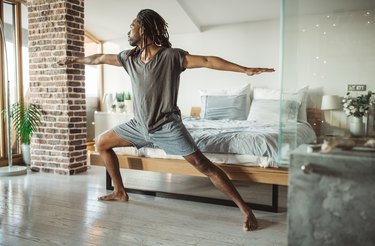
If the images in your head of what yoga is "supposed" to look like are of lithe models contorting their bodies into different shapes, then you've got it all wrong. In fact, the practice of yoga is all about finding flexibility and perseverance within — not an Instagram-worthy display of athleticism.
Whether you're practicing Hatha or Vinyasa, the teachings are all based on the Yoga Sutras of Patanjalix, written by sage Sri Swami Satchidananda, which references the eight limbs of yoga for living a life of purpose. Those eight limbs include Pranayama (breath) and Dharana (concentration), both of which are needed for handling stressful, challenging life moments.
But there's more to yoga than just de-stressing. It's also a practice that strengthens your muscles and joints, improves your range of motion and boosts your overall fitness. Here's everything you need to know to incorporate it into your regular workout routine.
The Mental and Physical Benefits of Yoga
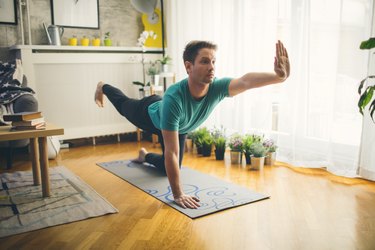
Committing to a yoga practice can help relieve stress, anxiety and muscle tension — but it can also help you sleep better at night and stand taller.
If you're new to exercise (or it's been a while), yoga is a great low-impact place to start. Essential yoga poses will build the body awareness required to do functional strength-training moves like squats, lunges and push-ups down the line.
But it's also an excellent way for experienced athletes to cross-train, recover from tough workouts and improve range of motion, flexibility and strength.
Learn more about the benefits of yoga that will convince you to make it a habit.
How to Start a Yoga Practice
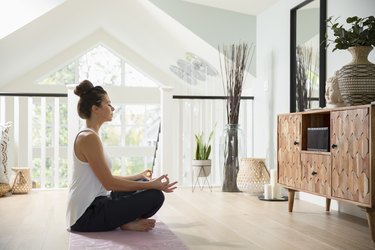
Now that you're sold on following a yoga practice, how and where do you start? Before you sign up for a yoga class, it's important to understand the different types of yoga (yes, there's more than one).
For example, if you're completely new to yoga, a Hatha yoga class is ideal for you because it breaks down many basic yoga poses and is a slower-paced practice that focuses on breathing through the transitions between asanas (poses).
Hatha yoga is an umbrella term for physical practice, so other types of yoga, like Vinyasa, Ashtanga and more, are all forms of Hatha. Various types of yoga are taught at faster paces or place a greater demand on endurance and strength, so there's something for everyone.
Read up on the different styles of yoga and get tips on how to get started with yoga at home or in a studio.
4 Types of Yoga to Consider
There are more than 800 styles of yoga, according to Harvard Health Publishing. Learn more about the basics of four popular types below.
Hatha Yoga
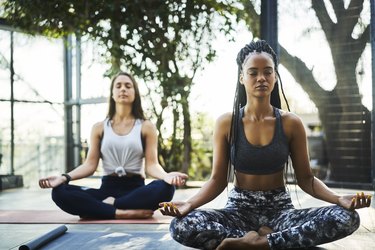
When speaking about yoga in general terms, Hatha is often the practice that comes to mind; it's the foundation for all types of yoga. This meditative style emphasizes using your breath to hold poses. In fact, you can expect to hold poses for at least five breaths, slowly inhaling and exhaling.
Hatha yoga is great for all fitness levels, but beginners can especially benefit because you can move at your own pace while instructors provide plenty of modifications. And because Hatha yoga forces you to tune into your breath, it can help you relax and de-stress while improving your flexibility and range of motion.
Discover the perks of a Hatha yoga practice and what to expect before your first class.
Ashtanga Yoga
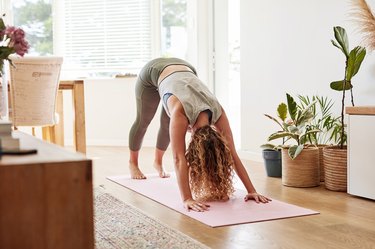
There are other styles of yoga that move at a faster pace and feel much more like a cardio workout than a restorative practice, and Ashtanga yoga is one of them. Ashtanga yoga syncs movement to breath, and it's filled with dynamic flows that challenge your balance, muscle strength and endurance.
Ashtanga yoga classes fall into two categories: Ashtanga Mysore and Ashtanga Led classes. If you're new to Ashtanga yoga, experts recommend taking a Mysore class because you'll get more individual attention from the instructor, who will walk you through the poses and give you more specific cues. Ashtanga Led classes stick to a certain rhythm, and you'll follow the instructor through three different sequences based on your level of practice with less one-on-one guidance.
Dive deeper into the details of an Ashtanga yoga practice.
Vinyasa Yoga
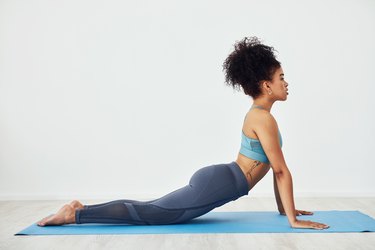
Like a dance workout, Vinyasa yoga flows seamlessly from one pose to the next. Because you're constantly moving, Vinyasa yoga will get your heart rate up and challenge your muscle endurance. As you build upon the poses, you'll also improve your strength and learn how to use your breath to carry you through the transitions.
Similar to Ashtanga yoga, Vinyasa also syncs movement to breath and is taught at a fast pace. But unlike Ashtanga, Vinyasa classes don't follow the same sequence, and instructors can structure their classes any way they like.
The good news is that you can expect to get into the relaxing Savasana (Corpse pose) at least twice in each class: once in the beginning to center your thoughts and once at the end to cool down.
Explore the basics of Vinyasa yoga and try our 15-minute flow at home.
Bikram Yoga
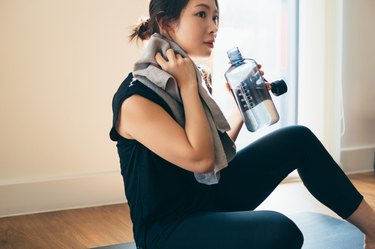
Bikram is a style of hot yoga that's taught in a room heated to 105 degrees Fahrenheit and 40 percent humidity. While the heat is a big element of Bikram, the practice focuses on a set of 26 yoga poses that are taught in exact order to warm up the muscles and joints.
Proponents of Bikram claim that it can increase flexibility, improve core stability and reduce stress. Bikram classes are 90 minutes long, so there are some safety precautions to take when exercising in the heat for that long, especially for people with heat sensitivity or certain heart conditions.
Be sure to stay hydrated by drinking water throughout class, and wear lightweight, moisture-wicking clothing to help you stay cool. You should also check in with your doctor to see if Bikram yoga is safe for you.
Weigh the pros and cons of Bikram yoga and learn how to prepare for your first class.
How to Find the Best Yoga Gear

Yoga doesn't require much equipment; all you really need is a mat. But using other yoga accessories, like yoga blocks, straps and blankets, can help enhance your practice and assist with a variety of poses that require more flexibility.
Yoga blocks, for instance, are great stability tools for holding balance poses, like Half Moon, Triangle and Crow. The blocks not only add support, but they can help deepen your stretch. If your flexibility isn't quite where it needs to be, yoga straps are helpful for binds and twists.
Obsessed with hot yoga? It's a good idea to invest in a yoga towel made with microfiber material to soak up the sweat on your mat and provide grip so you're not slipping and sliding throughout class.
Check out the best yoga gear and accessories recommended by seasoned yogis.