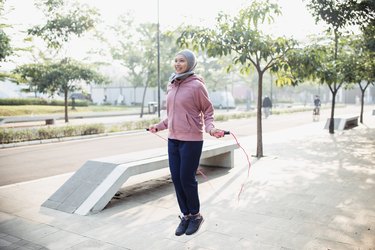
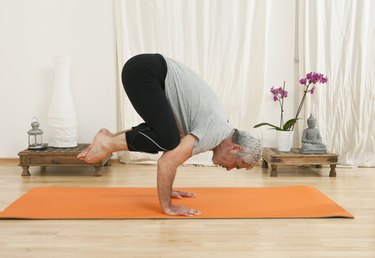
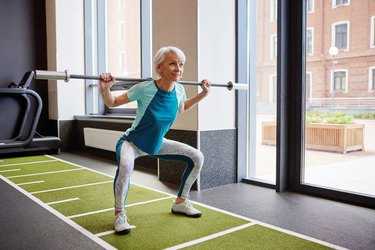

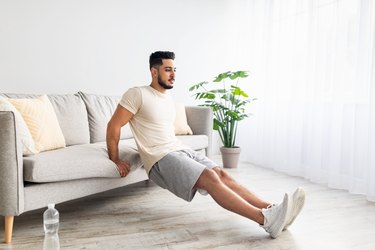


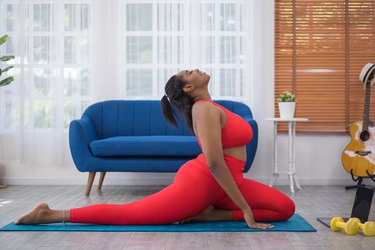
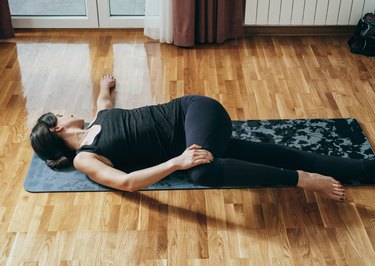
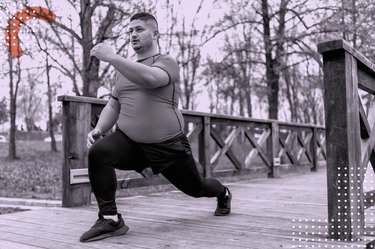



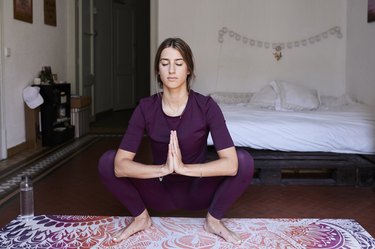
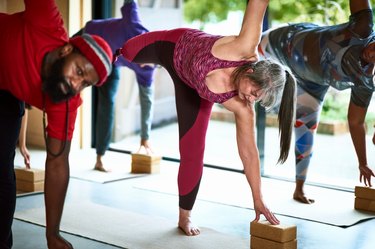
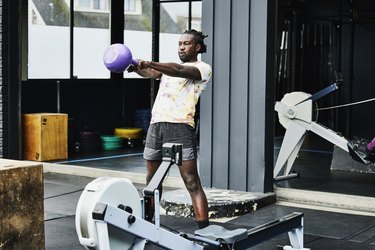
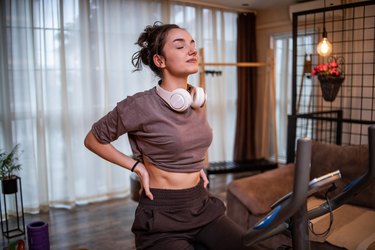

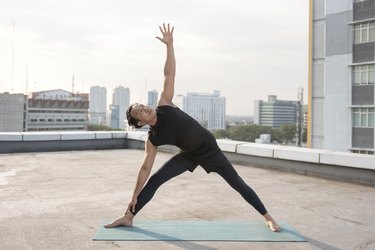
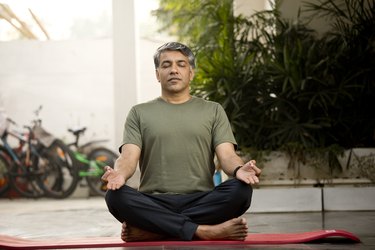
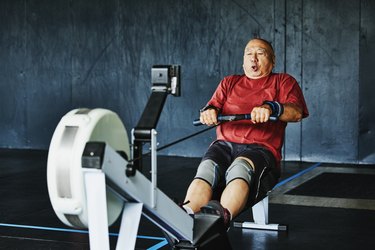
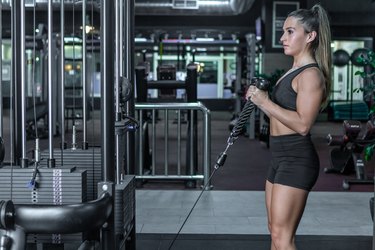
Osteoporosis, or low bone density, causes bone breaks in one out of every two women and one out of every four men over age 50, reports the National Osteoporosis Foundation. As the number of patients with osteoporosis increases, education on appropriate exercise methods becomes more important. The most common areas for osteoporotic bone breaks are wrists, the head of the femur and the vertebra of the spine.
Significance
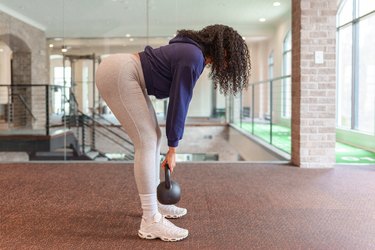
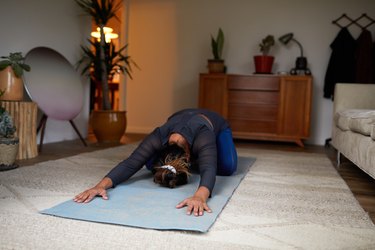
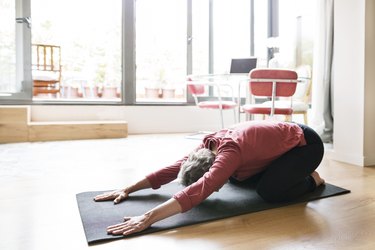
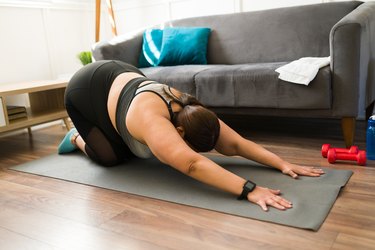
Although exercise is recommended as a means of stimulating bone growth, some movement patterns place stress on the spongy trabecular bone that is most compromised by osteoporosis, explains physical therapist and bone-health specialist Sheri Betz. The anterior of each vertebra -- the front side of the small bones that make up your spine -- is made up of trabecular bone, while the posterior or back side is made of stronger cortical bone. A 1984 study by M. Sinaki and B. A. Mikkelsen published in "Archives of Physical Medicine and Rehabilitation" found that osteoporotic patients who used flexion-based exercises, or forward bending movements of the spine, experienced new spine fractures at more than 5 times the rate of those who used extension-based exercises.
Solution
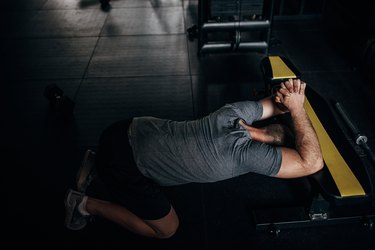
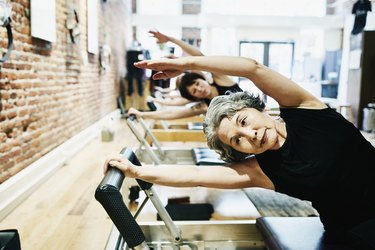
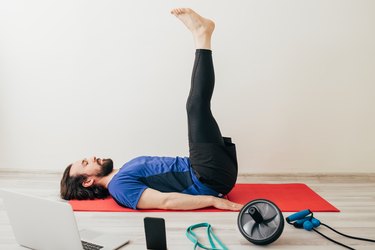
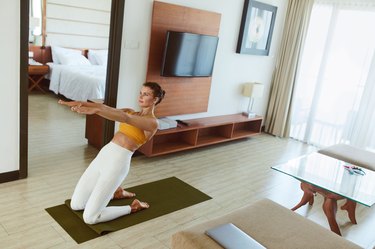
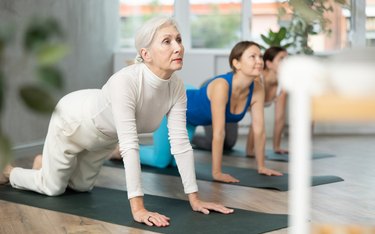
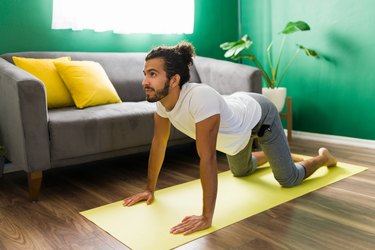
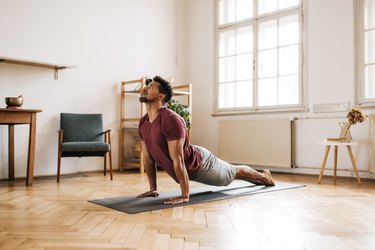
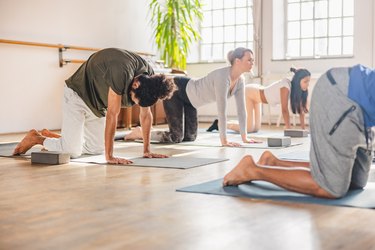
Extension exercises involve lengthening the spine and at times moving it into a back-bending position. Betz recommends modified Pilates exercises, which use the floor as a guide for spine position. She encourages clients and exercise trainers to focus on keeping the spine and neck in a long position. Many Pilates exercises can be modified to accommodate this position by leaving the head on the mat, rather than lifting it toward the chest. Patients with osteoporosis can improve their bone density scores, but it is imperative to avoid forward folding and side-bending movements, explains Betz.
Prevention
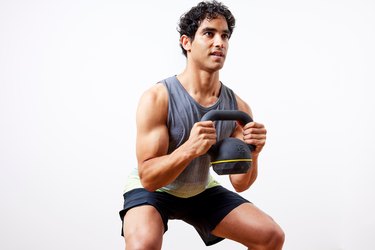
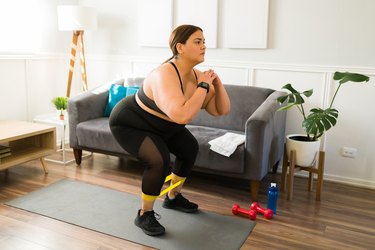
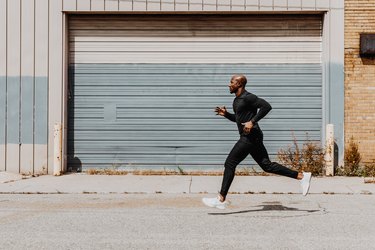
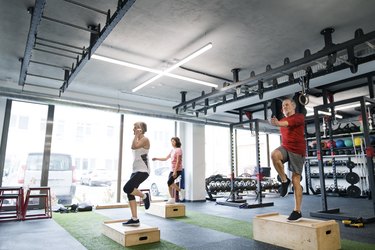
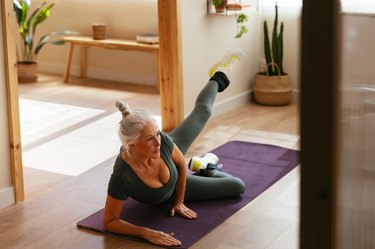
Although some risk factors, such as non-Black ethnicity and early menopause, cannot be avoided, many lifestyle choices can lessen your risk of osteoporosis. Weight-bearing exercise stimulates bone growth, and in adults, that means increased bone density. A diet rich in calcium, magnesium, potassium and vitamins D and K supplies your body with the nutrients it needs to continuously build new bone cells.
Considerations
Ask prospective exercise trainers about their background in bone building, advises the American Bone Health website. Fitness experts in this field should be able to interpret a bone density report, as well as create a program that helps you manage daily activities with minimal risk.
Expert Insight
Loss of height, broken bones and hunched spines are not a normal part of aging, reports the National Osteoporosis Foundation. These are all signs of low bone density, which can be prevented and treated, explains Betz. Know your bone density score, she advises, and learn what to do to protect and improve the health of your bones. Check with your doctor before starting any new exercise program, and re-check your scores and fractures to ensure that your program continues to be appropriate for you.


Member Comments