


































The hip joint is a ball and socket joint in which the hip joint rotates the leg for movement. Arthritis, injury, wear and tear from sports or work or from unique anatomical shape can cause pain. Normally the joint is cushioned by synovial fluid, but with age, this can decrease. Hip placement surgery is usually recommended if the pain is so great that movement is limited; however, there are exercises that can help you avoid this invasive procedure.
Gentle Range of Movement Exercise
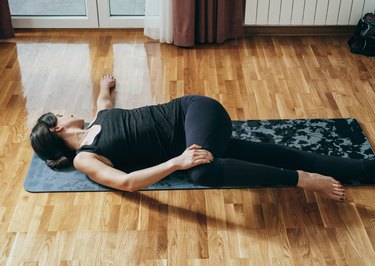
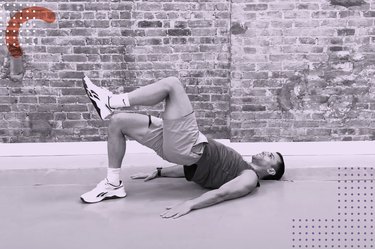
Use range of motion exercises to help keep the hip joints "oiled." Lying on your back, bend both knees, and lift the feet off the floor. Place your hands on each knee cap, and moving from the hip joint, rotate the knees away from each other. The action of the legs will resemble the movement of an old-fashioned egg beater. Do a few rotations in one direction, and then repeat to the other. If you have stiffness, alternate by moving one knee and then the other.
Hip Adductor Exercise
Use exercise machines in the gym to strengthen the muscles around the hip joints. Begin with the hip adductor machine. Select a very low weight, and set the machine to form into a V-shape. Sitting tall and drawing the lower abdominal muscles toward the spine, bring the legs together, pausing briefly when your inner thighs are together. Do eight to 12 repetitions to start, and work up to three sets over time.
Hip Abductor Exercise
Proceed to the hip abductor machine. Set a low weight, and begin with the legs together. Press the legs apart, against the resistance of the weights. Do eight to 12 repetitions, and work up to three sets.
Leg Press Machine
Integrate your muscular strength with leg presses to help keep the hip joints stable and free of injury. Stand on the platform with feet apart hips-width distance and big toes facing straight forward, and select a very low weight. Begin with your knees bent at about a 90-degree angle, and press through your feet to extend the legs so they are straight. Do eight to 12 reps to start, and build up to three sets.
Walk Stairs and Bike
Walk stairs slowly, or ride a bike at a mellow pace. Both activities move the legs in a way that keeps the hip joints in neutral rotation and also exercises all the muscles of the hips and legs that support and help stabilize the hip joints. Do not sprint or run stairs or blast up hills on your bike; the idea is to do low-impact, low-tempo movement that does not strain the hip joints. Take the stairs whenever it is practical, and bike for 15 to 20 minutes to begin, two to three times a week. This is not for weight loss but to prevent hip joint degeneration. To help you lose weight, the American Academy of Sports Medicine recommends 30 minutes of cardiovascular exercise five days a week.


Member Comments