If you've been coping with inflamed intestines symptoms, you're well-acquainted with inflammatory bowel disease (IBD). Fortunately, a well-rounded treatment program supported by an anti-inflammatory diet will give you a good foundation for managing this challenging condition.
Tip
Prebiotic foods, such as blueberries, flax meal and onions, help your "good" gut bacteria to thrive. Adding probiotic foods containing live bacteria, such as honey and yogurt, should gradually help to reduce inflammation and contribute to a healthier immune system.
Video of the Day
Learn About Inflammatory Bowel Disease
Contrary to its name, inflammatory bowel disease doesn't refer to a single medical condition, according to the Cleveland Clinic). Instead, the name encompasses several disorders, all of which cause your digestive tract to be chronically inflamed. The condition rarely affects patients younger than 10 years old.
Video of the Day
The Cleveland Clinic notes that Crohn's disease and ulcerative colitis are the two most prevalent types of inflammatory bowel disease. In both cases, a poorly functioning immune system plays a major part in the onset of inflammation. However, the specific origin of Crohn's disease and ulcerative colitis has not been determined.
Despite that ambiguity, several factors come into play when predicting who might develop inflammatory bowel disease. Multiple members of the same family are sometimes affected by this condition, with specific environmental factors potentially increasing this risk.
Caucasians, especially people of Jewish descent, are most often affected by inflammatory bowel disease. This incidence prevails throughout different geographic regions and time zones, which seems to point to a genetic cause for this condition.
Crohn’s Disease Symptoms and Progression
The Cleveland Clinic states that Crohn's disease, which is a chronic condition, can trigger sores and inflammation in any part of your digestive tract. This uncomfortable ailment could manifest itself in your mouth, in your rectum or at any point in-between. The sores and inflammation can reach deep into your digestive system lining.
Specific Crohn's disease symptoms vary based on their location and severity. In general, you may experience abdominal tenderness and pain, particularly in the lower right abdomen. Rectal bleeding and persistent diarrhea can also occur. Weight loss, malnutrition and anemia are possible too.
Because Crohn's disease is a chronic condition, you may experience extreme symptoms for some period of time and then go into extended remission. Flare-ups are common, and their frequency varies from one individual to another. Although it's impossible to predict how long either period will last, patients who follow a treatment plan generally fare better than patients without one.
Ulcerative Colitis Symptoms and Progression
Ulcerative colitis, which is a chronic inflammatory condition, impacts only the large intestine lining and the rectum. Consistent diarrhea (possibly bloody) is the primary symptom, and you may also experience short-notice bowel movements. Abdominal pain, anemia and fever are other common symptoms.
Infrequently, ulcerative colitis can result in complications, such as kidney stones, eye and mouth inflammation, liver disease, skin lesions or arthritis.
Ulcerative colitis inflammation generally begins in the rectum and gradually migrates upward through the colon. Although you may experience inflammation throughout your entire colon, there's no guarantee of that occurrence.
Sometimes, inflammation doesn't progress further than the rectum, causing a condition known as ulcerative proctitis. In other words, every person's situation is different.
Like Crohn's disease, ulcerative colitis patients can also experience symptom flare-ups and remission periods. Either cycle can last from several weeks up to several years, with no way to predict either interval. Finally, note that children don't develop ulcerative colitis as frequently as Crohn's disease.
Read more: 7 Signs Your Gut Is Out of Whack
How to Soothe Inflamed Intestines
After your physician diagnoses the inflammatory bowel disease, she will develop a multifaceted treatment plan. The Mayo Clinic emphasizes that every component relates to a unified goal: decreasing the intestinal inflammation that causes your symptoms. Ideally, you'll get some welcome relief, and could experience an extended remission.
To begin your treatment plan, your physician will likely prescribe an anti-inflammatory medication. She will choose the drug based on the location of your symptoms.
An immune system suppressor is the next tool in your treatment tool kit. In a nutshell, this medication dampens the immune response that triggers the release of inflammation-producing chemicals in your intestinal lining. Taking several of these medications may be more effective than using just one of them.
If your physician suspects that an infection may develop, she may add an antibiotic to your medication regimen. Depending on the severity of your symptoms, your doctor may also recommend a pain reliever, anti-diarrhea drug, calcium/vitamin D supplement or iron supplement, or some combination of some or all those.
Learn About Nutrition Strategies
If your bowel has become partially narrowed or obstructed, your physician may decide that a low-residue diet makes sense, says the Mayo Clinic. When your body digests foods that don't produce much leftover residue, there's less chance that the undigested contents will become lodged in the narrowest section of your bowel.
If your physician feels that your body's tired-out bowel needs time to rest, she may opt to provide nutrition via another method. Depending on your specific situation, nutrients can be directly routed to your body via a vein or feeding tube.
Surprisingly, these alternative methods may improve your overall health and nutrition status. However, beware that although resting your bowel temporarily reduces inflammation, it doesn't provide a long-term solution to the problem.
Hopefully, dietary modifications, medication therapy and targeted treatments will help reduce your inflamed intestines symptoms. If they don't, your physician may decide that surgery will provide the best outcome.
Reduce Intestinal Inflammation Naturally
Patients living with inflammatory bowel disease (IBD) can augment their physician-prescribed treatment programs with three nonmedical therapies. In a comprehensive review published in the July 2018 issue of the _World Journal of Gastroenterolog_y, researchers presented several IBD patient self-care options.
To gather the data, researchers searched the PUBMED, MEDLINE and EMBASE databases in September 2016. The search parameters included studies on diet, physical activities, exercise and psychotherapy for IBD patients.
In their post-study recommendations, the study authors stated that IBD patients would likely benefit from a diet that included generous amounts of vegetables, fruits and varied types of soluble fiber. The authors did not recommend that IBD patients follow restrictive eating plans.
Researchers also found evidence that consistent low-to-moderate-intensity physical activity may improve IBD patients' quality of life. Exercise may reduce their inflammation issues as well. Cardiovascular workouts and resistance training were specifically mentioned.
Several psychotherapy modalities were demonstrated to enhance IBD patients' quality of life. Stress management, mindfulness, hypnosis and cognitive-behavioral interventions were specifically noted here. However, there was insufficient evidence on the therapies' effects on patients' depression, anxiety or the IBD disease.
IBD Diet: Prebiotics and Probiotics
To provide IBD patients with comprehensive diet and nutrition guidelines, the University of Massachusetts Medical School has formulated the multi-part IBD-AID diet. To nourish your "good" gut bacteria, and introduce additional beneficial bacteria, aim to provide your body with several categories of nutritious foods every day.
Collectively, the IBD-AID diet foods are designed to support essential gut repair function and reduce your inflammatory bowel problems. Over time, following the diet should set the stage for a more balanced immune system.
Think of prebiotic foods as a smorgasbord for the "good" gut bacteria. Prebiotic-containing foods are rich in beneficial beta-glucans and inulin fiber, both of which are ideal for nourishing these desirable organisms. Examples include blueberries, chia, flax meal, garlic and onions.
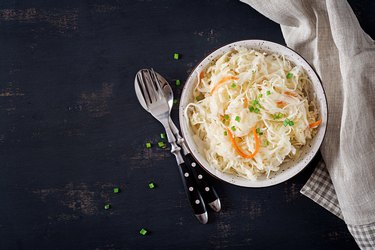
Next, consume a healthy amount of fermented probiotic foods, all of which contain beneficial live bacteria. Honey, miso, sauerkraut and yogurt are readily available. Before you buy, verify that the label specifically includes live, active bacteria on the ingredients list.
Read more: 13 Surprising and Beneficial Probiotic Foods
IBD Diet: Nutrition and Fiber
Lean proteins are another important component of an inflammatory bowel disease diet, the University of Massachusetts Medical School notes. Look for healthy recipes that feature fish, beans or soy products. In moderation, nuts are a tasty and nutritious snack and can double as a salad or main dish topping.
Healthy fats can also add flavor and texture to your daily menu. Use olive oil in salad dressings or marinades. Top a healthy salad with avocado slices or mix freshly ground flaxseeds into your hot or cold cereals or homemade baked goods.
Vegetables and fruits are powerhouses of fiber, vitamins, minerals and micronutrients. In order for your body to heal and to set the stage for reduced inflammation, you should consistently eat a variety of these nutrient-dense foods. Cooking or pureeing your vegetables and fruits may make them easier to digest and absorb.
Soluble fiber is an essential part of inflammatory bowel disease diets. Foods containing soluble fiber produce a gelatinous substance that improves stool consistency and slows food's movement through your intestinal system. This should reduce inflammation and produce better formed, more regular bowel movements.
Cool, clear water is an important part of every well-balanced diet. Drinking plenty of water will help your body better process the fiber you consume and also help replenish your fluids. Aim for 48 fluid ounces (or more) of water, coffee or tea daily. If desired, add nondairy milk, along with raw honey or other approved sweeteners.
Read more: List of Foods High in Soluble Fiber
Peanut Butter: Low-Residue Food?
Peanut butter has proven to be a tasty, versatile food that lends itself well to meals and healthy snacks. When designing an inflammatory bowel disease diet, however, it's useful to examine peanut butter's digestibility before adding it to the list of allowable foods.
Ideally, you'll eat low-residue foods that contain a minimum of fiber and other nondigestible substances that must transit the small intestine. Because your intestinal system has less material to process, your stools will be smaller and fewer in number. In turn, you may experience reduced diarrhea and abdominal discomfort, according to the University of Michigan Medical School.
Unfortunately, peanut butter is considered a high-residue food source. Additionally, it contains large amounts of fat. As a result, it's likely to make your intestinal system work harder, potentially leading to symptoms you'd like to avoid. Consult your physician for guidance, and accept that peanut butter might be more trouble than it's worth.
IBD Diet: Banish These Foods
Keeping your desirable gut bacteria happy sets the stage for reduced inflammatory bowel disease symptoms, states the University of Massachusetts Medical School. Toward that end, the IBD-AID diet eliminates specific foods that can upset your existing gut flora. For starters, stay away from any food that contains refined sugar.
Avoid foods that list wheat, corn and other grains among their ingredients. Oats, however, are on the "permitted foods" list. Trans fats-containing foods are a red flag, so eliminate store-purchased baked goods and any food with "partially hydrogenated" oils or fats.
Milk, freshly made cheese and other lactose-rich foods are also on the banned list, although aged cheeses are permitted. All processed foods and fast foods are off-limit.
Foods with intact fiber, such as those containing stems and seeds, may cause problems for your intestinal system. You may be able to digest other foods if they're in pureed or ground form. As an added bonus, your body may be better able to tolerate and absorb nutrients from the pureed foods.
- Cleveland Clinic: “Inflammatory Bowel Disease”
- Mayo Clinic: "Inflammatory Bowel Disease (IBD)"
- World Journal of Gastroenterology: “Non-pharmacological Therapies for Inflammatory Bowel Disease: Recommendations for Self-Care and Physician Guidance”
- University of Massachusetts Medical School: “What Is the Anti-Inflammatory Diet for IBD?”
- University of Michigan Medical School: “Inflammatory Bowel Disease”
Is this an emergency? If you are experiencing serious medical symptoms, please see the National Library of Medicine’s list of signs you need emergency medical attention or call 911.