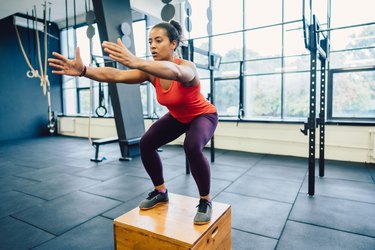
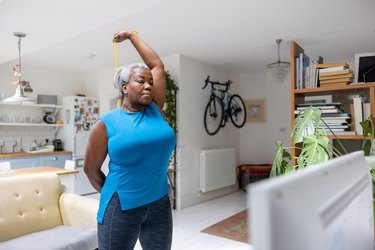
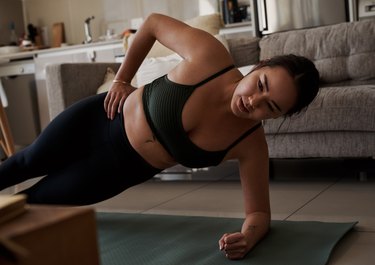
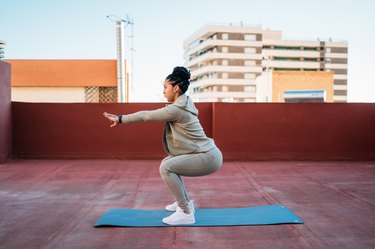



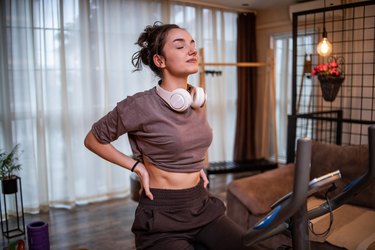

Menstrual cramps top the list of reasons girls miss school and women in their 20s miss work, according to MedlinePlus. Pain may occur a few days before your period begins and becomes less severe as menstrual bleeding comes to an end. Over-the-counter pain relievers such as ibuprofen are common remedies for painful menstrual cramps. However, exercise may also provide relief.
Causes
Pain associated with menstruation is known medically as dysmenorrhea. In primary dysmenorrhea, pain is usually due to increased levels of hormones called prostaglandins, which trigger contractions in the uterine and intestinal walls. Secondary dysmenorrhea refers to menstrual pain that begins to develop after your periods have been normal and is usually caused by abnormalities in the pelvic organs or uterus, such as fibroids or ovarian cysts. It may also be related to stress, anxiety or a sexually transmitted disease.
Cramp-Relieving Effect
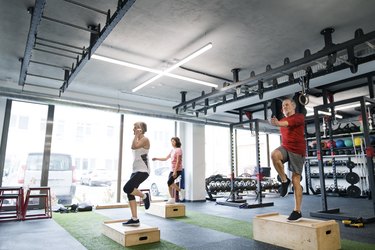
Exercise can help relieve menstrual cramps in a few ways. It increases blood circulation, which helps cramps to go away. Menstrual cramps are also made worse by stress; exercise is a well-known natural way to lower stress. In a study published in the "Journal of Research in Health Science" in 2006, Iranian researchers found that exercise helped decrease the duration and severity of primary dysmenorrhea in high school girls. It also reduced the girls' use of sedative medications.
Type and Amount of Exercise
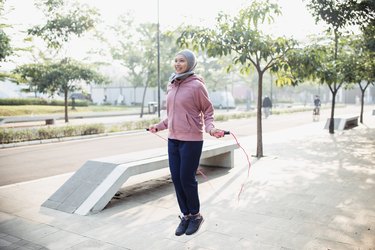
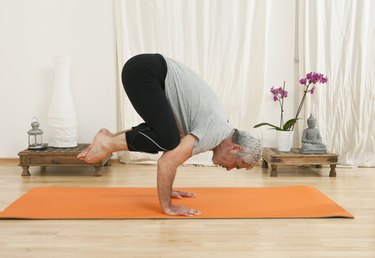
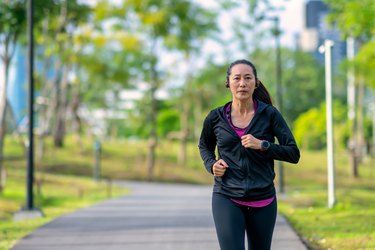
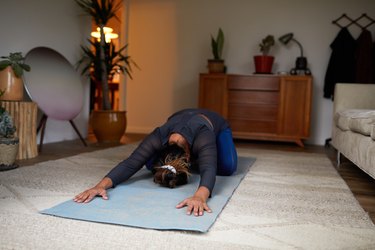
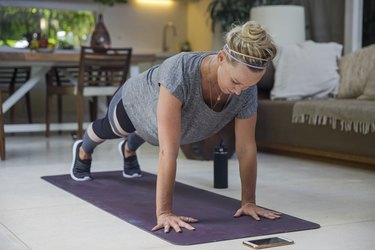
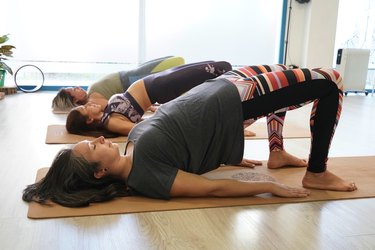
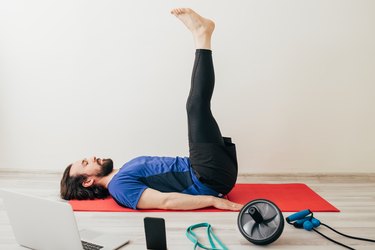
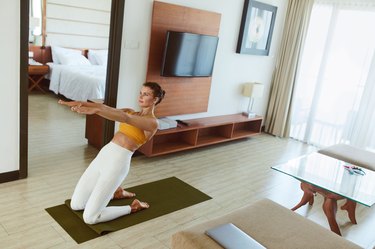
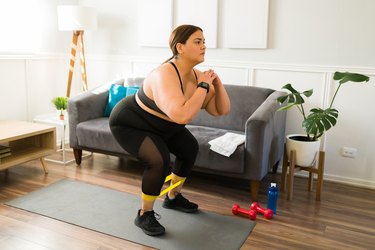
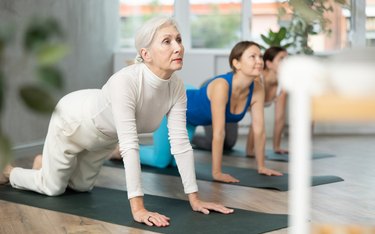
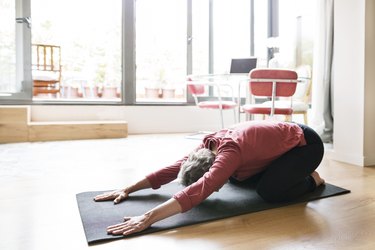
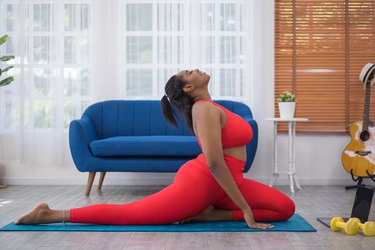
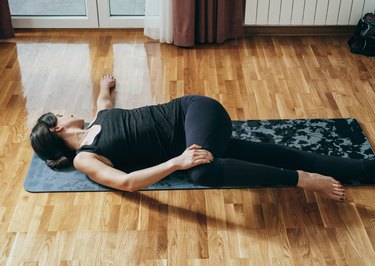
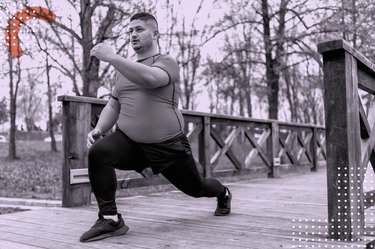
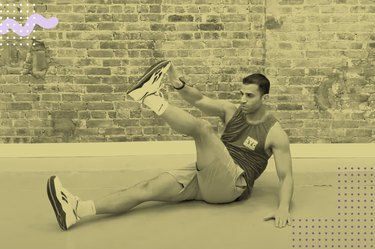
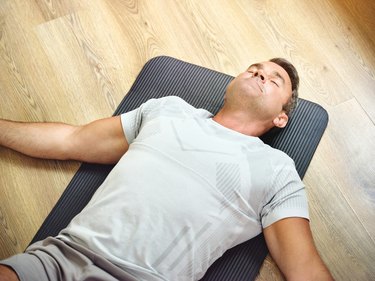
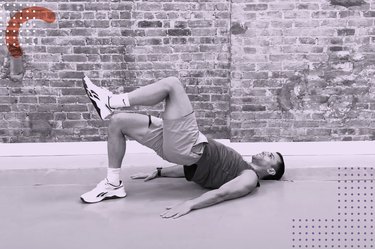
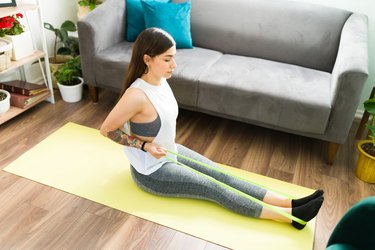
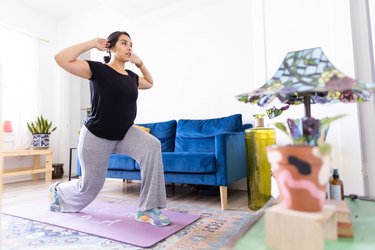
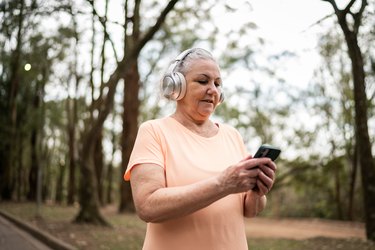
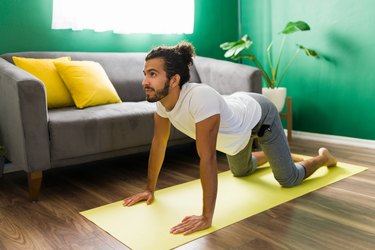
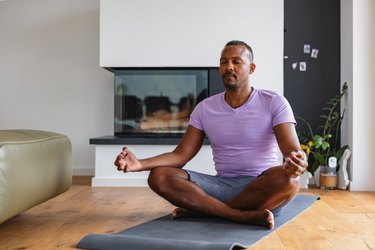
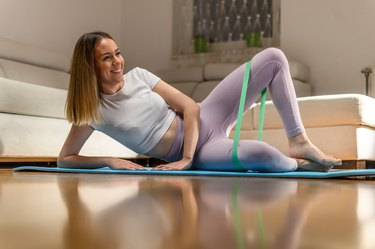
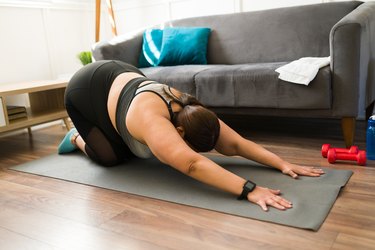
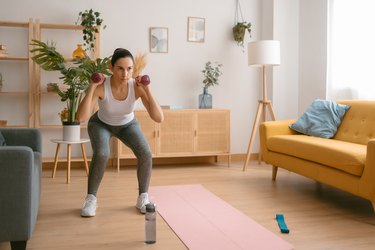
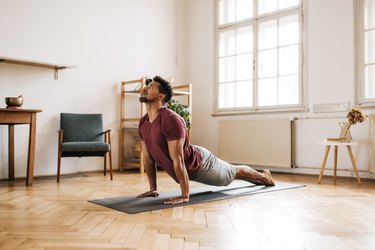
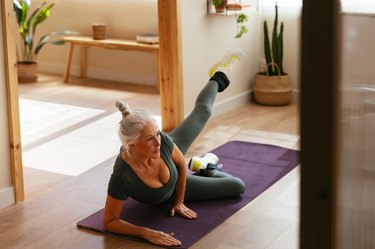
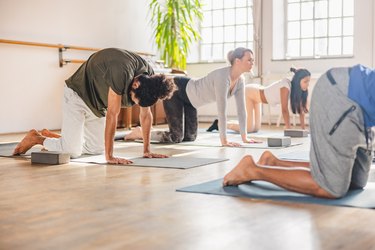
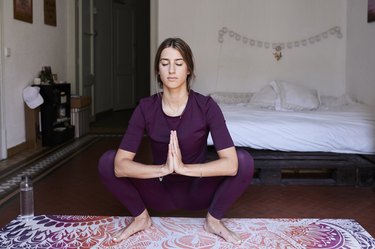
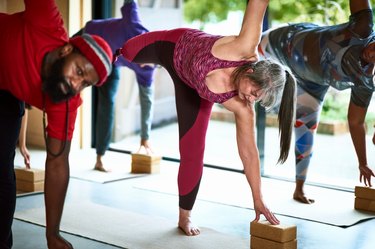
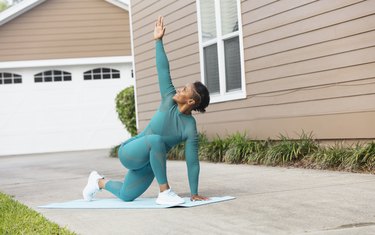
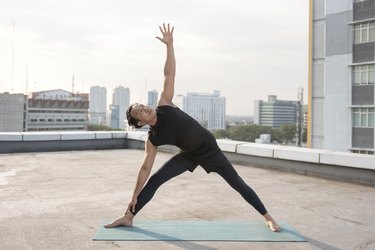
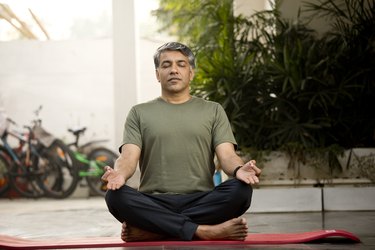
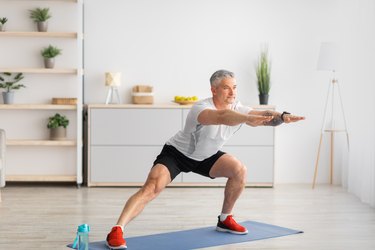
When you're in pain, the last thing you will want to do is strenuous or vigorous exercise. Choose gentle aerobic exercises such as walking or swimming at a slow pace. Exercises that rock your pelvis, such as pelvic tilts, and stress-reducing activities, such as yoga, might also provide relief. Ideally, you should get at least 30 minutes of aerobic exercise most days of the week. If this seems like a stretch when you're suffering with menstrual cramps, break those exercise sessions into three 10-minute bouts.
Complementary Relief for Cramps
To get quicker relief, use a combination of remedies instead of just exercise alone. Other non-drug remedies for menstrual cramps include taking a warm bath, gentle abdominal massages and taking vitamin E or omega-3 essential fatty acid supplements. Some natural remedies might also help to prevent cramps. Right before and during menstruation, drink lots of fluids, eat iron-rich foods such as lean meat, green leafy vegetables and whole grains and limit your intake of caffeine.
Caution
If you have not been active for a while or have a medical condition such as heart disease, diabetes or arthritis, consult your doctor before starting to exercise to relieve menstrual cramps. Also seek medical attention if you've suddenly started to develop menstrual cramps after years of normal periods as they may signal another health problem such as fibroids.
References
- MedlinePlus: Painful menstrual periods
- University of Chicago: Women's Guide to the University of Chicago
- Columbia University Medical Center: Dysmenorrhea (Menstrual Cramps)
- "Journal of Research in Health Science"; The Effect of Exercise on Primary Dysmenorrhea; Abbaspour Z., M.Sc., et al.; February 2006


